
Aspergillus Mold in Gainesville, FL: What It Is, Who It Really Affects and What to Do
Maybe the word showed up on an air test report, or a friend sent you an alarming article, and now you are wondering whether it is safe to sleep in your own bedroom. Take a breath. Aspergillus is one of the most common molds on earth, and the Aspergillosis Trust says most people breathe in its spores every day without getting ill.
That is the honest middle of this page. Aspergillus is everywhere and usually harmless for healthy people, and it is a real medical concern for a small group, mainly people with weak immune systems or chronic lung disease. We are a mold removal crew, not doctors, so we keep the medical part short and point you to the people who treat it. The part that is ours is the building: finding the moisture, getting the growth out and keeping your Gainesville home from feeding it.
If you are coughing up blood, struggling to breathe or running a fever and you have a lung condition or a weak immune system, call your doctor first.
- Common and usually harmless for healthy people
- Real risk for weak immunity or lung disease
- Fix the moisture first
- Doctor first for breathing trouble
Checked against Mayo Clinic, Cleveland Clinic, NHS, CDC and EPA guidance, October 2026.
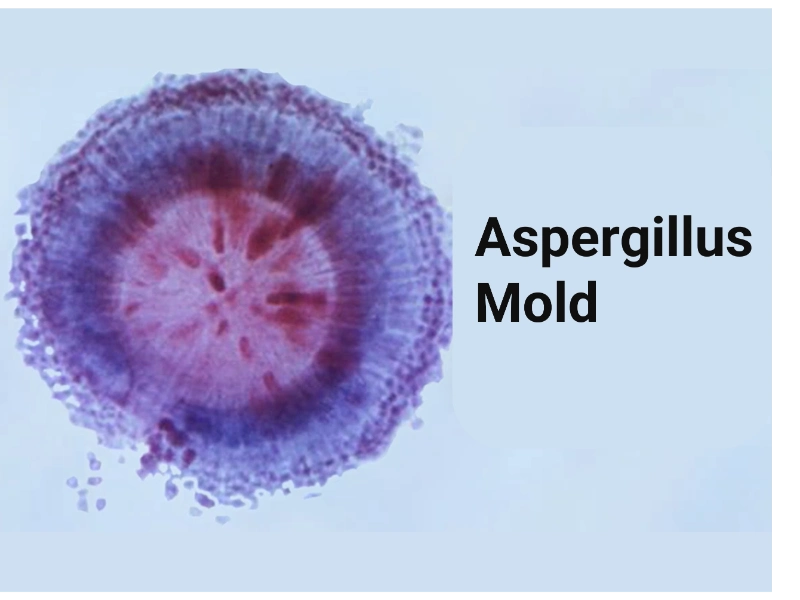
What Is Aspergillus Mold, and Is It Dangerous?
Aspergillus is a very common mold found in soil, dust, compost and buildings, and most people breathe in its spores every day without getting sick. It is a concern mainly for people with weak immune systems or chronic lung disease, where it can cause aspergillosis. For a healthy household, a small patch is a moisture problem to fix, not an emergency.
One genus, two faces
Aspergillus is a genus of molds with hundreds of species. Some are quietly useful: one species is used to make sake and miso. A few can cause illness in people. Same family, very different jobs, and that is why the internet gives you both a shrug and a horror story depending on which page you land on.
Indoors, you will mostly meet it as dust-borne spores and the occasional patch on damp material. Mayo Clinic notes that it lives in soil, decaying plants and crops, and that healthy immune systems usually handle the spores people breathe in. The trouble starts when the body cannot cope, not simply because the mold is in the room.
- Common in soil, dust, compost and buildings
- Spores travel on air and settle on damp, dusty surfaces
- Healthy people usually clear what they inhale
- The serious disease is aspergillosis, and it is a medical diagnosis
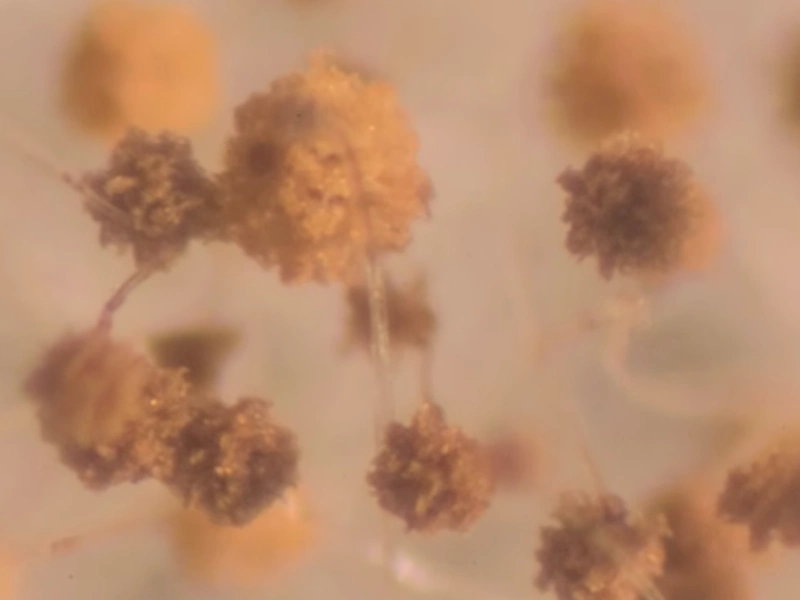
Same genus, very different outcomes. Who you are matters more than the name.
Which Aspergillus species do people actually talk about?
| Species | Best known for | What to know at home |
|---|---|---|
| A. fumigatus | The species most often behind aspergillosis in people | Lives in soil, compost and dust. Its spores are small and travel easily on air. |
| A. flavus | Aflatoxin on stored grain and crops | More of a food and crop story than a house story. |
| A. niger | Black, powdery colonies, like the dark dust on a moldy onion | Often mistaken for Stachybotrys because of the color. |
| A. oryzae | Used to make sake and miso | Proof that the genus has a harmless, useful side. |
Species cannot be told apart by color or by eye. Only a lab can identify one, and for a house the species rarely changes what you do: find the moisture and remove the growth.
Where Is Aspergillus Found in the Home?
Mostly where dust meets dampness: AC filters and the air handler closet, drain pans, houseplant soil, stored paper and cardboard, and any drywall or insulation that got wet. The NHS also lists damp buildings and air conditioning systems among the places it is found.
| Spot in the house | Why Aspergillus likes it | What to do |
|---|---|---|
| AC filter and return grille | Dust plus cool, damp air | Replace the filter on schedule and check the frame for staining |
| Drain pan and condensate line | Standing or slow-draining water | Look for water and slime, and get it cleared before summer |
| Air handler closet and nearby drywall | Humid air and dust trapped in a small space | Look for stains, soft drywall and a musty smell |
| Houseplant soil | The NHS lists soil and compost among its habitats | Do not overwater, and keep pots out of the bedroom if someone has asthma or a weak immune system |
| Stored paper and cardboard | Damp boxes in a garage or closet | Move to plastic bins, off the floor and away from outside walls |
| Wet drywall or insulation after a leak | Material that stays wet past 48 hours | Dry or remove it within 24 to 48 hours (EPA) |
| Attic and crawl space | Humid, poorly vented air | Check for moisture after storms and hurricane season |
Why does it show up near the AC so often?
Think about what an air handler does all year in Gainesville. It pulls in dusty air, cools it and drips water. Dust gives spores something to sit on, and damp spots give them a reason to stay. That combination is why we look at filters, drain pans and the closet around the air handler before we look anywhere fancy.
The NHS lists air conditioning systems and damp buildings among the places Aspergillus is found. That does not mean your AC is moldy. It means a dusty, damp, forgotten system is worth a look.
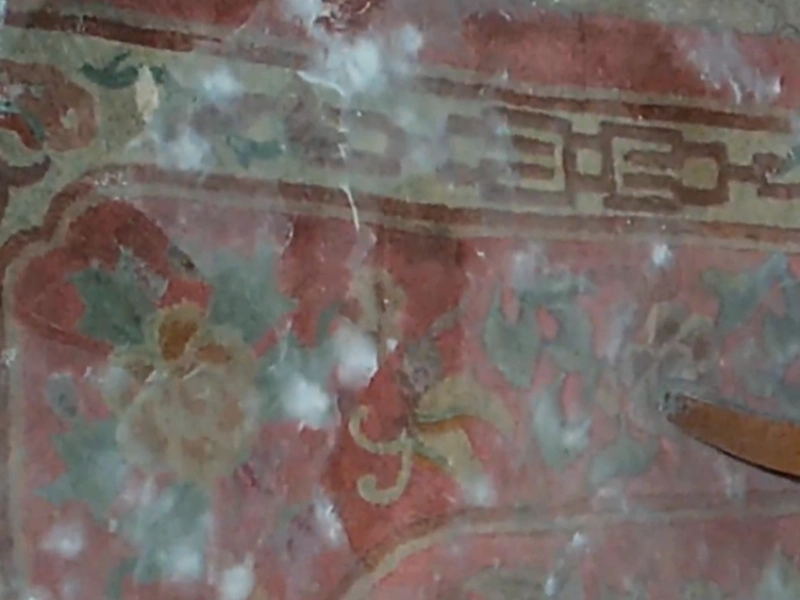
Dust plus a damp spot is all Aspergillus needs indoors.
What Does Aspergillus Look Like, and Is It Black Mold?
Aspergillus can look green, blue-green, yellow-green, black, white or gray, usually flat and powdery. A. niger often looks black, which is why people call it black mold. Color cannot confirm the species, so only a lab can say for sure.
| What you see | What it could be | Honest note |
|---|---|---|
| Green or blue-green powder | Aspergillus or Penicillium, among others | They look alike. Only a lab can tell them apart. |
| Yellow-green patches | Possibly an A. flavus type | Color alone proves nothing. |
| Black, powdery dots | A. niger, or another mold such as Cladosporium or Stachybotrys | Black does not automatically mean toxic or a specific species. |
| White or gray fuzz | Early growth of many molds | It often changes color as it matures. |
| Dark stain with no texture | Mold, dirt or old water staining | Look for the moisture behind it before deciding. |
The AI summaries often say A. niger is black mold. It can look black and powdery, but in homes ‘black mold’ usually refers to Stachybotrys, a different mold. Read our Stachybotrys guide and the mold vs mildew guide for the full picture.
Who Actually Needs to Worry About Aspergillus?
Mostly people with a weak immune system or chronic lung disease: transplant patients, people on chemotherapy or long-term steroids, and people with asthma, cystic fibrosis, COPD or past tuberculosis. Healthy people usually clear the spores (Mayo Clinic, Cleveland Clinic, NHS).
| Group | Why it matters | What helps |
|---|---|---|
| Healthy adults and children | The immune system usually clears inhaled spores (Mayo Clinic) | Fix the moisture and keep humidity down |
| People with asthma or cystic fibrosis | Risk of an allergic lung reaction called ABPA (Mayo Clinic, Cleveland Clinic) | Ask your doctor, and use an N95 for dusty jobs as Cleveland Clinic suggests |
| People with lung cavities, COPD, sarcoidosis or past tuberculosis | Risk of a fungus ball or chronic infection (Cleveland Clinic, NHS) | Tell your lung doctor and stay out of dusty, damp spaces |
| Transplant, chemotherapy, long-term steroids or low white cells | Risk of invasive aspergillosis, the serious form (Mayo Clinic, Cleveland Clinic) | Talk to the care team before any mold cleanup nearby, and let someone else handle it |
What is aspergillosis, in plain words?
Aspergillosis is the name for the illnesses Aspergillus can cause. It is a lung and sinus story far more often than a house story, and it is diagnosed and treated by doctors with imaging, cultures and prescription medicine. Cleveland Clinic and Mayo Clinic both describe the same four patterns, shown in the table below.
None of this is a reason to panic about a spot on a wall. It is a reason to take the building seriously if someone at home is in one of the higher-risk groups.
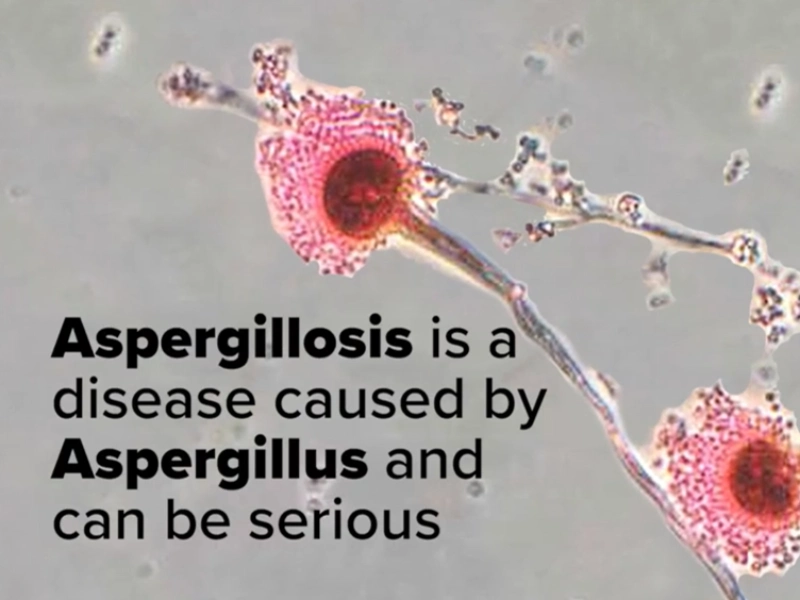
Aspergillosis is serious, but it mainly affects a specific group of people.
| Type | What it is | Who it mostly affects |
|---|---|---|
| Allergic bronchopulmonary aspergillosis (ABPA) | An allergic reaction in the lungs | People with asthma or cystic fibrosis |
| Aspergilloma | A ball of fungus growing in a lung cavity | People with cavities left by tuberculosis or emphysema |
| Chronic pulmonary aspergillosis | Long-running lung infection and damage | People with COPD, sarcoidosis or past tuberculosis |
| Invasive aspergillosis | Infection that spreads beyond the lungs and can be fatal | People with very weak immune systems |
Treatment is a doctor matter. Cleveland Clinic describes antifungal medicines such as voriconazole, steroids for allergic forms and surgery for fungus balls. There is no home remedy for aspergillosis, and cleaning your house does not treat it.
What Are the Symptoms of Aspergillus Exposure?
In most people, indoor Aspergillus exposure looks like any mold exposure: sneezing, a stuffy nose, itchy eyes and a cough. In people with asthma it can trigger wheezing. In the small group with lung disease or weak immunity, doctors watch for coughing up blood, shortness of breath, chest pain, fever and weight loss. Those need medical care, not a cleaning plan.
Allergy-type
Sneezing, a stuffy nose, itchy eyes and a cough. The most common reaction to any indoor mold.
Most commonAsthma flare
Wheezing, chest tightness and shortness of breath in people who already have asthma.
Call your doctorAllergic lung reaction
Wheeze, cough, sometimes fever. Linked to asthma or cystic fibrosis (ABPA).
Needs medical careLong-running lung symptoms
Cough, tiredness and weight loss over weeks or months in people with existing lung disease.
Needs medical careCoughing up blood
Mayo Clinic and Cleveland Clinic list it with fungus balls and chronic forms.
Seek care promptlyInvasive illness
Fever, chest pain and breathlessness in people with very weak immune systems.
EmergencyThese are general descriptions, not a diagnosis. Fatigue and headaches get blamed on mold a lot, but they have many causes. Tell your doctor what you notice and where you notice it. Our mold allergies and health effects guide goes deeper on the everyday symptoms.
Can You Catch Aspergillosis From a Moldy House or From Someone Else?
No. Aspergillosis is not contagious, and you cannot catch it from people or animals. You breathe in spores from the environment, and in healthy people the lungs usually clear them.
What the medical sources say
- It is not contagious. You cannot catch it from people or animals (Cleveland Clinic, NHS)
- Healthy lungs usually clear the spores (Mayo Clinic)
- Disease develops when the body’s defenses cannot cope (Aspergillosis Trust)
- Complete avoidance is nearly impossible, so the goal is less exposure, not zero (Mayo Clinic)
What this does not mean
- It does not mean a moldy room is fine to ignore
- It does not mean someone with a transplant, chemotherapy or severe lung disease should hang around it
- It does not mean a test number tells you who will get sick
- It does not replace asking your doctor about your own situation
What Does Penicillium/Aspergillus on My Mold Test Report Mean?
It means the lab counted spores from Penicillium and Aspergillus together as one group, so you usually do not learn the species. The number is a snapshot of one sample, not a diagnosis. Use it as a clue to look for moisture, dust and visible growth.
This is the question we hear most from Gainesville homeowners after an air test. People get a report with ‘Penicillium/Aspergillus’ near the top of the list and a big number next to it, and then spend the weekend on forums. Here is how to read it without losing your weekend.
| What the report shows | What it means | What it does not tell you |
|---|---|---|
| Penicillium/Aspergillus group | Many labs report spores from these two together as one group | Which species it is, or whether it is a harmless one |
| A raw count such as 97,000 or 188,000 spores | How many spores were caught in that sample, at that moment, in that spot | Whether anyone will get sick, or where the moisture is |
| An indoor sample next to an outdoor one | Whether indoor air looks very different from outside | What caused the difference |
| A low number | Little was caught during the sample | That the room is fine. A hidden leak can still be there. |
A calmer way to use the report
Treat the report as a clue about where to look, not a verdict about your health. A high Pen/Asp reading is a good reason to check for moisture, dust and any visible growth. A low one does not clear a room that smells musty and has a stain. The CDC does not recommend routine mold testing, because there are no accepted safe levels and results do not change what you do.
Why Does Aspergillus Show Up Around AC and HVAC Systems in Gainesville?
Because an air handler pulls in dusty air and makes water, and dust plus dampness is what Aspergillus needs. Gainesville humidity close to 80 percent in August and an AC that runs most of the year give it plenty of chances. A clogged drain line or a dirty filter is a common starting point.
1. Dust settles
Filters, return grilles, vents and the air handler closet collect household dust all year.
2. Moisture shows up
A clogged drain line, sweating duct, leak or indoor humidity over 60 percent wets that dust.
3. Spores land and stay
Spores already in the air settle on the damp, dusty spots. This is normal anywhere in the world.
4. Growth shows
A musty smell, a stained filter frame, dark or powdery patches near vents or the drain pan.
5. Airflow spreads it
Every time the system cycles, air moves across and past the damp spot and carries spores through the house.
6. We break the chain
Fix the water, clean or remove what is affected, and bring the humidity down so it stays that way.
Mold in air ducts and air handlers is its own job, and we cover it on our HVAC and air duct mold page. If you can see growth on the filter or inside the vents, do not run the system more than you have to and call us before you start tearing things apart.
Is It Safe to Live in a House With Aspergillus?
For most healthy households, yes, once the moisture is fixed and visible growth is cleaned or removed. If someone at home has asthma, lung disease or a weak immune system, talk to their doctor and deal with the mold quickly instead of living with it.
| Your situation | Reasonable approach |
|---|---|
| Healthy household, small spot, moisture fixed | Clean hard surfaces, dry them fully and watch for it to return. Most people carry on living there. |
| Someone has asthma, allergies or lung disease | Ask their doctor first, fix the moisture fast and keep them out of the room during cleanup. |
| Someone has a weak immune system | Talk to the care team before anything. Have someone else handle cleanup and avoid dust. |
| More than about 10 sq ft, or growth in the HVAC | Bring in a crew and limit how much you run the system. |
| A musty smell and nothing visible | Look for hidden moisture: AC closet, under sinks, attic and crawl space. |
What Kills Aspergillus, and Is It Hard to Get Rid Of?
Soap or detergent and water on hard surfaces, followed by complete drying, handles most small jobs (EPA). It is not hard to remove once the moisture is gone, and it comes straight back if the moisture stays. Porous materials like ceiling tiles, carpet and soaked insulation often have to be replaced.
Where does your indoor humidity land?
EPA range: 30 to 60%. CDC: under 50% is better. Cleveland Clinic suggests 30 to 50%. Gainesville outdoor air sits near 71% on average and close to 80% in August, so a closed-up house with a tired AC can drift into the red fast. A cheap hygrometer beats guessing.
| Material | What the EPA approach says | Notes |
|---|---|---|
| Hard, non-porous (tile, glass, sealed counters) | Scrub with soap or detergent and water, then dry completely | No routine biocide needed |
| Porous (ceiling tiles, carpet, soaked insulation) | May have to be thrown away if they become moldy | Cleaning rarely gets mold out of absorbent material |
| Soaked drywall | Usually comes out and gets replaced after the leak is fixed | Drying fast saves some jobs. Past 48 hours, plan on removal. |
| Bleach, vinegar or essential oils | The EPA does not recommend routine biocide use | If you use bleach anyway, never mix it with ammonia (CDC). We do not build a cleanup around vinegar or essential oils. |
If the moisture problem is a leak or storm water, the clock matters. The EPA says to dry or remove wet material within 24 to 48 hours. Our water damage restoration page covers that first window.
How Does Aspergillus Compare With Other Common Household Molds?
Aspergillus and Penicillium are the pair labs often group together. Cladosporium is another common allergy-linked mold, and Stachybotrys is the one people usually mean by black mold, which needs material that stays wet for a long stretch. Color cannot separate them. Moisture is the common thread.
| Mold | Where it usually shows | What to know |
|---|---|---|
| Aspergillus | Dust, filters, houseplant soil, damp paper and drywall | Very common. Labs often group it with Penicillium. |
| Penicillium | Damp materials and dust | The other half of Pen/Asp on a lab report. |
| Cladosporium | Surfaces and fabrics, indoors and outdoors | One of the usual allergy-linked molds. |
| Stachybotrys | Material that stays wet for a long stretch | What most people mean by black mold. |
Hurricane season runs June 1 to November 30, and Gainesville’s wettest months are June through August. Any of these molds can follow a wet roof, a leaking window or a flooded slab. See the Cladosporium page and the Stachybotrys page for the other two.
What Does Aspergillus Look Like in Real Gainesville Homes?
Illustrative scenarios based on common patterns, not specific customers.
| Scenario | What sets it up | Aspergillus angle | First move |
|---|---|---|---|
| Rental near UF and Midtown (32601 or 32603) | Overdue AC filter, windows shut all summer, a weak bathroom fan | Dusty filter and a damp air handler closet | Replace the filter, check the drain line and tell the landlord in writing |
| Two-story home in Haile Plantation (32608) | An upstairs air handler or duct that sweats in humid months | Damp dust on ducts and nearby drywall | Find the source, dry it and have the area looked at before painting over |
| Pier-and-post house near Paynes Prairie (32641) | Humid air under the house and a wet crawl space | Damp stored boxes and paper | Fix drainage and moisture, then move storage up |
| Ranch or slab home in 32605, 32606 or 32607 after a summer storm | A roof leak or wet attic insulation | Wet insulation and drywall, then dust on top | Dry or remove within 24 to 48 hours |
| Single-story home in 32609 | Closet full of boxes stacked against an outside wall | Damp paper and cardboard | Move to bins, off the floor and away from the wall |
What about renters and landlords?
If you rent, especially near UF in 32601 or 32603, tell your landlord in writing what you see and when you noticed it, and keep dated photos. Florida’s landlord maintenance duties are in Fla. Stat. 83.51. We are not lawyers, so check your lease and your options before you act.
When Should You Stop Handling Aspergillus Yourself and Call for Help?
Call when it covers more than about 10 square feet, sits near the AC or ducts, follows water that stayed wet past 48 hours, keeps coming back, or when someone at home has asthma, a lung condition or a weak immune system. For smaller jobs on hard surfaces, you can often clean it yourself.
Reasonable to handle yourself
- A small patch, under about 10 square feet, on a hard surface
- A leak you found, stopped and can see the whole of
- A dusty filter you can simply replace
- No one at home has asthma, a lung condition or a weak immune system
Time to bring in help
- More than about 10 contiguous square feet, or it keeps coming back
- Growth on or around the AC, ducts or air handler
- Wet drywall, insulation or subfloor, or water that sat past 48 hours
- Someone at home is in a higher-risk group, or you smell mold you cannot find
What does a call to Gainesville Mold Rescue look like?
You tell us what you found, where, and whether there was a leak or a storm. We look for the moisture first, then scope what has to come out and what can be cleaned. Our mold remediation process is written out step by step, so you know the plan before work starts.
- Moisture source found before cleanup
- Affected material removed under containment
- Clear, written scope before work begins
- Prevention advice that fits Gainesville humidity
Other pages that may help
How Do You Keep Aspergillus From Coming Back in a Gainesville Home?
Keep humidity under 60 percent, replace AC filters on time, keep the drain line clear, dry wet material within 24 to 48 hours and store paper off the floor. Moisture control is the only thing that works long term.
| Habit | Why it helps | Gainesville tip |
|---|---|---|
| Hold humidity under 60 percent | The EPA ceiling for indoor humidity | Use a hygrometer, and run the AC and a dehumidifier in August |
| Change AC filters on schedule | Less dust for spores to sit on | Check monthly in summer |
| Keep the drain line clear | No standing water near the air handler | Have it checked each spring |
| Dry wet material in 24 to 48 hours | The EPA window to prevent growth | After a storm, check the attic and under windows |
| Store paper off the floor | Damp cardboard feeds mold | Use plastic bins in garages and closets |
| Water houseplants sensibly | Soggy soil is a habitat | Keep pots out of the bedroom for higher-risk household members |
The full seasonal plan lives on our mold prevention tips page.
Found Aspergillus on a Report or a Wall and Not Sure What Comes Next?
Call Gainesville Mold Rescue. Tell us what the report says or what you can see, where it is and whether there was a leak or a storm. We will tell you what to do next. Photos of the area help.
Aspergillus Mold Questions, Answered Honestly
Is Aspergillus mold harmful?
For most healthy people, spores are usually harmless, and most people breathe them every day (Aspergillosis Trust). For people with weak immune systems or chronic lung disease it can cause aspergillosis, which needs a doctor. In a house it is mostly a sign that moisture and dust need attention.
Is Aspergillus black mold?
Not exactly. A. niger can look black and powdery, but black mold in homes usually means Stachybotrys, a different mold. Color cannot identify a species, so a black spot on the wall is a reason to find the moisture, not to guess.
Where is Aspergillus found in the home?
Mostly where dust meets dampness: AC filters, drain pans, the air handler closet, houseplant soil, stored paper and cardboard, and wet drywall or insulation. The NHS lists damp buildings and air conditioning systems among the places it is found.
What does Aspergillus look like?
It varies by species: green, blue-green, yellow-green, black, white or gray, often flat and powdery. Penicillium looks similar, and several other molds do too. Only a lab can tell them apart.
What are the symptoms of Aspergillus exposure?
Most people notice allergy-type symptoms like sneezing, a stuffy nose, itchy eyes and a cough. People with asthma can wheeze. In people with lung disease or weak immunity, doctors watch for coughing up blood, shortness of breath, chest pain, fever and weight loss. Anything in that second group needs medical care.
Is it safe to live in a house with Aspergillus?
For many healthy households, yes, once the moisture is fixed and visible growth is cleaned or removed. If anyone at home has asthma, lung disease or a weak immune system, ask their doctor and act quickly rather than living with it.
What kills Aspergillus, and is it hard to get rid of?
On hard surfaces, soap or detergent and water followed by complete drying works for small jobs, according to the EPA. It is not hard to remove once the moisture is gone, but it returns if the moisture stays. Porous materials like carpet and ceiling tiles often have to be replaced.
What does Penicillium/Aspergillus on my air test mean?
Many labs report spores from these two molds together as one group, so you usually do not learn the species. A raw number is a snapshot of one sample, not a diagnosis. Use it as a clue to check for moisture, dust and visible growth.
Can I catch aspergillosis from my house or from someone else?
You cannot catch it from other people or animals, because it is not contagious (Cleveland Clinic, NHS). You breathe in spores from the environment, and healthy lungs usually clear them. Illness develops when the body cannot cope, which is why risk groups matter.
Should I test my Gainesville home for Aspergillus?
The CDC does not recommend routine mold testing, because there are no accepted safe levels and results do not change what you do. If you can see or smell mold, find the moisture and deal with the mold. A written inspection and scope of work is more useful than a number.
How do you get rid of Aspergillus in your body?
That is a medical question for your doctor. Cleveland Clinic describes antifungal medicines, steroids for allergic forms and surgery for fungus balls, depending on the type. Cleaning your home does not treat an infection, but it can lower your exposure.
Is Aspergillus in my AC or air ducts dangerous?
Usually it is a moisture and dust problem to fix, not an emergency. If you can see growth on the filter, drain pan or inside the vents, or the system smells musty, call us before running it heavily. If someone at home is higher risk, tell their doctor.
Can I clean Aspergillus myself?
Often yes for a small spot on a hard surface, about 10 square feet or less, using soap or detergent and water once the moisture is fixed. Bigger, hidden or recurring growth, or growth near the AC, is a different job. If anyone at home has a weak immune system or lung disease, think twice about doing it yourself.
Can Aspergillus grow in houseplant soil?
The NHS lists soil and compost among the places Aspergillus lives, so it can. Avoid overwatering, and keep pots out of the bedroom if someone at home has asthma or a weak immune system.
Do you serve my ZIP code?
We cover Gainesville ZIP codes 32601, 32603, 32605, 32606, 32607, 32608, 32609 and 32641, plus Alachua, High Springs, Newberry, Archer and Micanopy. Call (352) 450-4030 and we will confirm your address.
Sources
- Mayo Clinic: Aspergillosis, symptoms and causes
- Cleveland Clinic: Aspergillosis
- NHS: Aspergillosis
- Aspergillosis Trust: What is aspergillosis
- CDC: About aspergillosis
- U.S. EPA: Mold Cleanup in Your Home
- U.S. EPA: Ten Things You Should Know About Mold
- U.S. EPA: A Brief Guide to Mold, Moisture and Your Home
- Florida Statutes 83.51: Landlord obligation to maintain premises
Written by the Gainesville Mold Rescue team for general information. Medical questions belong with your doctor.