
Mold Removal in Newberry, FL: New Homes, Old Houses and Rural Lots
A musty smell that shows up when the AC starts. Dark spots on a ceiling in a house that is only a few years old. A wall that feels soft behind the sink. We find the water feeding the mold, contain it, take out what can’t be cleaned and check the job before anything gets rebuilt. Straight answers from a Gainesville crew.
- 24/7 Emergency Calls
- Gainesville based crew
- Independent local contractors
- Moisture source first
Checked against EPA and Florida Department of Health guidance, October 2026.
Mold Removal in Newberry Starts With the Water, Not the Stain
Newberry sits in the southwest corner of Alachua County, next to the Gilchrist County line, and it has changed fast. There are subdivisions that didn’t exist 15 years ago, older houses near the historic district, and plenty of lots out toward the farms and horse properties on a private well and septic. Different houses, same rule: mold grows where something stays damp. A new house is not a dry house, and an old one isn’t automatically a wet one.
This page follows the order most people need: is it mold, why Newberry homes grow it, where it hides, what to do first, whether you can handle it, what shapes the work, and what we do once we’re there.
I Smell Mold but Can’t Find It. What Am I Looking For?
It’s the most common thing we hear. Most people don’t find mold, they find a smell, a stain or a spot that keeps coming back. Here’s what those clues often point to.
| What you notice | What it often means | First thing to check |
|---|---|---|
| Musty smell right when the AC starts | Damp or growing material near the air handler, in the closet, attic or ducts | AC closet base, drain pan, drain line, attic duct wrap |
| Smell strong in one room, nothing visible | Growth inside or behind a wall, often from a slow leak | The other side of the wall, behind appliances, under sinks |
| Dark spots spreading across a ceiling | Moisture from above: roof leak, attic condensation or AC condensation | Attic after the next rain, duct insulation, roof flashing |
| Dark speckled line along a window frame | Condensation that never fully dries | Window seals, indoor humidity, blinds blocking airflow |
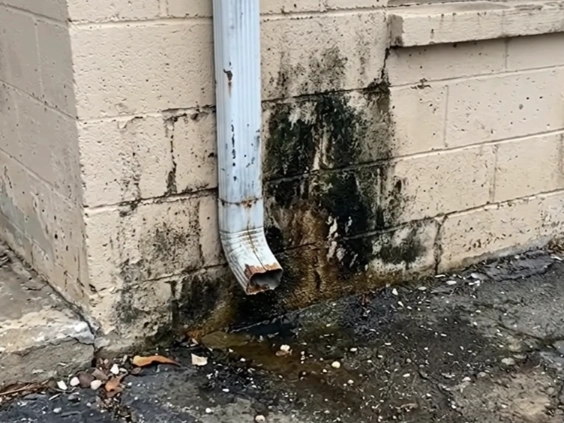
| Black growth at the bottom of an outside wall or around a downspout | Water pooling against the house | Gutters, downspout discharge, grading |
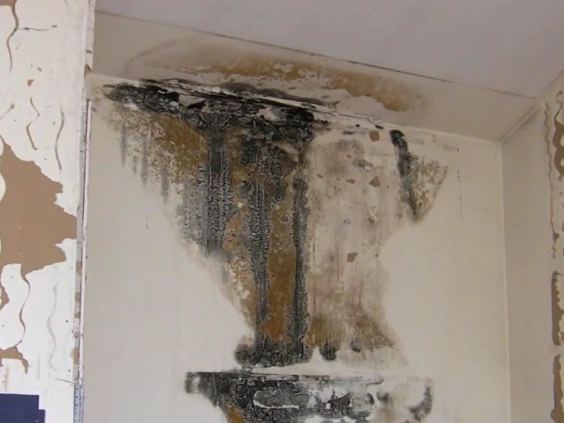
| Brown ring on a ceiling | A leak at some point. A stain alone is not mold | Is it still wet or still growing? |
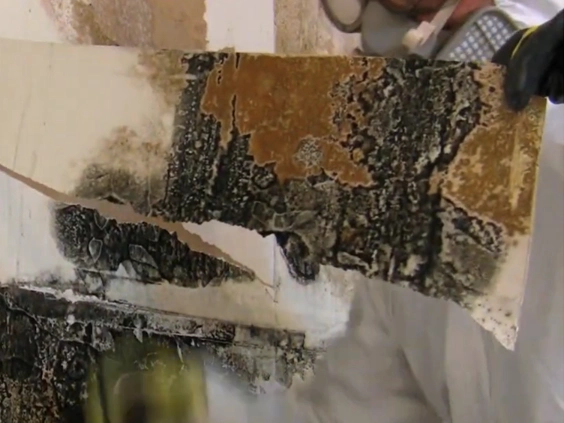
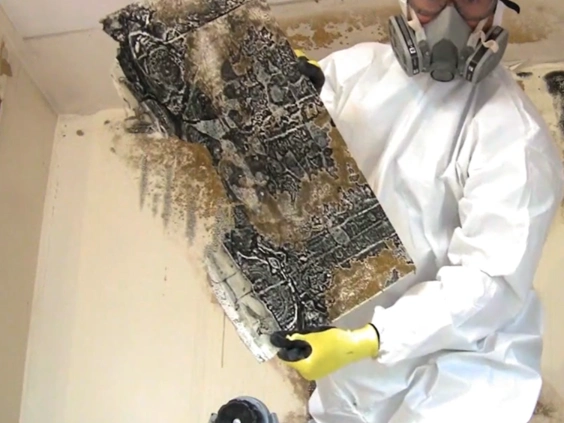
A water stain proves moisture was there. Mold needs it to keep going. Not sure which one you have? Our guide on mold vs mildew shows the difference, and black mold (Stachybotrys) explains why color alone tells you very little. Photos help us a lot: email them to us or call.
Can a Brand New Newberry Home Have Mold?
Yes, and it surprises people every time. Newberry’s population grew 48.3% between 2010 and 2020, and a lot of that growth is newer slab homes. New doesn’t mean mold-proof. These are the usual reasons, based on how houses are built and run in this climate:
- Construction moisture. Framing, drywall and a fresh slab hold water. If the house is closed up and cooled before things dry, that moisture has to go somewhere.
- A tight house. Newer homes leak less air, which saves energy but also means humid air that gets in stays in.
- An AC that cools fast but doesn’t dry. When a system is bigger than the house needs, it can hit the thermostat setting quickly and shut off before it has pulled much moisture out of the air. Ask your HVAC contractor if this could be you.
- Ducts in a hot attic. Cold ducts in a hot, humid attic sweat. That water lands on the insulation and roof decking.
| Home type | Typical moisture pattern | What we check first |
|---|---|---|
| Newer subdivision homes | AC closet and attic duct condensation, bath fans venting into the attic, window seals | AC closet, attic, duct insulation, bath fan ducting |
| Older homes near the historic district | Aging roofs and flashing, original windows, plumbing changed over the years | Roof and flashing, window sills, attic, plumbing runs |
| Rural lots on well and septic | Pump and tank closets, water heater leaks, yard drainage toward the house | Equipment closet, supply lines, downspouts, grading |
| Manufactured homes | Roof seams, plumbing under the floor, skirting that traps moisture | Roof seams, under-floor plumbing, ventilation under the home |
| Rentals and apartments | Shared walls, plumbing in neighboring units, slow repairs | Photos, dates, written notice to the landlord |
The reasons above are general building science, not claims about any one Newberry builder or neighborhood.
New house, old smell? A professional look finds the source.
☎ Call (352) 450-4030Where Does Mold Hide in a Newberry Home?
Six spots cover most of what we find. Look at the picture, then use the list under it as a walk-through.
- 1Attic ducts and deckingCold ducts in a hot attic sweat onto insulation and roof decking. Common in newer homes.
- 2AC closetThe coil and drain pan sweat all day. A clogged drain line wets the floor and the wall next to it.
- 3Plumbing wall behind an applianceA slow drip keeps drywall and framing damp behind the fridge, stove or sink.
- 4Window framesCondensation collects at the corners and sills and never fully dries.
- 5Bathroom ceiling and fanShowers add a lot of moisture. A fan that vents into the attic just moves it upstairs.
- 6Downspout and slab edgeWater pooling against the house wicks into the wall base and the bottom plate.
How do you check your AC closet?
Ten minutes, twice a year, with a flashlight:
- Look at the floor and the base of the unit for water, rust or a dark ring
- Check the drain pan and drain line for standing water
- Feel the insulation on the lines and ducts for dampness
- Look at the walls and baseboard around the unit for dark spots
- Smell the closet right after the AC has been running
If you see widespread growth, don’t scrub it. Take photos and call. Mold in the system itself is covered in our guide to mold in air ducts and HVAC, and the routine side is in our AC and mold prevention guide.
How Do You Fix Condensation in the Attic Before It Turns Into Mold?
Attic condensation is one of the most searched mold questions around here, and the honest answer is that it depends on where the water comes from. Fans on the roof, extra vents or new insulation can help in one house and do nothing in another. Work out the source first.
| Source | How it shows up | What usually fixes it |
|---|---|---|
| Cold ducts sweating in hot attic air | Damp insulation over the duct, drips, dark spots on the ceiling below | Sealing the ducts and correcting the duct insulation (an HVAC contractor’s job) |
| Bath fan or dryer vented into the attic | Wet decking and insulation near the fan, often a musty smell in the bathroom | Ducting the exhaust all the way outside |
| Roof leak or failed flashing | Stains that grow after storms, wet spots around vents and chimneys | Roof repair first, then the mold work |
| Poor attic ventilation | Warm, humid air that doesn’t move out | Correcting vents, as judged on site by the roofer or contractor |
If decking or insulation has stayed wet, the mold work is ours: containment, removal of what can’t be saved, HEPA cleaning and drying. See our attic mold removal page for how that goes.
Can Mold Grow Behind a Wall, the Fridge or Under the Sink in Newberry?
Yes, and it’s the sneaky kind. A drip every few seconds inside a wall doesn’t stain a ceiling or spike a water bill. It keeps drywall and framing damp, week after week, behind something heavy that nobody moves. When someone finally opens the wall, the growth is already well along.
Tip: if a musty smell is strong in one room and you can’t find a thing, check the other side of the wall. A bathroom wall often backs onto a kitchen, a laundry or a closet.
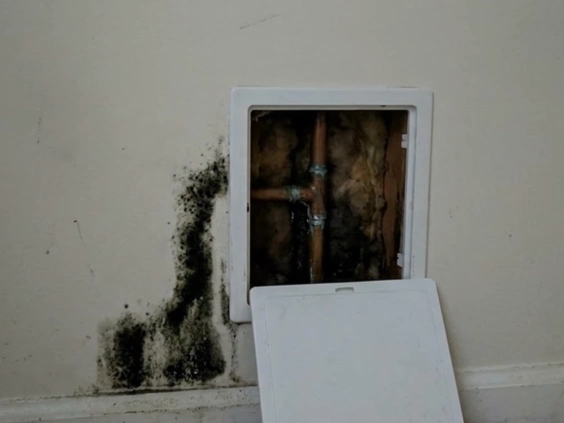
How a hidden leak shows up in the next room
A slow drip starts
A bad joint or worn fitting inside a wall or behind an appliance.
The wall stays damp
Drywall and framing soak it up. Nothing looks wrong from the front.
Growth builds out of sight
Behind the stove or fridge, where no one looks or cleans.
The smell shows up next door
Strong in a room with nothing visible. The source is on the other side.
Where to look around the house
| Spot | What can leak | Quick check |
|---|---|---|
| Refrigerator with an ice maker | The small water line and its fitting | Pull the fridge out. Look for a damp floor, a kinked line or dark wall behind it |
| Under sinks and the dishwasher | Supply lines and drain connections | Flashlight and a dry paper towel on every fitting |
| Washer hookups | Hoses and the wall box behind the machine | Check hoses for bulges and the wall box for staining |
| Water heater and well pump closet | Fittings, relief valve lines, pressure tank connections | Look for rust streaks, a damp floor or a musty closet |
| Shower and tub walls | Cracked grout, failed caulk, valve leaks | Press the wall below the tub. Soft means wet |
If drywall is soft when you press it, it has been wet a while. For a closer look at what to do when it’s already happened, see our water damage restoration page.
Why Is There Black Growth at the Bottom of My Outside Wall?
When a downspout dumps next to the house, the water doesn’t just run away. It soaks the base of the wall, the stucco, block or siding, and can wick up into the bottom plate and drywall inside. Out on the larger rural lots around Newberry, where yards are flat and often shaded, water can sit against a house for days after a storm.
- Point downspouts well away from the foundation, not at it
- Keep soil and mulch sloped away from the wall and below the siding
- Check inside the wall directly behind any dark outside patch
- After a heavy afternoon storm, walk the house and look for pooling
The outside growth is the clue. The question is whether water has already gotten in. That’s what the inspection answers. For storm and flood situations, our emergency mold and water response page lays out the first 48 hours.
Dark patches outside and a musty smell inside? Don’t wait for it to spread.
☎ Call (352) 450-4030What Should You Do First If You Find Mold in Your House?
Don’t panic and don’t start scrubbing. The first hour is mostly about not making it worse.
Stop the water
Shut off the leak, empty the pan, close the window. No new moisture, no new growth.
Photograph it
Wide shots and close ups with dates. Useful for insurance, a landlord or a second opinion.
Leave it alone
No scrubbing, no spraying, no fan blowing on it. Disturbing it spreads spores.
Dry the area
Open it up, run a dehumidifier. Wet materials need to dry within 24 to 48 hours.
Get it looked at
If it’s big, hidden or keeps coming back, call before you rebuild.
Do
- Fix the water source first
- Wear an N95, gloves and goggles if you must be near it
- Keep kids, pets and anyone with breathing problems out of the room
- Bag and remove soaked porous items like carpet and ceiling tiles
Don’t
- Paint or caulk over it
- Spray bleach or mix cleaners. Never mix bleach and ammonia
- Run a fan across visible growth
- Cut open a big wall without containment
If you also have a leak that happened because of a storm, read our emergency page and call. Timing matters.
Can I Remove Mold Myself, or Do I Need a Professional?
Usually fine to handle yourself
- Under about 10 sq ft on tile, sealed counters or other hard surfaces
- You know the cause and it’s fixed
- It hasn’t come back after one cleaning
- Nobody in the home has asthma, allergies or a weakened immune system
Better to call a pro
- More than 10 sq ft, or growth on drywall, wood, carpet or insulation
- Anything inside the AC closet, ducts or a wall
- A smell with no visible source
- It keeps coming back
- Infants, older adults or anyone with breathing problems at home
Does bleach kill mold? What about vinegar or other natural options?
Mold needs water, food and oxygen. You can’t take away the food (it’s your house) or the oxygen, so you take away the water. For a small hard-surface patch, the EPA suggests detergent or soap and water, then drying completely. It doesn’t recommend routine bleach or other biocides, and bleach does little for porous materials like drywall, where the roots go below the surface. If the moisture comes back, so does the mold, whatever you used.
Is mold dangerous even if it’s dead? Can I just paint over it?
Dead mold can still cause allergic reactions in some people, so wiping it off and leaving the source isn’t the end of it. Painting or coating over mold on a wet surface hides it, it doesn’t remove it. Take out what’s wet, fix the water, then finish.
What do you need for a small cleanup?
Nothing fancy: detergent, a soft brush, microfiber cloths, an N95 respirator, gloves, goggles and sealed trash bags. A simple hygrometer tells you if the room is too humid, and a dehumidifier helps if it is. Our small mold cleanup guide walks through the steps.
| It’s worth the call when | You can probably skip it when |
|---|---|
| The growth is large, hidden or inside the AC system | It’s a small hard-surface patch and the cause is fixed |
| You don’t know where the water is coming from | You found the leak, repaired it and it dried fast |
| It’s on drywall, wood or insulation that stayed wet | It’s surface spotting on tile or sealed grout |
| Someone at home has breathing problems | Nobody is sensitive and the area is small |
| You’re selling, buying or filing an insurance claim | You only need a quick wipe and a dehumidifier |
What Time of Year Is Worst for Mold in Newberry?
Summer into early fall. Newberry shares the Gainesville area’s climate: hot, humid and wet. The wet season runs from about June 1 to September 20, the muggiest stretch runs from early May through October, and hurricane season runs June 1 to November 30. Afternoon thunderstorms can drop a lot of rain in a short time, which is when roof, window and downspout problems show themselves.
Mold pressure through the year
Based on WeatherSpark data for the Gainesville area. A leak can start mold in any month, so treat this as a guide.
| When | What’s going on | What to do |
|---|---|---|
| Before May | The last stretch of drier air | Check the AC closet and drain line, the attic and the roof |
| June to September | Wet season, afternoon storms, constant humidity | Watch indoor humidity, check ceilings after storms, run bath fans |
| October and November | Still muggy at times, hurricane season ends November 30 | Look for damage from late season storms before cooler weather settles in |
| After a storm | Wet materials start growing in a day or two if they stay damp | Dry within 24 to 48 hours or call for help |
Should I set the AC to 80 or 85 to save money?
A warmer setpoint saves energy, but the AC dehumidifies less because it runs less. Check a hygrometer, aim for under 60% humidity and don’t leave the house closed up with the AC off for long. Our humidity guide and dehumidifier tips go into it.
How Much Does Mold Removal Cost in Newberry, FL?
You’ll find national averages all over the internet, and they’re a wide range for a reason: one bathroom ceiling and a whole attic aren’t the same job. We don’t price by phone. We look at the space first, then explain the scope. Here’s what shapes the job.
| What shapes the job | Why |
|---|---|
| Size of the affected area | More area means more containment, more material and more cleaning |
| What it’s growing on | Hard surfaces can be cleaned. Drywall, insulation and carpet usually have to come out |
| How hard it is to reach | Attics, crawl spaces and tight closets take more time and care |
| Containment and air filtration | Bigger or more dispersed growth needs more barriers and air scrubbing |
| Fixing the cause | A plumbing, roofing or HVAC repair is often a separate trade, but it has to happen |
| Rebuilding afterward | Putting drywall, paint and insulation back is usually separate from removal |
Does homeowners insurance cover mold removal in Florida?
Sometimes. Mold that follows a sudden, covered event is more likely to be covered. Long term humidity or a slow leak is commonly excluded, and many policies cap mold coverage. Your insurer makes the call, so read your policy, photograph everything and document the source.
Want to talk through your Newberry home? Start with a call.
☎ Call (352) 450-4030What Happens During Mold Removal in Newberry, Step by Step
Every job is a little different, but the order doesn’t change.
Inspect and find the source
Moisture readings, a look at the AC closet, attic, walls and outside, and the cause. Then a plan for the work.
Contain the area
Barriers go up and air filtration runs so spores don’t travel to clean rooms. The HVAC is handled so it doesn’t spread them.
Remove and clean
What can’t be cleaned gets bagged out. What stays is HEPA vacuumed and cleaned.
Dry and fix the cause
Dehumidifiers and air movers bring moisture down. The leak, drain or ventilation gets corrected.
Check and rebuild
A final check before anything goes back. An independent clearance check is available.
What does the removal stage look like?
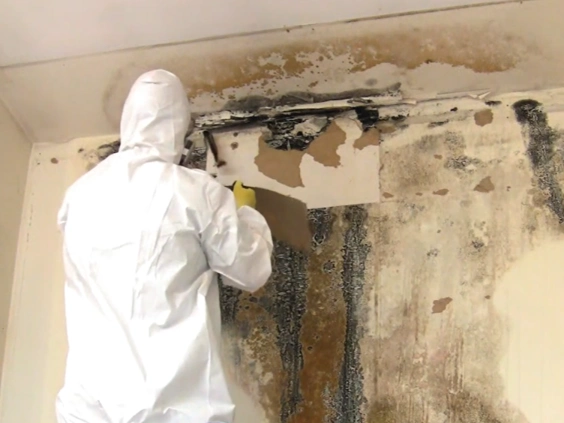
Crew members wear full protective gear: suit, respirator, gloves. Wet or growth-covered drywall is cut out in sections and bagged right there, and the cavity behind it gets checked for what’s feeding it. We look at both sides of the wall, because the problem is rarely only where you saw it.
You’ll know what’s happening each day, and nothing gets rebuilt until the area passes.
Do you need a mold test before removal?
Not always. For a small visible patch you can often go straight to cleanup. An assessment earns its place when the source isn’t obvious, the growth is hidden or the area is large. The CDC doesn’t recommend routine mold testing. Here’s how the roles split in Florida:
| Role | What they do | Good to know |
|---|---|---|
| Mold assessor | Evaluates the property and writes up what’s found and what needs to happen | Useful when the source isn’t clear or you want an independent opinion |
| Mold remediator | Does the containment, removal, cleaning and drying | That’s us |
| Independent clearance check | A separate check that the area is ready to be rebuilt | Florida keeps assessment and remediation separate: one company can’t do both on the same property within 12 months (Fla. Stat. 468.8419) |
The full breakdown is on our mold remediation process page. Dealing with black growth specifically? See black mold removal.
Mold, Home Sales and Rentals in Florida: What Newberry Owners and Tenants Ask
These are general information, not legal advice. Talk to a Florida real estate attorney for your situation.
Is it illegal to sell a house with mold in Florida?
No, but you can’t hide it. Under Johnson v. Davis, a seller who knows of facts that materially affect the value of the home and that a buyer can’t easily see must disclose them. Mold with a known cause usually falls in that bucket.
Ask your agent or attorney how to handle it before listing.I’m renting and found mold. Can I break my lease?
Start in writing. Tell the landlord what you found, attach dated photos and keep a copy. Florida law sets landlord maintenance duties for residential rentals, but what you can do about the lease depends on the lease and the facts.
See Fla. Stat. 83.51 and consider legal aid or an attorney.Who pays for mold cleanup, the landlord or the tenant?
It depends on the lease, the cause and the notice given. A leak the landlord was told about and didn’t fix is a different situation from damage caused by something the tenant did. Documentation helps either side.
We can write up what we find so everyone is working from the same facts.How Do You Find a Fair, Honest Mold Removal Company Near Newberry?
Plenty of people ask for a local company that isn’t a big corporate franchise and will treat you fairly. Fair enough. Here’s how to compare proposals, whoever you call:
- Is the scope written down: what’s being removed, where, and how it’s contained?
- Does it include finding and fixing the cause, or only the visible mold?
- Do they take photos before and after?
- Do they tell you when it’s a DIY patch?
- Do you get a clear answer on what’s separate, like rebuilding and repairs?
Gainesville Mold Rescue is based at 1201 E University Ave in Gainesville and serves Newberry and the rest of Alachua County. We look first, explain the scope and tell you when the answer is “you can handle this.” Read about us or see what neighbors say in the homepage reviews.
Three Mold Stories That Fit Newberry Homes
These are illustrative examples based on common patterns, not specific past clients. What they share: no flood, no disaster, just slow moisture in a place nobody was looking.
The newer house with a musty hallway
A few years old, nothing visibly wrong, but a smell every time the AC cycled on. The air handler closet had a damp base and the drain pan wasn’t draining well. The house was cool but never really dry.
Fix: clear the drain, deal with growth in the closet, look at humidity and airflow.The wall behind the fridge
Strong smell in a kitchen corner, nothing to see. A slow leak at the ice maker line had kept the wall damp behind the refrigerator for months, and the drywall was soft.
Fix: repair the line, remove the wet drywall, dry the cavity.The downspout that fed the wall
Black growth on the outside block at one corner and a musty closet on the inside of that same wall. The downspout was emptying right against the foundation.
Fix: move the water away, remove affected material inside, dry the wall.How Do You Keep Mold From Coming Back in a Newberry Home?
- Open the AC closet twice a year and keep the drain line clear
- Keep indoor humidity under 60%, ideally 30 to 50%, and check it with a hygrometer
- Make sure bath fans vent outside, not into the attic, and run them after showers
- Point downspouts away from the house and keep soil sloped away from the wall
- Look at the attic and ceilings after storms
- Check behind the fridge and under sinks when you clean
- Fix drips as soon as you see them and don’t wait for a stain
Weekend homework: open the AC closet, look behind the refrigerator, and walk the outside of the house after the next big storm. Half an hour. The full room by room list is in Mold Prevention Tips for Gainesville, and the seasonal calendar helps you plan.
Mold Removal Around Newberry, FL and West Alachua County
We cover Newberry (ZIP 32669) and the nearby communities, from the historic district and the Newberry Road (State Road 26) corridor to the areas around Champions Park, the Easton-Newberry Sports Complex, Dudley Farm and the farm and horse properties on the edge of town. We also work toward Jonesville and Tioga on the Gainesville side. Confirm coverage for your exact address when you call.
- 32669 Newberry
- 32615 Alachua
- 32643 High Springs
- 32618 Archer
- 32667 Micanopy
- 32641 Gainesville (our base)
Based in the city? Head to our Gainesville mold removal homepage. Other topics: crawl space mold, mold and health effects and the resources page.
Worth a look next: dry ice blasting for studs and joists, the Aspergillus and Cladosporium guides, and trauma and crime scene cleanup if the damage came from something other than water.
Newberry Mold Removal: Your Questions Answered
Short answers to the questions people ask most. Don’t see yours? Call (352) 450-4030.
Do you offer mold removal in Newberry, and how fast can you get there?
Yes. We serve Newberry and the rest of Alachua County from our Gainesville base and offer professional look. We’ll confirm timing for your address when you call.
I smell mold but can’t see any. Where should I look?
Start with the AC closet, the attic, under sinks and behind the fridge or stove. Check the other side of the wall where the smell is strongest. If you still can’t find it, an inspection with moisture readings usually does.
Can a new house in Newberry have mold?
Yes. Construction moisture, a tight house, an AC that cools without drying the air and sweating attic ducts can all cause it. A newer house is not automatically a dry one.
How do you treat condensation in the attic?
Find the source first: sweating ducts, a bath fan venting into the attic, a roof leak or poor ventilation. Each has a different fix. If the decking or insulation has stayed wet, the mold has to be removed too.
Can mold in the AC spread through the house?
It can. The system moves air through the whole home, so growth near the air handler can reach other rooms. If equipment has to come out, that’s an HVAC contractor’s job, and the mold cleanup is ours.
Can mold grow behind a wall, a stove or a refrigerator?
Yes. A slow leak at a water line or a fitting can keep a wall damp for months without any stain. If a smell is strong in one room and nothing is visible, check the other side of the wall.
How much does mold removal cost in Newberry and Florida?
It depends on the size of the area, how hard it is to reach, how much material has to come out and what needs fixing so it doesn’t return. A provider has to see the space first, so expect a conversation about scope before any pricing.
Does homeowners insurance cover mold removal in Florida?
Sometimes. Mold after a sudden, covered event is more likely to be covered, while long term humidity or a slow leak is commonly excluded. Many policies cap mold coverage. Your insurer decides, so read your policy and document the source.
Does bleach kill mold, and what naturally kills it?
Nothing replaces fixing the moisture. For a small hard-surface patch, the EPA suggests soap or detergent and water, then complete drying. It doesn’t recommend routine bleach or other biocides, and bleach does little on porous materials like drywall.
Can I paint over mold or use a mold-blocking paint?
Not as a fix. Coating mold on a wet surface hides it and it can come back through. Remove what’s wet, fix the water, let it dry, then finish.
Should I hire a professional or do it myself?
If it’s under about 10 square feet on a hard surface and the cause is fixed, many homeowners handle it with gloves, goggles and an N95. Call a pro for larger, hidden or recurring growth, anything in the AC system or a wall, or if someone at home has breathing problems.
Do I need a mold test before removal?
Not always. The CDC doesn’t recommend routine testing. An assessment helps when the source is unclear. Florida keeps assessment and remediation separate, so if you want an independent clearance check, we point you to one.
Is it illegal to sell a house with mold in Florida?
No, but sellers can’t hide it. Under Johnson v. Davis, a seller who knows of facts that materially affect value and that a buyer can’t easily see must disclose them. Ask your agent or a Florida real estate attorney. This isn’t legal advice.
I’m renting and found mold. What do I do?
Tell the landlord in writing, keep photos and dates, and don’t wait. Florida law sets landlord maintenance duties for residential rentals, though the details depend on your lease. This isn’t legal advice.
Can mold ever be fully removed from a house?
Mold spores are everywhere outdoors and indoors, so the goal isn’t zero. The goal is no active growth, which means removing what’s growing and fixing the moisture. Keep humidity under 60% and it stays that way.
What should I expect during mold removal?
An inspection to find the source, containment, air filtration, removal of materials that can’t be cleaned, HEPA vacuuming and cleaning, drying and a final check before rebuilding. The scope is worked out after the first look.
Will mold come back after removal?
Only if the moisture does. Removal clears the mold that’s there. If an AC drain, a leak, a downspout or high humidity caused it, that has to be fixed too.
More reading: mold vs mildew, black mold removal and mold in air ducts and HVAC.
Ready to Talk to Someone in Newberry?
If you smell something when the AC starts, found dark spots on a ceiling or want someone to look behind the fridge, call Gainesville Mold Rescue. We’ll tell you what the problem needs, including when the answer is “you can handle this.”
Call now to talk it through.
Sources
- U.S. EPA: A Brief Guide to Mold, Moisture and Your Home
- U.S. EPA: Mold Cleanup in Your Home
- Florida Department of Health: Mold
- Florida Statute 468.8419: mold-related services
- Florida Statute 83.51: landlord obligation to maintain premises
- Florida Realtors: Disclose, Disclose, Disclose (Johnson v. Davis)
- WeatherSpark: Average Weather in Gainesville, Florida
- Wikipedia: Newberry, Florida