
Dry Ice Blasting for Mold Removal in Gainesville, FL: What It Can Do and What It Cannot
You have probably seen the videos. Pellets of frozen CO2 shoot out of a gun, black mold lifts off the wood, and nothing gets wet. It is real, and in the right spot it works well. It is also not a shortcut around containment, moisture control or tearing out soaked drywall. Here is the honest version, written for Gainesville homes and buildings.
- Built around EPA mold guidance
- Honest about when it does not fit
- Serving all of Gainesville, FL
Reviewed October 2026 by the Gainesville Mold Rescue team
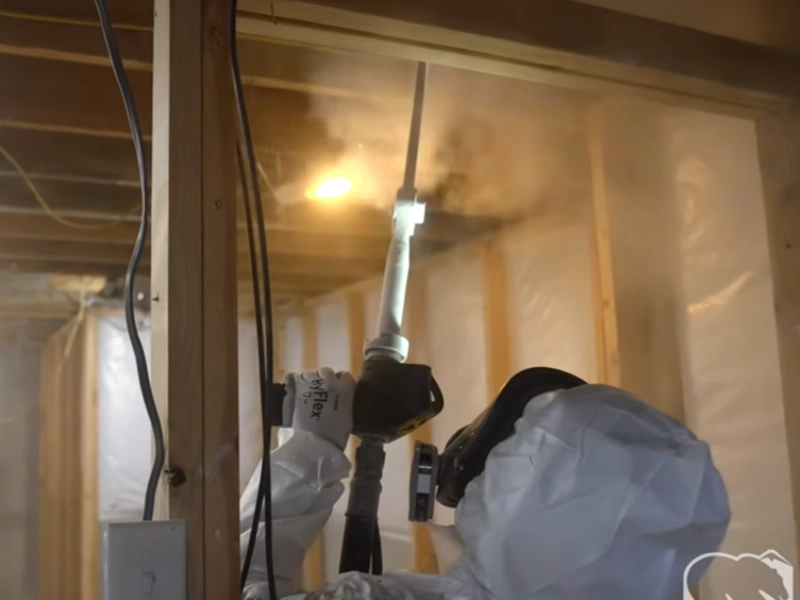
What Is Dry Ice Blasting for Mold Removal, and How Does It Work?
What actually happens when a pellet hits the wood?
- Impact. The pellet hits fast, and that force dislodges growth from the surface.
- Cold shock. The sudden chill makes the contaminant brittle so it lets go of the material underneath.
- Sublimation. The pellet turns to gas on contact. Equipment makers say the gas takes up hundreds of times the space of the pellet, which helps lift debris off the surface.
- No leftover media. Unlike sandblasting or soda blasting, there is no grit to sweep up. The mold debris still has to be captured, which is why the air filtering matters.
A heads up on search results: some pages that mention dry ice blasting and “mold” are about cleaning rubber and tire molds in factories. This page is about mold growing in homes and buildings.
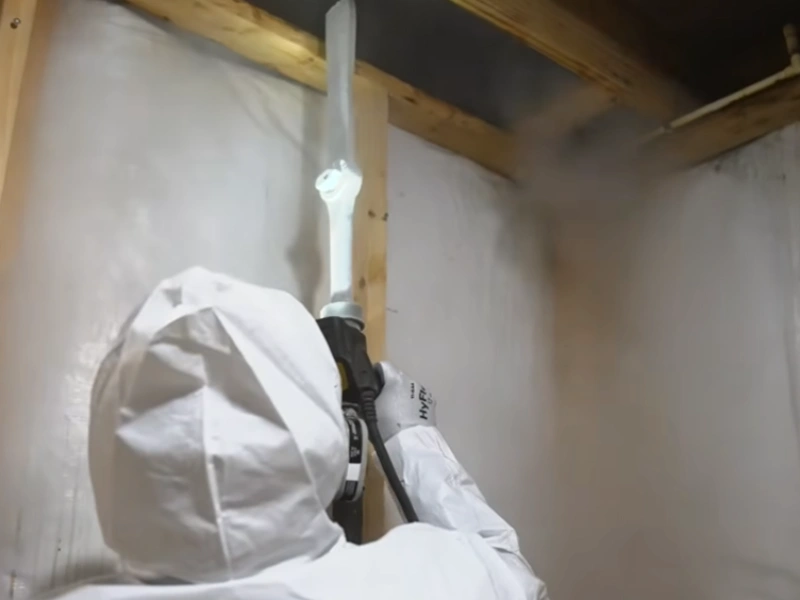
A trained crew works in protective gear inside a sealed area.
Does Dry Ice Blasting Kill Mold or Just Remove It?
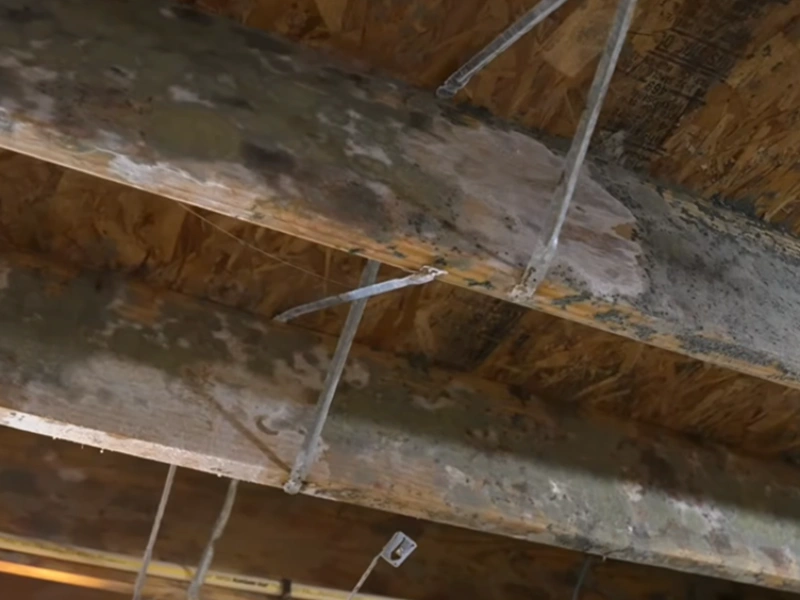
Growth on framing is what blasting is best suited to.
Why does the “root” matter on wood?
Mold on rough lumber is not just a stain on top. It works into the grain. Wiping or painting over it leaves material behind that can wake up with the next humid week. Blasting reaches into that texture better than a wire brush or a rag, and it does it without wetting the wood. That is the real advantage.
The catch is that nothing about blasting fixes the reason it grew. If the roof leaks, the AC drips or the crawl space stays damp, the mold will be back no matter how clean the wood looks on day one. For the moisture side, see our water damage restoration page.
Where Does Dry Ice Blasting Work Best on a Mold Job?
Attic framing and roof decking
Rafters, trusses and the underside of the sheathing, where mold often follows an AC condensation or roof leak problem. See our attic mold removal page.
Crawl space joists and sill plates
Solid wood under older Gainesville homes that has held moisture for years. See crawl space mold removal.
Concrete and masonry
Slab edges, block walls and foundation surfaces that can take the impact without damage.
Older and historic wood
Framing in older homes where sanding would remove too much material and chemicals are not welcome.
Soot and some equipment surfaces
Fire cleanup and hard to reach mechanical surfaces, with the right controls in place.
HVAC components, case by case
Sometimes used on accessible parts. Ducts have their own rules, covered on our air duct and HVAC page.
Where does dry ice blasting not belong?
| Material | Why blasting is the wrong tool |
|---|---|
| Drywall with growth through the paper and gypsum | Porous and soaked through. EPA guidance is to remove and replace it. |
| Wet or moldy insulation | Cannot be cleaned. It comes out and gets bagged. |
| Ceiling tile and carpet padding | Disposable materials that are easier to replace than to treat. |
| Wood that is soft, rotted or still wet | Rot is structural damage, not a cleaning problem. Wet wood has to be dried or replaced first. |
| Fragile finishes, old glass and thin plastics | Thermal shock and impact can damage them. |
A good rule of thumb: if the material is solid, dry and worth keeping, blasting is on the table. If it is porous and wet, it is going in a bag.
Is Dry Ice Blasting Safe for Mold Removal?
What are the real risks?
- Spores in the air. The blast disturbs mold and can send spores and fragments flying. That is why EPA style containment (sealed poly walls, a controlled entry and HEPA negative air) comes before the blaster ever starts.
- CO2 buildup. The pellets turn to gas, and in a small closed space that gas can push out breathable air. OSHA’s eight hour limit for CO2 is 5,000 parts per million, so crews use personal monitors and extra ventilation.
- Noise. Blasters are loud, commonly reported above 100 decibels. Hearing protection is required, and OSHA’s hearing conservation level starts at 85 decibels.
- Cold burns. Dry ice is about minus 109 degrees. It needs insulated gloves and face and eye protection. Bare skin and dry ice do not mix.
- Pressure and moisture. Compressed air injuries are a real hazard, and the cold can pull a little condensation onto surfaces in humid air, so everything gets dried and checked afterward.
- Pressure inside the building. Gas expansion pushes air around. Crews balance exhaust and supply machines so the work area still pulls air in, not out.
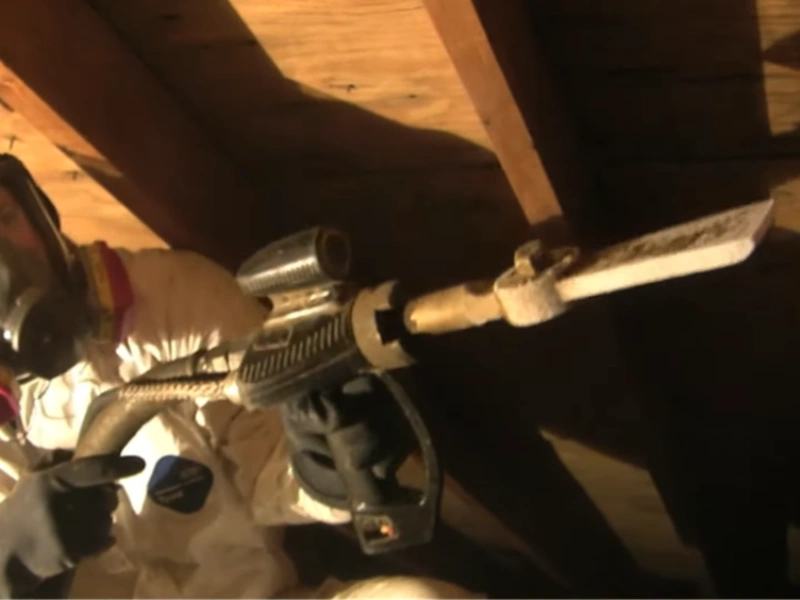
The blast gun is simple to point and hard to use safely without the setup around it.
How Does a Dry Ice Mold Removal Job Work Step by Step?
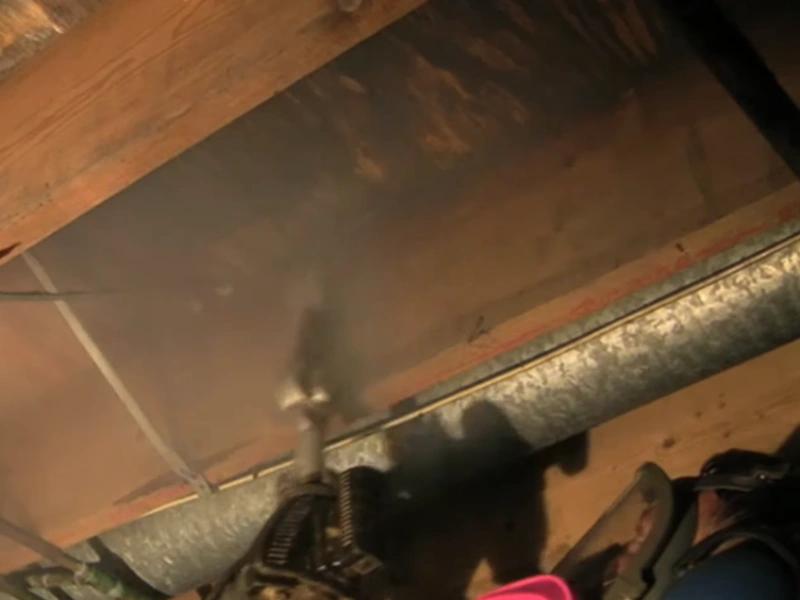
Containment first, blasting second, cleanup and checks last.
Blasting is one step in the middle of a longer job. This is the order a careful crew follows, built on EPA mold guidance and the way these jobs are set up on site.
Notice what comes before the blaster. Most of the real work of a mold job is finding the water, protecting the rest of the house and verifying the result.
Moisture meters and a thermal camera show what is wet and where it came from. A roof leak, AC condensation, a plumbing drip or damp crawl space air each need their own fix.
Solid, dry framing and concrete are candidates. Wet drywall, insulation and soft wood are not. For bigger or sensitive jobs, an independent assessor writes the protocol first.
Stop the leak, dry the structure and bring humidity down. Blasting wet wood just invites the problem back.
Contaminated insulation, drywall and similar porous materials come out first, bagged and carried out sealed.
Poly walls, a zippered entry and HEPA machines create negative pressure. Supply air and exhaust are balanced, and a pressure gauge confirms it.
Respirators, disposable suits, hearing and eye protection, insulated gloves and a personal CO2 monitor. In attics and crawl spaces, a second person stays outside as a spotter.
The crew works the framing in passes, adjusting pressure and pellet rate so the wood is cleaned without being cut up. Textured lumber gets extra attention.
Loosened debris settles. It gets vacuumed from every surface, floor and ledge with HEPA equipment, not swept.
Moisture readings confirm the wood is dry. Visual checks follow, and bigger jobs get independent post remediation verification, with a written result.
Seal air leaks, fix ventilation or the crawl space moisture, adjust the AC, and only then consider a sealer. Our mold encapsulation page explains when coatings make sense.
What Does Mold Look Like Before and After Dry Ice Blasting?
Wood that has been blasted usually looks lighter and cleaner than wood that has been wiped or sanded. Color alone does not tell you the job is done, though. Moisture readings and clean air checks do.
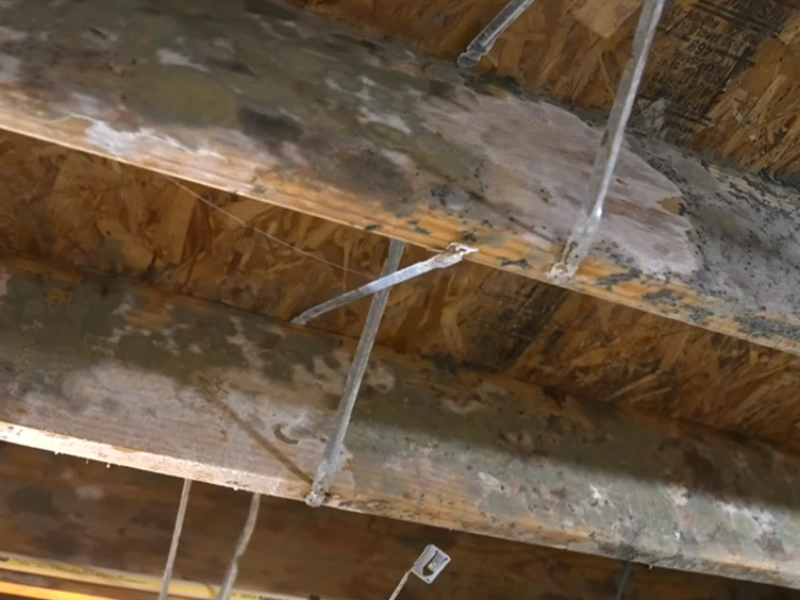
Before dry ice blasting
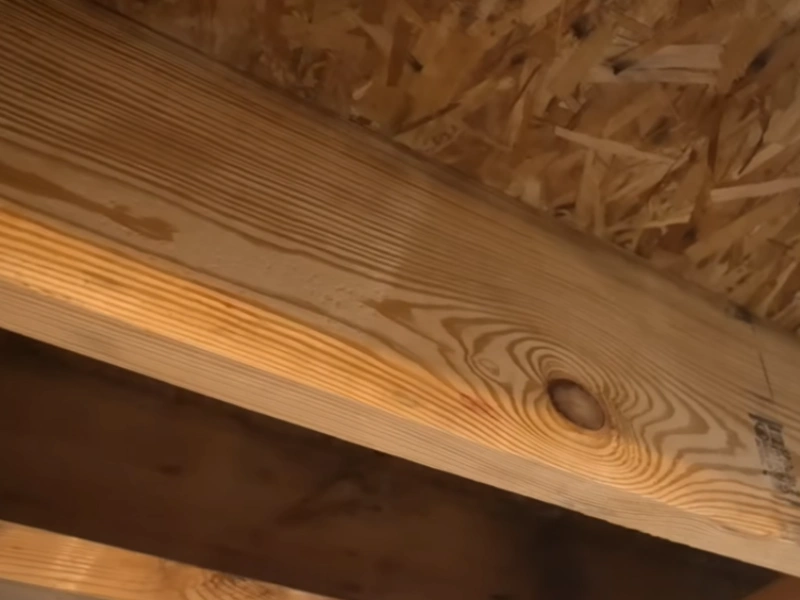
After dry ice blasting
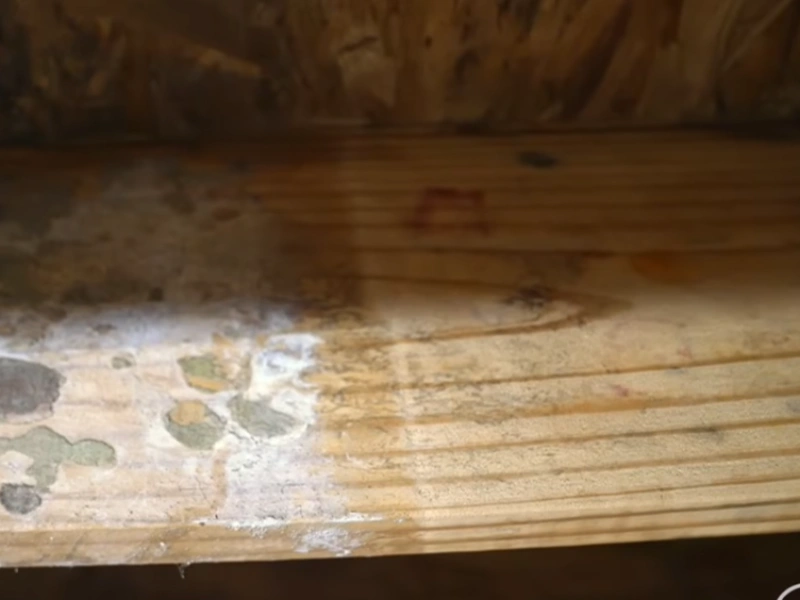
Before and after comparison
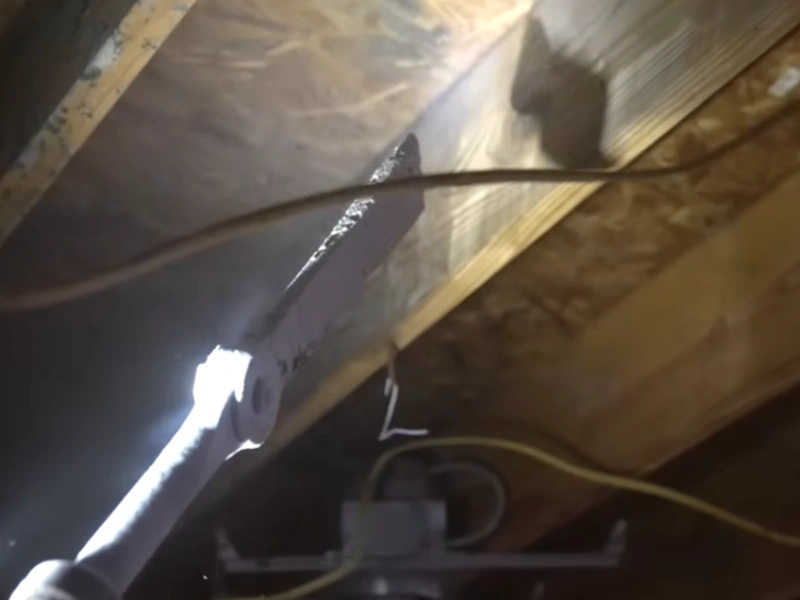
A second before and after comparison
How Does Dry Ice Blasting Compare With Soda Blasting, Sanding and Wet Cleaning?
| Method | Good at | Watch out for |
|---|---|---|
| Dry ice blasting | Cleaning rough wood and masonry with no leftover media and no added water | CO2 buildup, noise, cold, spore dispersal; needs full containment; specialized equipment |
| Soda blasting | Gentle cleaning on many surfaces | Leaves residue that has to be removed afterward |
| Sandblasting or similar abrasives | Aggressive stripping | Cuts into wood, creates a lot of dust and debris to collect |
| HEPA vacuum, sanding and wire brushing | The standard, proven approach on framing | Slower and more labor, though very effective when done under containment |
| Damp wiping with detergent | Hard, non porous surfaces | Not suited to rough lumber; adds moisture |
| Fogging or painting over | Looks quick | Does not remove the mold. Not what EPA guidance calls for |
Plenty of excellent mold jobs are done with HEPA vacuums, brushes and sanding and never touch a blaster. Dry ice is a choice, not a requirement. We would rather tell you that than sell you the fancier tool.
What Equipment and Materials Are Used in Dry Ice Mold Removal?
Blasting equipment
A pellet blaster, a hose and gun, and an air compressor sized to the machine. Pellet size, air pressure and feed rate are adjusted for the wood.
Dry ice pellets
Solid CO2, supplied cold and used within hours because it keeps turning to gas. Local industrial gas suppliers carry it, but a job still needs delivery planning.
Containment
6 mil poly sheeting, zipper doors, tape and a decon area to seal the work zone.
Air control
HEPA negative air machines, HEPA supply machines to balance flow, extra scrubbers near the blaster and a manometer to check pressure.
Personal protection
Respirators, disposable suits, hearing and eye protection, insulated gloves and a personal CO2 monitor.
Cleanup and verification
HEPA vacuums, moisture meters, a thermal camera and, on bigger jobs, independent sampling and a written clearance result.
How Much Does Dry Ice Blasting for Mold Cost in Gainesville?
| What shapes the job | Why |
|---|---|
| Square footage and access | Tight crawl spaces and steep attics slow everything down. |
| Containment and air machines | More poly, more HEPA machines and monitors add time and complexity. |
| Dry ice use | Pellets are consumed quickly and cannot be stockpiled, so media supply matters. |
| Mobilization | Crews that bring a blaster in from out of town need extra setup time. |
| Tear out and rebuild | Removing wet drywall or insulation is separate work. |
| Testing and verification | Independent assessment and clearance are separate from the removal. |
How much does 100 lb or 500 lb of dry ice cost?
Suppliers set their own prices by volume and delivery, so ask a local supplier for today’s number. A blaster can use roughly 88 pounds an hour at typical settings, so the media adds up fast on a long day. Use this to understand the math, not to plan a DIY job.
What are the downsides of dry ice blasting?
- It does not fix moisture. The source still has to be found and corrected.
- It is not for porous materials. Drywall and insulation get removed.
- It needs full containment. Spores can travel without it.
- CO2, noise and cold hazards. Real training and monitors are required.
- It can be more involved than brushing and HEPA vacuuming. Equipment, media and setup add time.
- Not every crew offers it. Ask whether they own the machine and who has actually run it.
What Do the Standards and Florida Law Say About Mold Cleaning Methods?
- EPA guidance is method neutral and moisture first. The EPA’s commercial and residential guides center on controlling moisture, containing the work, and physically removing mold. They do not recommend biocides as a routine step.
- The industry standard asks for containment and verification. The IICRC S520 mold standard describes containment, HEPA air control, removal of porous materials and independent verification. It does not hand blasting a free pass around any of that.
- Florida regulates the professionals. Under Fla. Stat. 468.8419, remediating more than 10 contiguous square feet generally has to be done by a licensed professional, and the assessor who writes the protocol cannot be the one who performs the remediation on the same property within 12 months.
- No set limits for airborne mold. EPA states there are no federal standards for acceptable mold levels, and we know of no Florida standard either, so a good result is judged against the written protocol.
- Insurance depends on the cause. Many policies cover mold after a sudden covered loss and limit it for long term leaks. Under Florida Statute 627.70132, notice of a new or reopened property claim is generally due within one year of the date of loss. Check your policy.
What Could Dry Ice Blasting Look Like in Gainesville’s Older Homes and Landmarks?
Would dry ice blasting suit an older home in the Duckpond or Pleasant Street neighborhoods?
Many older Florida homes, including those in Gainesville’s historic neighborhoods, were framed with dense old growth pine that is worth saving. Sanding it takes off material you cannot put back, and chemical treatments soak in. If the problem is surface growth on dry rafters and joists, blasting under full containment is a reasonable option to discuss. If the wood is soft or the house has a hidden plumbing leak, the answer changes to repair first. Historic district rules may also apply to exterior work, so the city is worth a call before any structural changes.
What about an attic in a newer subdivision off Newberry Road or in Haile Plantation?
Picture a 1990s or 2000s attic where an old AC drain line dripped for a summer and the roof decking and trusses have patchy mold. This is a classic fit: solid framing, hard to reach corners, no wet drywall to deal with. The order still matters: fix the drain line, remove soaked insulation, contain, blast, vacuum, dry and verify. Gainesville summers make attics brutal to work in, so crews limit time inside and watch the CO2 monitor.
How would a crew approach an older building near downtown or the University of Florida?
Around Depot Park, Midtown and the UF campus area, many buildings mix older wood framing with newer systems. A job near Century Tower or the busy Archer Road corridor is as much about logistics as mold: access, loading, noise limits, neighbors, and keeping the rest of the building in use. Containment, negative air and a written scope still come first, and the crew works after hours when it can.
How do Gainesville’s environment and climate affect the choice?
The Gainesville area sits on limestone with groundwater not far below the surface in many places, and Paynes Prairie, Newnans Lake and the Devil’s Millhopper area are reminders of how much water moves under and around town. Combine that with humid air from May through October, a wet season that peaks June through September, and hurricane season from June 1 to November 30, and crawl spaces and attics stay at risk. Cleaning the wood without drying the space is a short lived win.
Where Do We Help With Dry Ice Blasting Questions in Gainesville, FL?
All of Gainesville, including Downtown, Midtown, Northwest and Southwest neighborhoods, Haile Plantation, Millhopper and the UF area, plus the surrounding county.
Gainesville ZIP codes
- 32601
- 32603
- 32605
- 32606
- 32607
- 32608
- 32609
- 32641
Nearby communities
Why Call Gainesville Mold Rescue Before You Book a Dry Ice Blaster?
Because the best answer might be “you do not need it.” Tell Gainesville Mold Rescue what you are seeing, where and for how long, and send photos. We will help you sort out whether this is a dry ice candidate, a HEPA and brushing job, or a moisture problem first, and then connect you with a mold remediation provider serving the Gainesville area.
- Straight talk on whether blasting fits your surfaces.
- The questions to ask about containment, CO2 monitoring and who owns the equipment.
- A push toward a written scope, moisture readings and a documented finish.
Dry Ice Blasting for Mold Removal FAQ for Gainesville Homeowners
How much do people charge for dry ice blasting?
Dry ice blasting is priced by the crew that performs it, and a mold job also needs containment, air control, cleanup and verification, so real Gainesville pricing comes after an inspection.
What are the downsides of dry ice blasting?
It does not fix moisture, it is wrong for porous materials like drywall and insulation, it needs full containment, it brings CO2, noise and cold hazards, it can be more involved than brushing and HEPA vacuuming, and not every crew offers it.
How much does 100 lb or 500 lb of dry ice cost?
Suppliers set their own prices by volume and delivery, so ask a local supplier. A blaster can burn through about 88 pounds an hour, so media adds up quickly.
Does dry ice blasting remove mold completely?
It removes mold from solid surfaces like framing and masonry very effectively when done under containment, but it does not chemically kill mold and it cannot clean porous materials that are soaked through. Lasting results depend on fixing the moisture and verifying with readings and a written result.
Is dry ice blasting better than sanding or soda blasting for mold?
It is not automatically better. It leaves no media behind and adds no water, which helps on rough wood. Sanding and wire brushing with HEPA vacuuming are proven and often simpler, and soda blasting leaves residue to remove. The right choice depends on the surface and the setup.
Can I do dry ice blasting for mold myself?
We do not recommend it. Renting a machine does not give you containment, HEPA air control, respirators, a personal CO2 monitor or hearing protection, and the blast can spread spores through the house. CO2 can also build up in attics and crawl spaces.
Do you still need containment with dry ice blasting?
Yes. The blast disturbs mold, and the CO2 gas pushes air around. EPA style containment with poly walls, a controlled entry and HEPA negative air is what keeps spores out of the rest of the building. Equipment makers’ own safety guidance calls for it too.
Does dry ice blasting work on drywall?
Generally no. Mold that has grown through the paper and gypsum, or drywall that stayed wet, is removed and replaced under EPA guidance. Blasting is meant for solid surfaces.
Is dry ice blasting safe for my family and my house?
With containment, air control and monitoring it can be done safely by trained crews, but people and pets should stay out of the work area and may need to stay elsewhere for the loudest, dustiest days. Plan the timing with the crew and keep HVAC isolated from the work zone.
Will mold come back after dry ice blasting?
It can if the moisture problem stays. Clean wood still grows mold when roof leaks, AC drips, crawl space humidity or poor attic ventilation continue. EPA advises keeping indoor humidity below 60 percent, ideally 30 to 50 percent, and drying wet materials within 24 to 48 hours.
Does homeowners insurance cover dry ice blasting for mold in Florida?
Coverage depends on your policy and the cause. Many policies cover mold after a sudden covered loss and limit or exclude it from long term leaks or humidity. Under Florida Statute 627.70132, notice of a new or reopened property claim is generally due within one year of the date of loss. Policies vary, so check yours.
Who does dry ice blasting for mold removal in Gainesville?
Not every mold company here offers it, and some bring equipment in from elsewhere. Ask whether the crew owns or rents the blaster, who has run it before, how they contain the work, how they monitor CO2 and what they provide at the end. Gainesville Mold Rescue can point you to a provider serving the area and help you ask the right questions.
Not Sure If Dry Ice Blasting Fits Your Mold Problem?
Call Gainesville Mold Rescue, tell us what you see and where, and send photos of the framing, attic or crawl space. We will help you work out what the job really needs, including when the answer is not dry ice.
Sources and further reading
- U.S. EPA: Mold Cleanup in Your Home
- U.S. EPA: Mold Remediation in Schools and Commercial Buildings, Chapter 3
- OSHA: Mold
- University of Utah: Working Safely With Dry Ice
- Florida Department of Health: Mold
- University of Florida EH&S: Mold Remediation Guidelines
- Florida Statute 627.70132: property insurance claim notice
How this site works: gainesvillemoldremoval.net is a local information and referral service, not a contractor. When you call, we connect you with a mold remediation provider serving the Gainesville area. Nothing here is legal or insurance advice.