
Emergency Mold Removal in Gainesville, FL: What to Do in the First 24 to 48 Hours
Water on the floor, a ceiling stain that is spreading, or mold you just found behind a wall. The next two days decide whether this stays a drying job or turns into a mold job. Here is what actually needs to happen right now, what can wait, and when to pick up the phone.
- Built for Florida’s humid climate
- Follows EPA & CDC guidance
- Serving all of Gainesville, FL
Reviewed October 2026 by the Gainesville Mold Rescue team
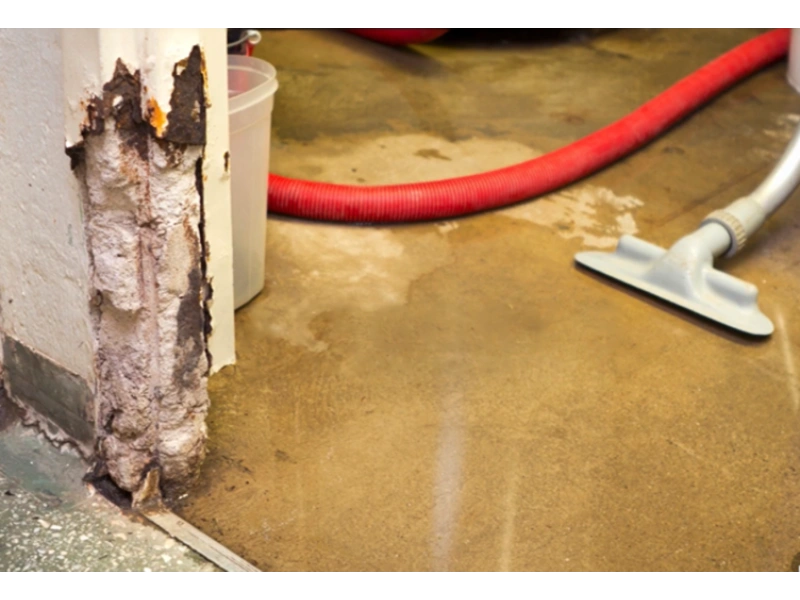
Is Mold Really an Emergency? When You Need Help Today vs. This Week
You will see “24/7 emergency mold removal” everywhere, and sometimes that is exactly right. Other times it is a way to rush you. The honest test is whether water is still doing damage.
| Call today | You can plan the job this week |
|---|---|
| Active leak, burst pipe, roof leak or storm water you cannot stop | Small, dry, old spotting with no active moisture |
| Sewage backup or flood water, which is contaminated | Mold on a hard surface, under about 10 square feet, with the cause fixed |
| Wet drywall, insulation, carpet or subfloor that has not dried in 24 to 48 hours | A musty smell in a space you can inspect, with no visible water damage |
| Mold across more than about 10 square feet, or growing back after cleaning | Routine humidity or condensation near a window or bathroom |
| Water or mold near the air handler, return or ductwork | Planning a rental or pre-sale inspection |
| Anyone in the home with asthma, a weak immune system, or a baby, with mold indoors | Cosmetic staining on tile or grout |
What Should You Do in the First Hour After Water Damage or Finding Mold?
- Stay safe first. If water is near outlets, appliances or the panel, turn off power to that area from the breaker, and stay out of standing water that could be energized.
- Stop the source. Shut off the main water valve for a pipe or appliance leak. For a roof leak, tarp or contain what you can safely reach.
- Take photos and video of everything before you move or throw it away. You will need them for an insurance claim.
- Get the water out. Mop, wet-vac and pull wet rugs, pillows and boxes out of the room. Lift furniture off wet carpet and place foil or plastic under the legs.
- Start drying. Run a dehumidifier and open the room to airflow. In Gainesville’s humidity, drying with outdoor air on a wet summer day often makes it worse, so use dehumidification and AC.
- Use the HVAC carefully. If the air handler, ducts or returns got wet, or if you can see mold, do not run the system until it has been checked. Do not point fans straight at visible mold.
- Contain the area. If mold is visible, close the door and tape plastic over the opening and vents if you can do it without disturbing the growth.
- Call someone if any item in the “call today” column above fits.
Not sure what you are looking at? Send us a photo when you call. Our guide to mold vs. mildew can also help.
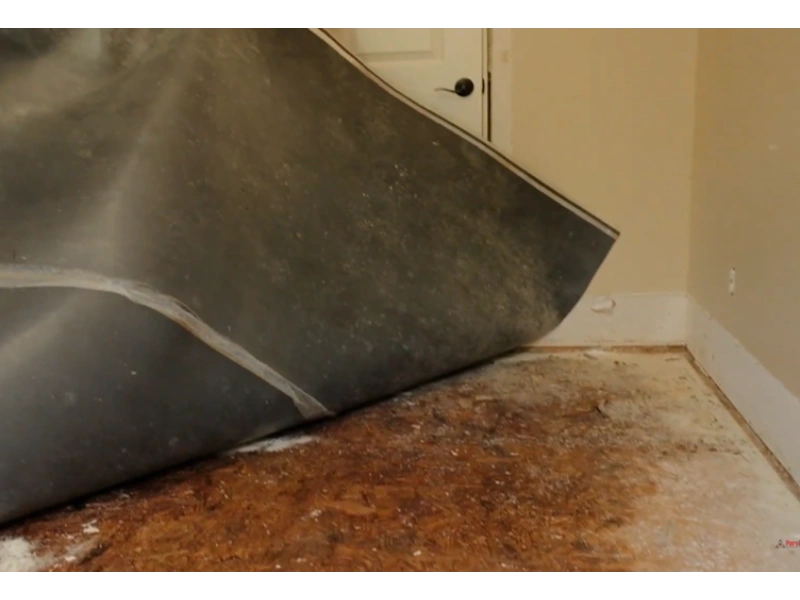
Carpet and padding that stay wet past 24 to 48 hours usually have to come out.
How Fast Does Mold Grow After Water Damage in Gainesville?
Quickly. The EPA says mold can start growing on wet materials within 24 to 48 hours, and the Florida Department of Health notes common molds can take hold when water stands for 24 hours. Gainesville makes that window tighter. We are muggy from early May through October, the rainy season runs roughly June through mid-September, and hurricane season officially runs June 1 through November 30. In a house with warm, humid air, a damp wall cavity has very little chance of drying on its own.
That is why a small plumbing leak from last week and a roof leak after a storm can both turn into the same mold call. The clock does not care how the water got in. What matters is how long materials stayed wet. Drywall, insulation, carpet padding and ceiling tiles are the first to go, because they hold water and are hard to dry fully once mold sets in.
Keep indoor humidity below 60 percent, and ideally between 30 and 50 percent, which is the EPA’s guidance. A simple humidity monitor will tell you whether the dehumidifier is keeping up.
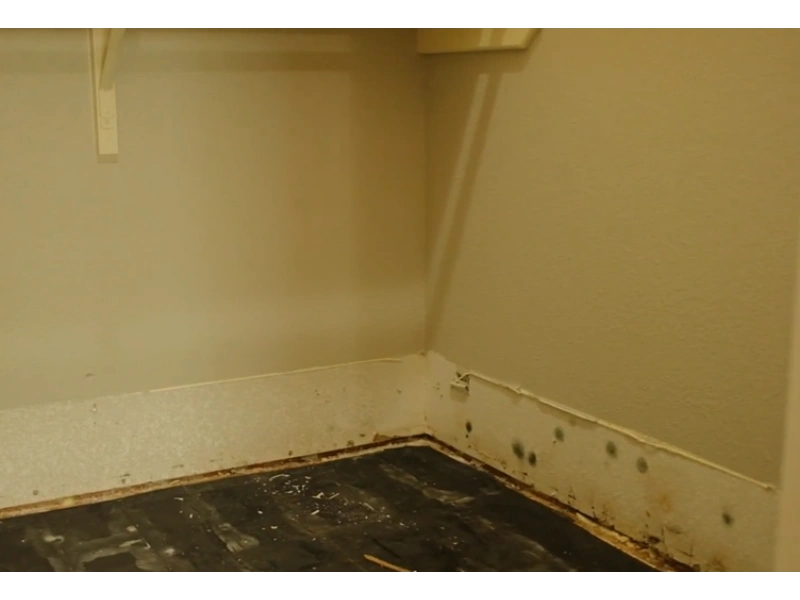
What Should You Not Put on Mold? Bleach, Vinegar, Lysol Wipes and Other Mistakes
This is the number one question we hear, and the answer is that most of what is under the sink makes things worse.
Bleach
The EPA does not recommend bleach as a routine mold treatment. It does little on porous materials like drywall and wood, and the water in it can feed mold. Never mix bleach with ammonia or vinegar, because the mix gives off toxic gas.
Vinegar and peroxide
Plenty of Reddit threads swear by them, and they may lighten surface growth on hard surfaces. They do not reach mold growing inside drywall or wood, and they do nothing about the moisture that started it.
Lysol wipes and sprays
Disinfectant wipes can clean a hard surface, but they do not remove growth from porous material. The EPA points out that dead mold can still trigger allergies, so the growth has to be removed, not just killed.
Also avoid dry-scrubbing, sweeping or using a regular household vacuum on visible mold, because it throws spores into the air. Do not paint over it either. Paint and sealers hide the stain and trap moisture under it.
Can You Handle It Yourself, or Do You Need Emergency Help?
Both the EPA and the Florida Department of Health say a small area, about 10 square feet or less (roughly 3 ft by 3 ft), can often be cleaned by the homeowner once the moisture problem is fixed. Past that, or when the situation involves contaminated water, the job changes.
| You can do this | Leave this to a professional |
|---|---|
| Shut off water, mop up, move furniture and pull wet rugs | Sewage, flood water or any water that touched the ground or a toilet |
| Run a dehumidifier and watch humidity | Wet drywall, insulation or subfloor that will not dry on its own |
| Clean a small patch on tile, glass or sealed surfaces with detergent and water | Mold across more than about 10 square feet or inside a wall |
| Take photos, document items and call your insurance agent | Containment, negative air and HEPA filtration |
| Wear an N95, gloves and goggles for small cleanup | Anything involving the HVAC system or ducts |
Water Damage First, Mold Second: How Restoration and Mold Removal Fit Together
People often call one company for “mold” and another for “water” and then wonder why nothing lines up. They are two stages of the same event. Water mitigation is the fast part: extracting standing water, opening or removing wet materials and drying the structure with dehumidifiers and air movers. Mold remediation is what you need when growth has already started or when materials stayed wet long enough that it will.
The type of water matters too. Clean supply-line water is the least risky. Water from a washing machine, dishwasher or aquarium (gray water) and sewage or flood water (black water) carry contamination and are not a DIY job. If your water damage started with a storm, a toilet backup or anything that touched the ground, treat it as contaminated until a professional tells you otherwise.
Our page on water damage restoration in Gainesville walks through the drying side and insurance. Call us at (352) 450-4030 and we will help you work out which stage you are in and who to send.
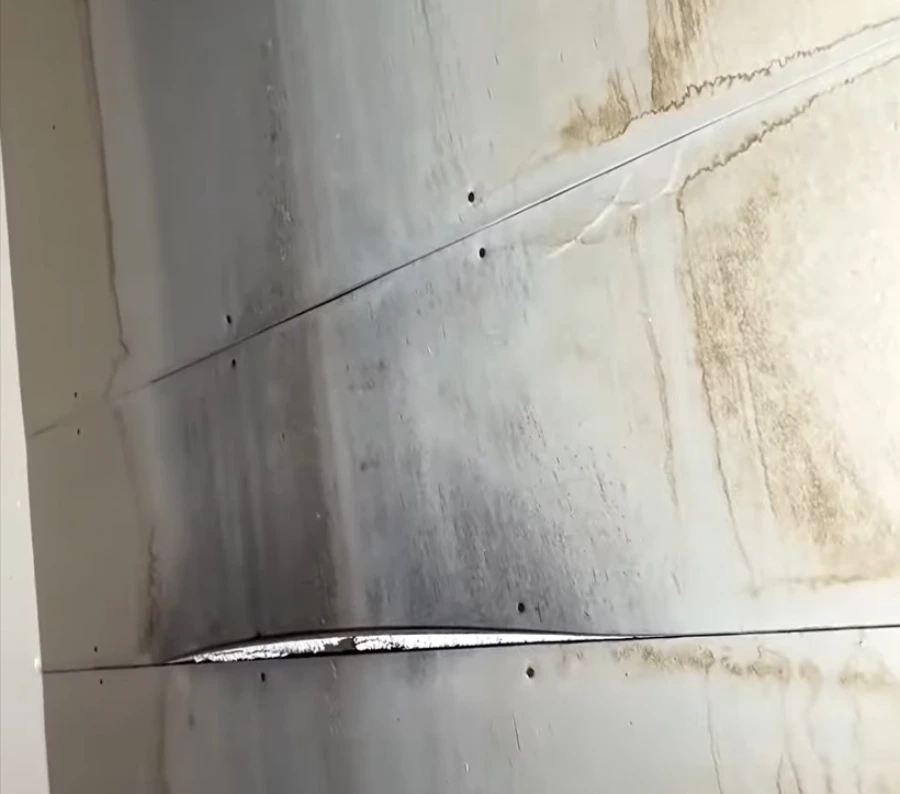
How Does Emergency Mold Removal Work, Step by Step?
The order matters more than the speed. A crew that starts spraying before the water is controlled is working in the wrong order. This is the sequence to expect, and the one to compare any provider’s plan against.
Meters and, where needed, a thermal camera locate wet materials, including inside walls and under floors. Ask for photos and a clear explanation of the scope.
The leak is stopped or tarped, and any standing water is pumped or vacuumed out.
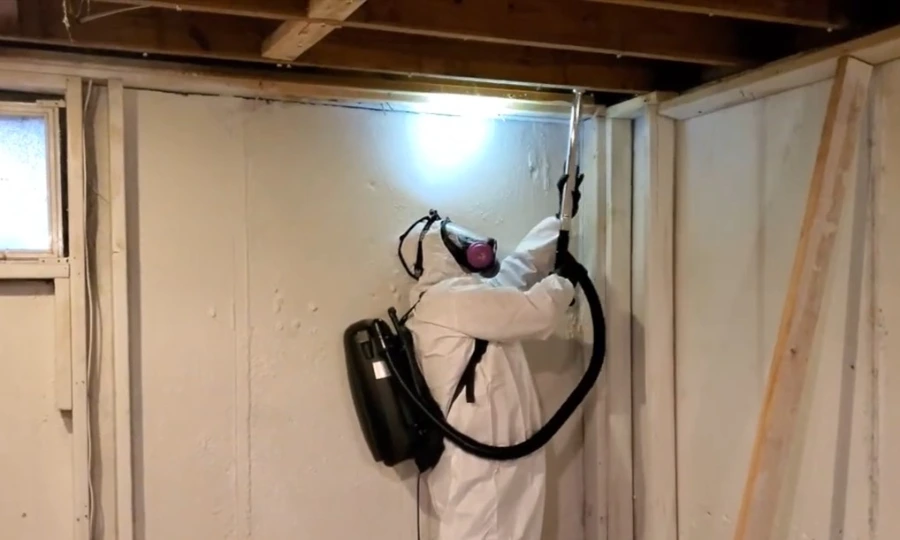
Plastic sheeting seals the work area, and HEPA air scrubbers run so spores stay out of the rest of the house.
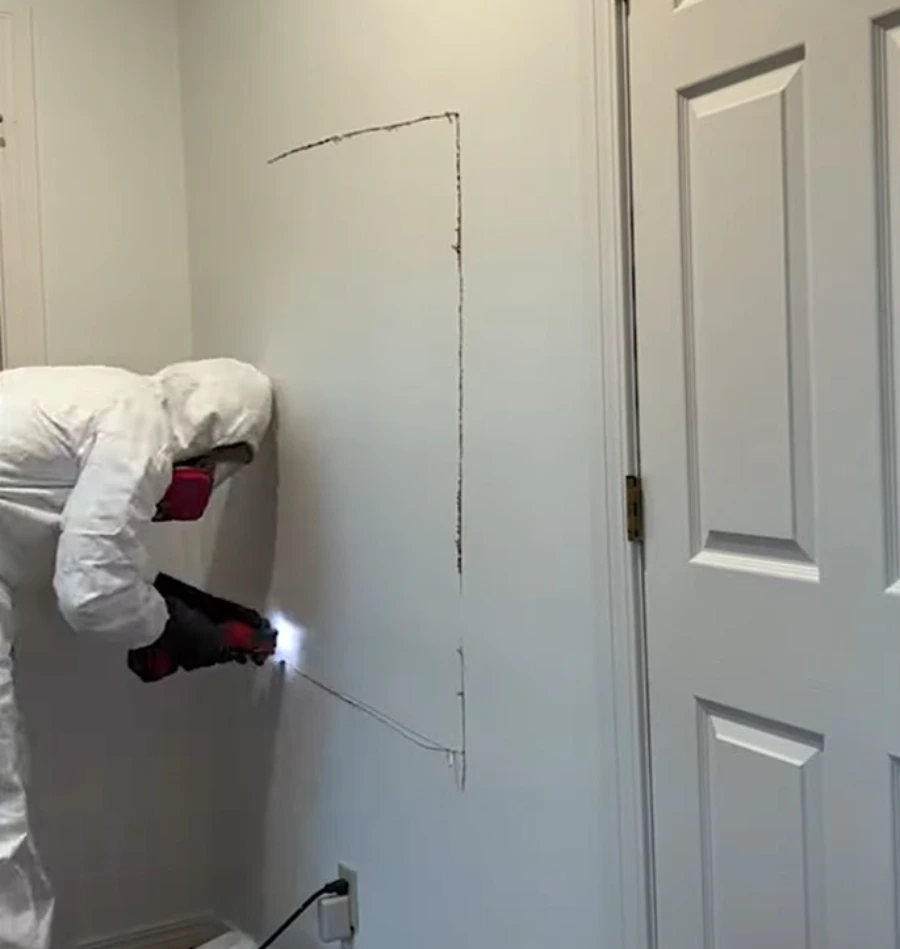
Wet drywall, insulation, carpet padding and ceiling tiles that stayed wet are cut out and bagged. Cuts usually go a few inches past the wet area, which is why you will hear the term “flood cut.”
Framing and hard surfaces are HEPA vacuumed and cleaned. A treatment suited to the surface goes on after the growth is physically removed, not in place of removal.
Dehumidifiers and air movers run until readings are back to normal. UF’s remediation guidelines call for bringing materials below 20 percent moisture content, and wood to be sealed under 12 percent.
A visual check at minimum. When an insurer, buyer or landlord needs proof, an independent assessor can do post-remediation verification with air or surface sampling.
New drywall, insulation and flooring go back only after everything is dry and cleared. Rebuilding on damp framing is how mold returns.
Why containment and air scrubbing are not optional
Cutting into moldy drywall puts spores into the air. Without a sealed work area and HEPA filtration, they settle in the rest of the house, and you end up with a second problem. If a company does not mention containment, ask how they plan to keep the work area isolated.
Cutting out the wet drywall
This is the part that surprises homeowners. If drywall was soaked and has not dried within a day or two, it usually has to come out, even if it looks fine on the surface. Mold grows on the back of the board and in the paper facing, where you cannot see it. Cutting it out is easier than finding it later.
Storm and Flood Mold in Gainesville: What Is Different After a Hurricane?
Flood water is not the same as a pipe leak. It carries soil, bacteria and sewage, so porous materials that got soaked, such as carpet, padding, mattresses and upholstered furniture, usually cannot be saved. Hard surfaces can often be cleaned and dried.
- Get photos before you move anything, and keep damaged items until the adjuster has seen them if the claim requires it
- Wear boots, gloves and an N95 for any cleanup
- Do not run the AC or air handler if it was submerged or wet until it has been checked
- Pull wet materials out and dry the structure within the first 24 to 48 hours
- Check the crawl space and attic too, since water and humidity hide there. See our crawl space and attic guides
Low-lying areas near Hogtown Creek and the Paynes Prairie basin are the ones that tend to stay wet longest, but we see storm-driven roof leaks in every part of Gainesville.

How Much Does Emergency Mold Removal Cost in Gainesville?
Emergency work is priced by the provider once they have seen the job. These are the things that shape the scope:
| What shapes the job | Why it matters |
|---|---|
| Size of the affected area | Larger areas need more containment, labor and disposal |
| Material involved | Porous materials such as drywall and insulation are usually removed, not cleaned |
| Access and location | Attics, crawlspaces and tight closets take more time and care |
| HVAC or subfloor involvement | These jobs need an on-site look before a scope can be set |
| Moisture source | The leak or humidity problem has to be fixed or the mold returns |
Water extraction, drying, and tearing out and rebuilding drywall, flooring or cabinets are separate from the mold work, so ask what is included before anyone starts. A proposal that only says “mold removal” with no scope is a red flag. The scope should list containment, filtration, material removal, drying and what verification you get.
What if you cannot afford mold removal?
It is a real question, and there are real steps that do not involve ignoring the problem:
- Do the safe part now. Stopping the water, extracting it and drying quickly prevents far more damage than waiting.
- Ask about phasing. A good company can dry and remove the unsalvageable material now and schedule rebuilding later.
- Check your insurance before you pay out of pocket. See the next section.
- Renters: tell your landlord in writing, keep copies and photos, and ask about Florida’s landlord-tenant rules in Chapter 83 or your local legal aid office, because landlords generally have to keep a rental habitable.
- Ask for payment options. Many companies offer them if you ask up front.
Be careful with ads that promise “free emergency mold removal.” Ask exactly what is included before anyone starts.
Does Homeowners Insurance Cover Emergency Mold Removal in Florida?
It depends on your policy and on why the water got in. Many Florida policies cover mold that follows a sudden covered loss, such as a burst pipe or storm damage to the roof, and limit or exclude mold from long-term leaks or humidity. Read the mold and water sections of your policy or ask your agent.
Timing matters. Under Florida Statute 627.70132, notice of a new or reopened claim must generally be given within one year of the date of loss, and a supplemental claim within 18 months. Photograph everything, stop the water and report the loss before you start repairs. Our water damage restoration page covers more on the water side of the claim.
How to Choose an Emergency Mold Company in Gainesville
When you are stressed, the company that answers first wins. Slow down for ten minutes and check the substance:
- Ask what “fast” means. An arrival window is worth little without a written scope behind it.
- They measure moisture and show you the readings.
- The scope covers water and mold, or they tell you who handles the other half.
- Containment, HEPA air filtration and drying are written in.
- Removal and rebuild are listed separately so you can compare proposals.
- Paperwork is ready: a written scope, license number and proof of insurance.
When you call Gainesville Mold Rescue at (352) 450-4030, we start with a few plain questions: what got wet, for how long, and what has already been touched. Then we match you with a local provider who fits the job, and we will tell you if it is something you can handle yourself.
Emergency Mold Removal Across Gainesville, FL
We cover the University of Florida area and the older neighborhoods around Duckpond and Midtown, Northwest, Southwest and Northeast Gainesville, Millhopper, and the Newberry Road and Archer Road corridors. Student rentals near campus often have deferred maintenance and shared walls, so a small leak can reach the next unit quickly. Homes near Hogtown Creek and the Paynes Prairie basin sit closer to wet ground.
Gainesville ZIP codes
- 32601
- 32603
- 32605
- 32606
- 32607
- 32608
- 32609
- 32641
Nearby communities
Planning ahead? Our mold prevention guide, remediation process and black mold pages cover what comes after the emergency.
Emergency Mold Removal in Gainesville: Frequently Asked Questions
Is mold an emergency?
Usually the water is the emergency, not the mold. Stop the source, remove standing water and dry everything within 24 to 48 hours. Call right away for sewage or flood water, wet materials that have not dried, mold over about 10 square feet, or any water near the air handler or ducts.
How fast does mold grow after water damage?
The EPA says mold can start growing on wet materials within 24 to 48 hours, and the Florida Department of Health says common molds can take hold when water stands for 24 hours. Gainesville humidity shortens that window, so dry quickly with dehumidifiers.
What should I do first when I find water damage or mold?
Stay safe around electricity, stop the water at the source, take photos, remove standing water, start dehumidifying, and contain visible mold. If the air handler or ducts got wet, do not run the system until it has been checked.
How much does emergency mold removal cost?
Cost depends on the size of the area, the materials involved, whether HVAC is affected and how much drying is needed. Water extraction, drying and rebuilding are separate from the mold work. A provider can discuss pricing once they have seen the job.
Is there free emergency mold removal?
Be cautious about ads that promise free removal, and ask exactly what is included before any work starts.
What if I cannot afford mold removal?
Do the safe part first: stop the water, extract it and dry the area quickly. Check your insurance policy and claim deadlines, ask a provider about phasing the work, and if you rent, notify your landlord in writing and keep records.
Do Lysol wipes kill mold spores?
Disinfectant wipes can clean a hard surface, but they do not remove growth from porous materials, and the EPA says dead mold can still cause allergic reactions. Growth has to be physically removed and the moisture source fixed.
What should you not put on mold?
Avoid bleach as a routine treatment, never mix bleach with ammonia or vinegar, and do not dry-scrub, use a regular vacuum, or paint over mold. Painting hides it and traps moisture, and scrubbing releases spores.
Should I turn off the AC when I find mold?
If the air handler, ducts or returns got wet, or mold is visible on or near the system, do not run it until it has been checked, because it can spread spores. If water damage is limited to a room and the system is dry, keeping the AC and a dehumidifier running helps control humidity.
Does homeowners insurance cover emergency mold removal in Florida?
It depends on your policy and the cause. Many policies cover mold that follows a sudden covered loss and limit or exclude mold from long-term leaks or humidity. Under Florida Statute 627.70132, notice of a new or reopened claim must generally be given within one year of the date of loss.
Do I need water damage restoration before mold removal?
Often yes. Extracting water and drying the structure comes first, and removing mold without fixing wet materials leads to regrowth. Many jobs need both, so ask who handles each stage.
How do I get rid of mold fast?
The fastest way to a lasting fix is to stop the moisture, remove wet materials that cannot be dried, remove or clean the growth under containment, dry everything and confirm it. Quick spray-and-paint fixes usually fail.
Water Damage or Mold Right Now in Your Gainesville Home?
Call Gainesville Mold Rescue, tell us what got wet, how long ago and where, and we will help you decide what needs to happen today and what can wait. Photos help.
Sources and further reading
- U.S. EPA: Mold Cleanup in Your Home
- CDC: Cleaning Up Mold
- Florida Department of Health: Mold
- University of Florida EH&S: Mold Remediation Guidelines
- Florida Statute 627.70132: property insurance claim notice
How this site works: gainesvillemoldremoval.net is a local information and referral service, not a contractor. When you call, we connect you with a mold remediation provider serving the Gainesville area. Nothing here is legal or insurance advice.