
Mold Encapsulation in Gainesville, FL: When It Works, When It Doesn’t, and How It’s Done Right
Somebody told you to “encapsulate” the mold. Or a foundation company quoted you for a crawl space liner and a dehumidifier. Or a painter offered to seal over a stain. Those are three different jobs with one word attached, and one rule that decides whether any of them work: the mold comes out first. Here is the process, the products, and the tips.
- Built for Florida’s humid climate
- Follows EPA & CDC guidance
- Serving all of Gainesville, FL
Reviewed October 2026 by the Gainesville Mold Rescue team
What Is Mold Encapsulation? Two Meanings, One Rule
Search for it and you will find two very different things sold under the same name.
1. Crawl space or basement encapsulation
A system that seals the space off from ground and outdoor moisture: a heavy-duty vapor barrier on the floor and up the walls and piers, sealed vents and penetrations, and a dehumidifier. It is a prevention system. It does not remove mold that is already there.
2. Encapsulant coatings and sealants
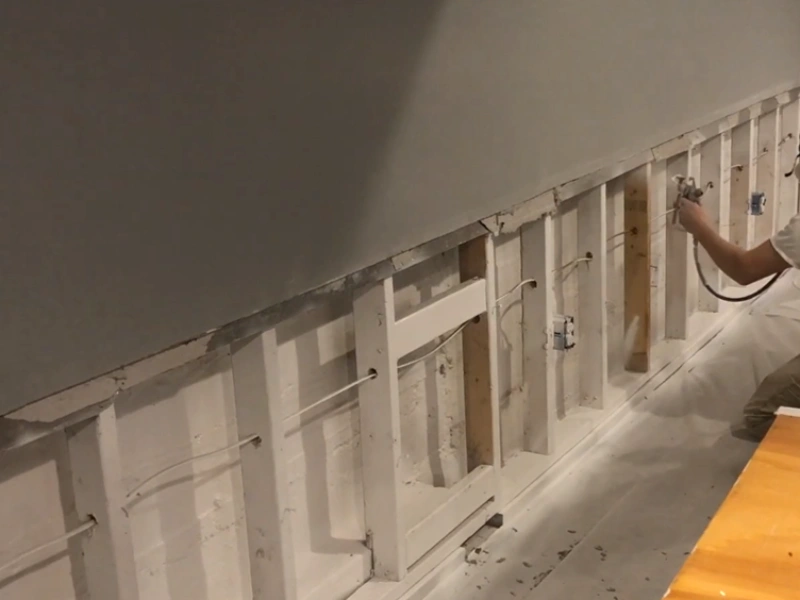
A sealer or mold-resistant coating rolled or sprayed onto surfaces that have already been cleaned. Its job is to lock down residue and discourage regrowth. It is not a cure for active mold or for a wet wall.
The rule for both: remove the mold first, fix the water, dry everything, then seal. Skip that order and you have bagged the problem, not solved it.
Does Mold Encapsulation Work?
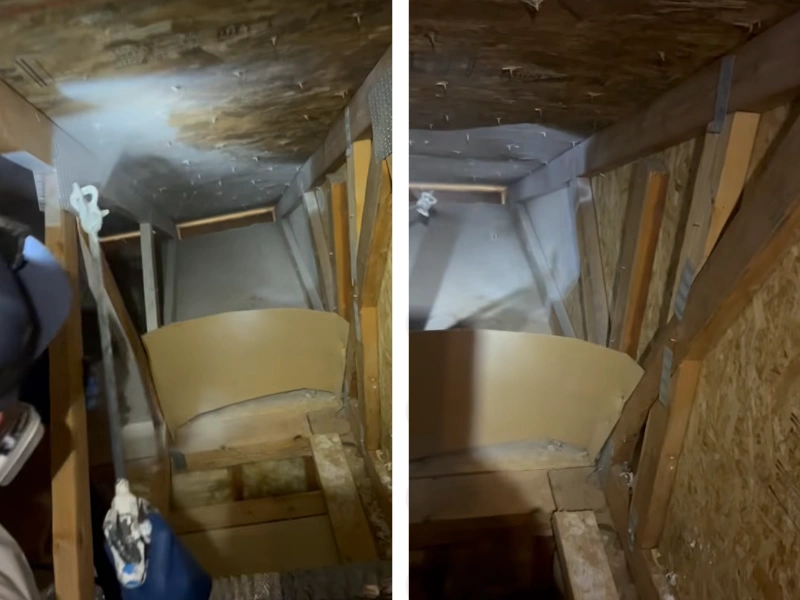
Yes, for what it is built to do. No, if you are asking it to kill or contain active mold.
| It works when… | It fails when… |
|---|---|
| Mold has been physically removed from framing and surfaces first | It goes over visible or hidden active growth |
| The moisture source (leak, drainage, humid air) has been fixed | The water keeps coming and the barrier traps it against the wood |
| Wood and drywall have dried to normal moisture readings before sealing | Damp materials are sealed in, so mold keeps growing underneath |
| A dehumidifier holds humidity under control after the space is sealed | The space is sealed but never conditioned, so humidity climbs again |
| Walls and piers are wrapped, not just the floor | Only a floor liner goes down and the block walls keep wicking moisture |
Mold Removal Comes First: What the Before and After Looks Like
This is the step that separates a real encapsulation job from a cosmetic one. On wood framing, removal usually means HEPA vacuuming, then abrasive cleaning such as sanding, wire-brushing, or media blasting like soda or dry ice, depending on the surface and the access. Wet insulation and debris come out. Hard surfaces get a wet wipe. UF’s mold remediation guidelines also call for containment with HEPA filtration while the work is done.
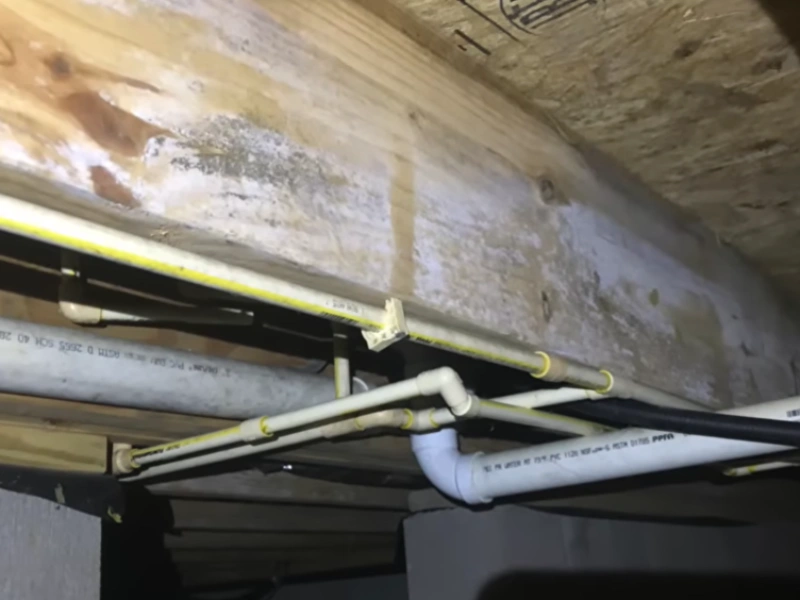
Before: active growth on framing and surfaces.
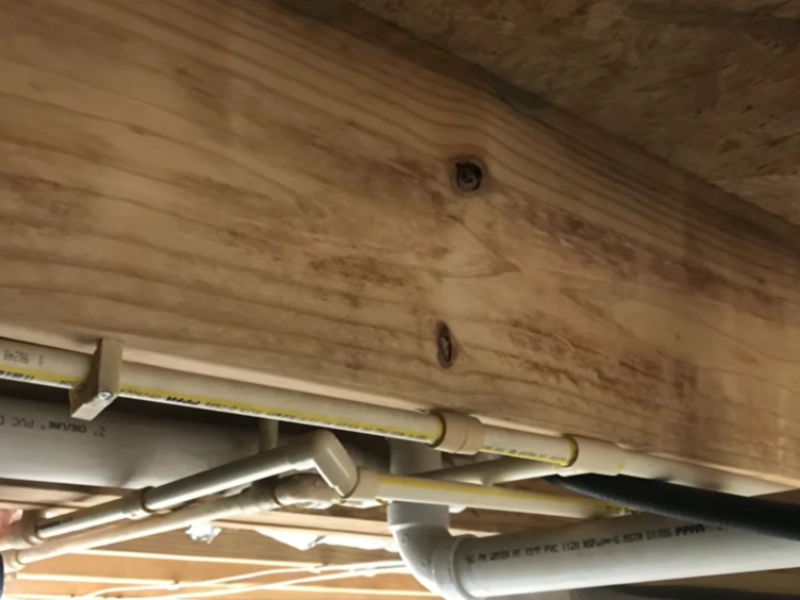
After: cleaned back to clean material, ready to dry and verify.
Only after this stage, and after the wood is dry, does anything get sealed. For the full removal side of a crawl space, see our crawl space mold removal page and our remediation process. If blasting is on the table, our dry ice blasting page explains how it works.
How Is a Crawl Space Encapsulated? The Step-by-Step Process
Done right, encapsulation is the last third of a three-part job: fix the water, remove the mold, then seal. This is the sequence to expect, and the one to compare any plan against.
Square footage, crawl height, drainage, standing water, ductwork, insulation and the soil are checked, along with wood moisture readings. You should get photos and a written scope.
Leaks are repaired, gutters and downspouts redirected, and any place where water gets onto the ground is handled. If water can collect on top of a liner, an interior drain and sump pump belong in the plan.
Containment and HEPA filtration go up, then growth is removed from framing and surfaces by HEPA vacuuming and abrasive cleaning or blasting as the surface calls for.
Fiberglass batts that have been wet are bagged and removed, along with trash, torn plastic and anything else on the ground.
The framing has to dry before it is covered. UF’s guideline is below 20 percent moisture content, and wood to be sealed under 12 percent. When an insurer, buyer or landlord wants proof, an independent assessor can do post-remediation verification.
Sharp rocks, roots and debris are cleared and the surface smoothed so the liner will not puncture.
A heavy-duty liner runs across the floor with overlapped seams, goes up the foundation walls and around each pier, and is fastened so it cannot slump. The Department of Energy’s floor guidance is 6-mil plastic, overlapped and sealed to the walls; many installers use thicker, puncture-resistant material.
Seam tape and sealant close the overlaps and the openings around pipes and posts. On a conditioned crawl space, the foundation vents are sealed too. If your home is in a mapped flood zone, flood openings in the foundation may be required, so check with the building or floodplain office before closing anything.
Moisture-tolerant rigid foam on the perimeter walls helps keep the space stable. Fiberglass batts between the floor joists are a common failure point in a humid climate.
A unit sized for the volume, with a drain line or condensate pump and power, holds humidity in range. The EPA says to keep it below 60 percent, ideally between 30 and 50 percent. A small monitor on the wall tells you it is working.
You should get before and after photos, the product details, the dehumidifier’s drain location, any written terms, and a short list of what to check each season.
Why the sealing step gets its own attention
This is where most shortcuts hide. Seams that are not overlapped enough, wall edges left loose, penetrations left open and a liner that stops at the floor all let moisture bypass the system. Ask how seams are joined, how far the liner goes up the walls and piers, and what seals the pipes and posts.
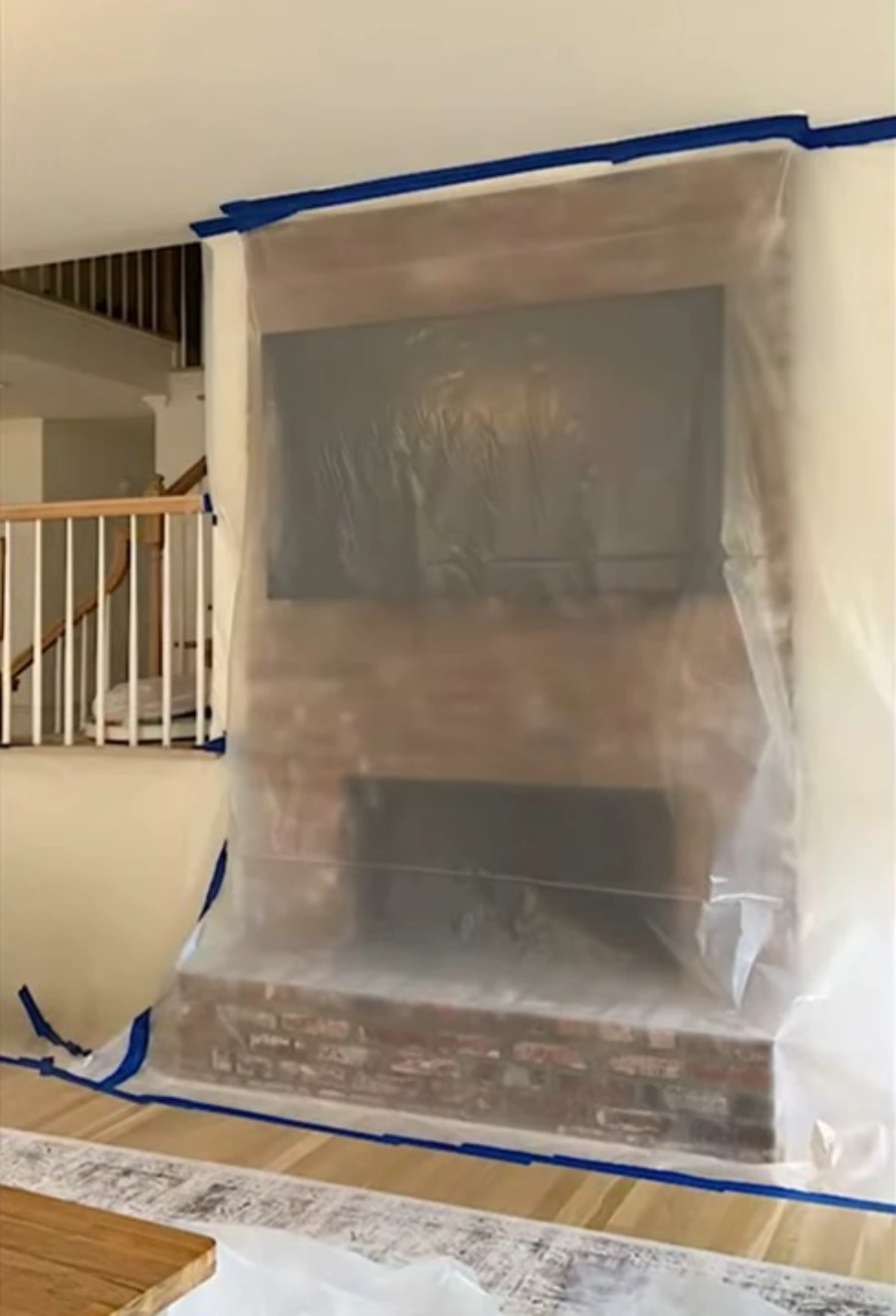
What Products Go Into Mold Encapsulation?
You do not need brand names to shop smart. You need to know what each material is for and what to ask about.
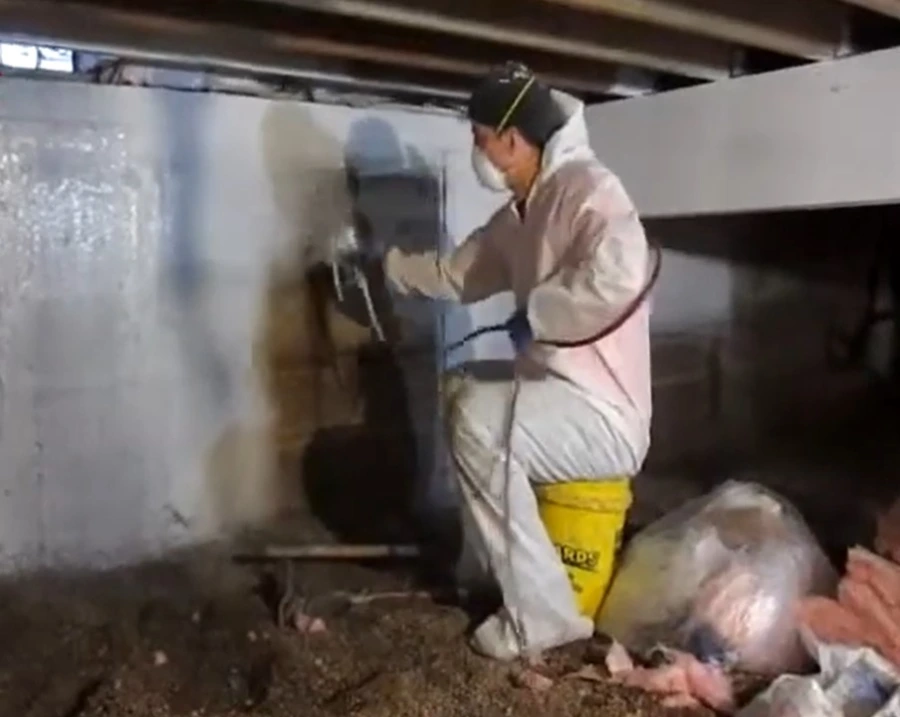
| Product | What it does | What to ask or look for |
|---|---|---|
| Vapor barrier (liner) | Blocks ground moisture from rising into the crawl space | Reinforced, puncture-resistant polyethylene; 6-mil is the DOE’s floor minimum, and many installers use thicker material; overlapped, taped seams |
| Seam tape and sealant | Closes overlaps and penetrations | Made to bond with the liner you are using, not generic tape |
| Wall insulation | Helps hold the space at a stable temperature | Rigid foam board rather than fiberglass batts, which absorb moisture |
| Crawl space dehumidifier | Removes moisture mechanically and keeps humidity in range | Rated for a crawl space, sized to the volume, with a drain or condensate pump and a place to service it |
| Sump pump and interior drainage | Moves water off the ground when it does get in | Needed if water can sit on or under the liner |
| Mold-resistant primer or coating | Discourages regrowth on surfaces that have been cleaned | Use only after removal; it inhibits growth, it does not kill existing mold |
| Hygrometer (humidity monitor) | Shows whether the system is working | Keep humidity under 60 percent, ideally 30 to 50 percent |
Ask for the product data sheets, not just the brand. A reputable installer will hand them over.
Mold Encapsulant Coatings: When Sealing Cleaned Surfaces Makes Sense
A coating or sealer has a narrow, honest job. After mold has been removed and the material has dried, a mold-resistant primer or encapsulant can lock down residue on bare wood or drywall and give regrowth a harder time. It also gives you a clean, uniform surface to inspect later.
- It goes on cleaned, dry material, never wet or visibly moldy surfaces
- It does not fix a leak, a humid space or a wet wall
- It does not replace removal. The S520 draft says fungicidal and mold-resistant coatings should not be used as encapsulants over mold growth
- Paint over a stain with no removal is the classic shortcut: the stain disappears, the mold does not
Drywall tells the story best. Mold often grows on the back of the board and in the paper facing, so if a wall was soaked, cutting it out and replacing it usually beats coating it. Our emergency mold removal page covers when materials have to come out.
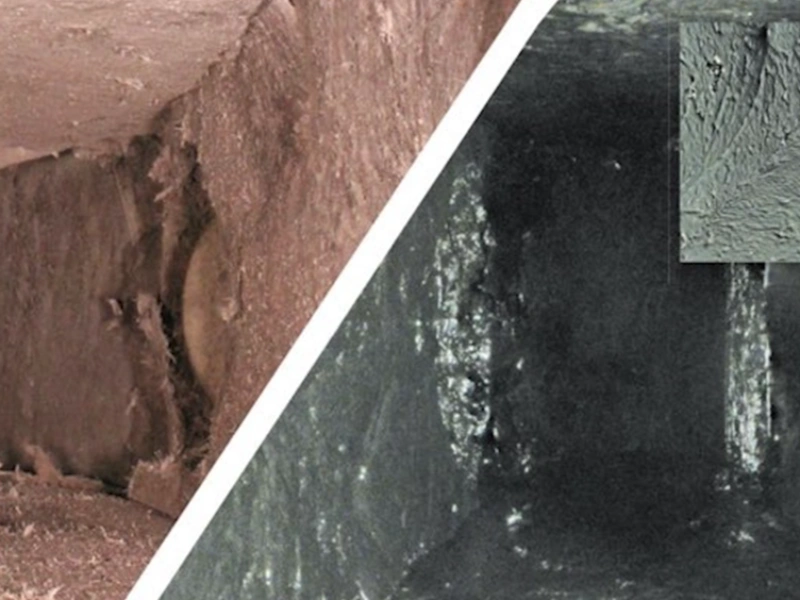
Coatings are applied after removal, to cleaned and dried surfaces.
Full Encapsulation vs. Hybrid or Ventilation Systems: What Is the Difference?
Full encapsulation
Liner on the floor, up the walls and around the piers, sealed seams and vents, and a dehumidifier. This is the approach the DOE’s building research favors for humid climates.
Hybrid or “starter” systems
A floor liner and a dehumidifier without wrapping the walls and piers. Block walls can wick ground moisture, so the dehumidifier runs more, uses more power and wears out sooner.
Ventilation systems
Fans that bring outdoor air in. In Gainesville, outdoor air is warm and humid from May through October, so it can add moisture to the crawl space instead of removing it.
The DOE notes that vented crawl spaces perform poorly in humid climates because outdoor air has a higher dew point than the cool framing, so it condenses. That is the main reason sealed, conditioned crawl spaces tend to hold up better here.
Is Crawl Space Encapsulation Worth It in Gainesville?
It is the most common question we hear, and the honest answer is: sometimes, and mostly when moisture is the issue.
| It is usually worth it when… | It may not be necessary when… |
|---|---|
| The crawl space smells musty, stays damp or has standing water after rain | The crawl space is dry, vented, and the humidity readings stay low |
| Ductwork, insulation or framing in the crawl space is sweating or stained | A single plumbing leak was the whole problem and it is fixed |
| Floors feel soft or cupped, or doors and windows stick in summer | The home is on a slab with no crawl space |
| You have had mold in the crawl space and want to prevent a repeat | You are selling soon and a repair or disclosure is the real need |
Gainesville factors that matter
- Humidity and rain. We are muggy from early May through October, with the rainy season running roughly June through mid-September, which keeps vented crawl spaces damp.
- Soil and water table. Gainesville’s sandy soils drain fast but sit over a high water table in low spots, so drainage often belongs in the plan.
- Older raised homes. Pier-and-beam houses near Duckpond, Northeast Gainesville and Midtown often have vented crawl spaces and original insulation.
- Flood zones. Homes near Hogtown Creek and the Paynes Prairie basin may be in mapped flood zones, where flood openings can be required. Check with the City of Gainesville before sealing vents.
- Termite inspections. Florida has termites, so ask your pest control company how they will inspect once the liner is in.
How Much Does Mold Encapsulation Cost in Gainesville?
There is no single answer, and anyone who gives you a firm number without seeing the crawl space is guessing. The total depends on crawl space size, drainage, insulation, mold removal and whether a dehumidifier is added.
What shapes the job:
- Square footage, since materials and labor scale with it
- Crawl space height and access: a tight crawl takes far longer than one you can stand in
- Drainage: standing water means an interior drain and a sump pump
- Mold and insulation: if there is mold, removal comes first, and wet insulation usually comes out
- Full wrap vs. floor only: wrapping walls and piers is more work up front and tends to be easier to keep dry
- The dehumidifier: size, drain or pump, and electrical work
Ask for mold removal, encapsulation, drainage and dehumidifier to be described as separate items. An “encapsulation” plan that quietly skips the mold or the drainage is not a fix.
Mold Encapsulation Tips: What to Ask Before You Sign
- “Who removes the mold, and when?” If the answer is “we seal it and it stays put,” keep looking.
- “Is the wall and pier wrapped?” A floor-only liner with a dehumidifier is not a full system.
- “What is the plan if water gets on the liner?” Look for drainage and a sump in the scope when the ground gets wet.
- “What dehumidifier, how big, and where does it drain?” Get the model, the size, and the drain or pump location in writing.
- “How are seams and penetrations sealed?” Overlaps, tape, and sealing around pipes and posts matter more than liner brand.
- Get before and after photos of every stage, including under the old insulation.
- Ask what written terms apply and what could void them, such as skipping dehumidifier maintenance.
- Plan to check it. Look at the humidity monitor, the drain and the liner each season, and after every major storm.
- Paperwork: a written scope, product data sheets, proof of insurance and license number.
When you call Gainesville Mold Rescue at (352) 450-4030, we ask whether the mold has been dealt with before anyone talks about sealing, and we match you with a local provider who works in that order.
Mold Encapsulation, Testing, Insurance and Selling a Home
Do you need testing?
Often not to decide whether to remove mold you can see. Testing helps when you smell mold you cannot find, when an insurer, lender or buyer wants documentation, or when you want a clearance result after the work. Under Florida Statute 468.8419, the company that remediates a structure cannot perform the mold assessment on it for the following 12 months, and the assessor cannot remediate it, so the verification is independent by design.
Insurance
Coverage depends on your policy and why the water got in. Removal after a sudden covered loss may be covered, and prevention work like encapsulation usually is not. Under Florida Statute 627.70132, notice of a new or reopened property claim must generally be given within one year of the date of loss, and a supplemental claim within 18 months. See our water damage restoration page for the water side.
Selling or buying
Selling a house with mold is not illegal in Florida, but sellers who know of a hidden problem that materially affects value have to disclose it (Johnson v. Davis, 1985). Documentation of removal, verification and encapsulation can help. Ask a real estate attorney what to disclose.
Mold Encapsulation Across Gainesville, FL
We cover the University of Florida area and the older neighborhoods around Duckpond and Midtown, Northwest, Southwest and Northeast Gainesville, Millhopper, and the Newberry Road and Archer Road corridors. Raised-foundation homes from the mid-century on are the most common candidates, and homes near Hogtown Creek and the Paynes Prairie basin tend to need drainage planning more often.
Gainesville ZIP codes
- 32601
- 32603
- 32605
- 32606
- 32607
- 32608
- 32609
- 32641
Nearby communities
Also see our mold prevention guide, attic mold and air duct mold pages for other parts of the house.
Mold Encapsulation in Gainesville: Frequently Asked Questions
Does mold encapsulation work?
Yes, for what it is designed to do: after mold has been physically removed and the moisture source fixed, sealing and humidity control help keep it from returning. It does not kill or contain active mold, and the IICRC S520 draft standard says contamination should be removed, not encapsulated in place of cleaning.
Does encapsulation kill mold?
No. A vapor barrier or a coating does not kill existing mold. Mold has to be removed first, and a sealed space with mold left inside can push odors and spores into the house.
How much does mold encapsulation cost in Gainesville?
Cost depends on crawl space size, drainage, insulation, mold removal and whether a dehumidifier is added. Ask for each part to be described separately.
Is crawl space encapsulation worth it in Florida?
Often, when the crawl space is damp, musty, sweating, or has had mold. A sealed, conditioned crawl space performs better than a vented one in humid climates, according to the Department of Energy. It is less useful when the space is already dry or the home is on a slab.
What is the difference between full encapsulation and a hybrid system?
Full encapsulation wraps the floor, walls and piers and seals vents. A hybrid or starter system covers only the floor and adds a dehumidifier, so block walls can still wick moisture and the dehumidifier works harder.
Can I paint or seal over mold?
No. Paint and sealers hide the stain and can trap moisture, and the S520 draft says coatings should not be used over mold growth. Coatings belong on surfaces that have been cleaned and dried after removal.
What thickness vapor barrier is used in a crawl space?
The Department of Energy cites 6-mil plastic, overlapped and sealed to the walls, as the minimum for floor coverage. Many installers use thicker, puncture-resistant liners. Ask for the product data sheet and how seams and walls are sealed.
Do I need a dehumidifier after encapsulation?
Usually yes. A liner slows ground moisture, but a crawl space dehumidifier with a drain or pump is what keeps humidity in range. The EPA recommends keeping humidity below 60 percent, ideally 30 to 50 percent.
Should I close my crawl space vents?
On a conditioned crawl space, vents are sealed as part of the system, but closing vents alone is not enough. If your home is in a mapped flood zone, flood openings may be required, so check with the City of Gainesville before sealing anything.
Is it illegal to sell a house with mold in Florida?
No, but sellers who know about a problem that materially affects value and is not easy for a buyer to see must disclose it under the Florida Supreme Court decision in Johnson v. Davis (1985). Talk to a real estate attorney about what to disclose.
Does homeowners insurance cover mold encapsulation?
Rarely as an upgrade. Mold removal after a covered water loss may be covered depending on your policy, while encapsulation as prevention usually is not. Under Florida Statute 627.70132, notice of a new or reopened claim must generally be given within one year of the date of loss.
Can plants remove mold from the air?
We could not verify claims that houseplants remove a large share of airborne mold. EPA guidance on mold focuses on controlling moisture and removing growth, so that is where to put your effort.
Thinking About Encapsulating Your Gainesville Crawl Space?
Call Gainesville Mold Rescue and tell us what you are seeing and what you were quoted. We will help you work out whether mold removal, moisture control or both come first, and connect you with a local provider.
Sources and further reading
- IICRC S520: Standard for Professional Mold Remediation (public-review draft, January 2024)
- U.S. Department of Energy: Unvented Crawlspace Code Adoption
- U.S. EPA: Mold Cleanup in Your Home
- University of Florida EH&S: Mold Remediation Guidelines
- Florida Statute 468.8419: mold assessment and remediation
- Florida Statute 627.70132: property insurance claim notice
How this site works: gainesvillemoldremoval.net is a local information and referral service, not a contractor. When you call, we connect you with a mold remediation provider serving the Gainesville area. Nothing here is legal or insurance advice.