
Water Damage Restoration in Gainesville, FL: Dry It Fast Before It Turns Into Mold
Here is how it usually goes in this town. A line under the sink drips for a weekend, a roof lets go during an afternoon storm, or the AC drain backs up into the closet. You mop, you run a fan, you tell yourself it is fine. Then two weeks later there is a musty smell and a dark patch on the wall. In Gainesville’s warm, wet air, wet drywall does not get a lot of time. The EPA says to dry or remove wet material within 24 to 48 hours, and that is the number this whole page is built around.
We are Gainesville Mold Rescue. Water extraction and drying is a separate job from mold removal, and we will tell you straight which one you need, in what order, and what you can safely do yourself while you wait.
- Dry in 24 to 48 hours
- Stop the water first
- Never paint over a wet stain
- Humidity under 60%
Checked against EPA and Florida Department of Health guidance, October 2026.
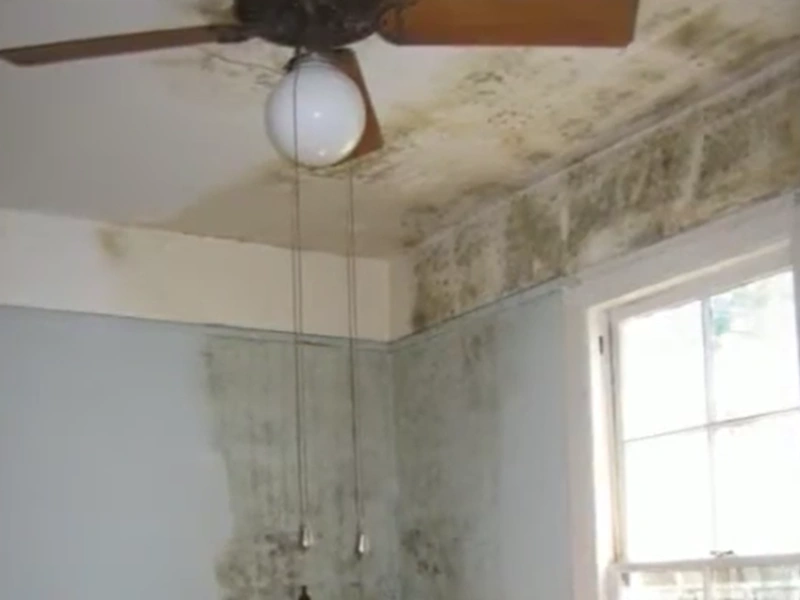
What Should You Do First When Water Gets Into a Gainesville Home?
Stop the source, make the area safe, take photos, remove standing water, then open the space up and dry it. Call your insurance company early. The goal is to have everything dry within 24 to 48 hours, because that is when mold can start to grow.
1. Stop the water
Shut the valve, turn off the water heater supply or cover the roof opening. Nothing else matters until the source is stopped.
2. Make it safe
If water reached outlets, the panel or the AC air handler, keep the power off until an electrician checks. Sewage or creek water is not a DIY job.
3. Photograph everything
Wide shots, close shots, the source, serial numbers on damaged items. Date matters for a claim.
4. Get the water out
Mop, wet vac, pull wet rugs and pads, empty cabinets, move furniture off wet floors. Foil or blocks under furniture legs.
5. Open it up and dry
Fans, a dehumidifier, AC running. Pull baseboards if the wall is wet behind them. Clear belongings away from wet walls.
6. Call people
Your insurer, a water extraction and drying crew if it is more than a small spill, and us if mold is already visible or there is a musty smell.
That list matches what homeowners in Florida tell each other on Reddit: sop up what you can, empty the cabinets, clear the walls and walk the wall through with a moisture eye. We would add one thing from experience. Check the wall cavity and the cabinet toe kick. Surface dry is not dry.
What Is the Difference Between Water Damage Restoration and Mold Remediation?
People use the two terms like they are the same job. They are not, and mixing them up is how people end up paying twice. Restoration deals with the water and the rebuild. Remediation deals with the mold and the moisture that fed it. On a lot of Gainesville jobs you need both, in a certain order.
| Job | What it covers | When it happens | Who usually does it |
|---|---|---|---|
| Water extraction and drying | Pulling standing water, drying floors, walls and cabinets with air movers and dehumidifiers, moisture readings | First 24 to 72 hours | A water damage restoration crew |
| Mold remediation | Containing the area, removing mold growth and affected porous materials, cleaning, fixing the moisture cause, checking the result | When mold is visible, or drying was late | A mold remediation company like ours |
| Rebuild and repair | New drywall, paint, flooring, cabinets | Only after everything is dry and clean | A general contractor |
Where we fit. If a restoration crew is already extracting water and setting equipment, that is their scope, and we stay out of their way. Once drying is done, or if mold showed up before drying finished, we take over the mold side: removal, cleaning, fixing the moisture cause and checking the area before anyone rebuilds.
Not sure which one you need? Call us. If it is a water problem first, we will say so, even if that means you do not need us yet.
- Standing water or a fresh leak: dry it first
- Dark growth or a musty smell: mold work comes next
- Do not rebuild over a wet or moldy wall
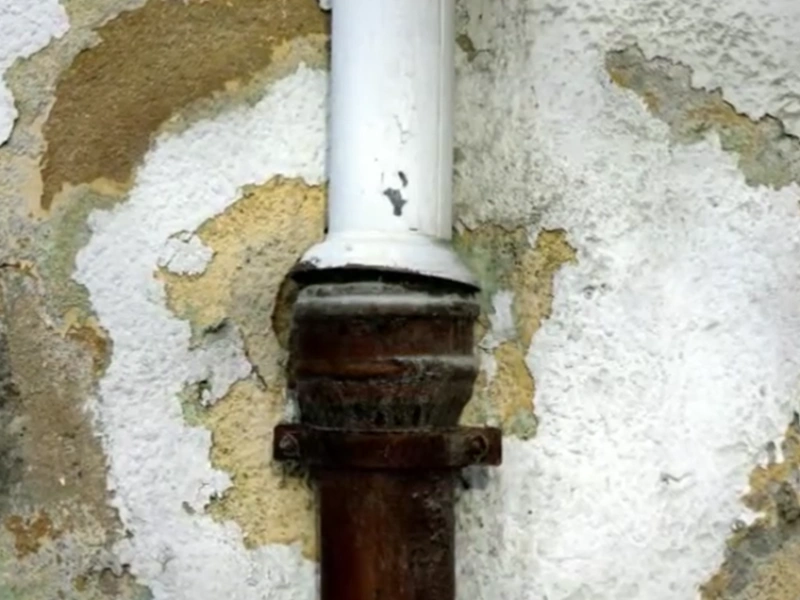
Drying comes first. Mold removal comes before the rebuild.
How Fast Does Water Damage Turn Into Mold in Gainesville?
Faster than most people expect, and faster here than in a drier climate. The EPA puts the dry window at 24 to 48 hours for wet materials. Our outdoor air sits near saturation for much of the summer, so a wet wall has a hard time drying on its own. Close the house up with the AC off while you are away and the clock runs even quicker.
The mold clock after a leak or storm
Hour 0 to 24
Best chance. Remove water, run fans and the dehumidifier, pull wet pads and baseboards.
Hour 24 to 48
The EPA window. Anything still wet can start growing mold. Porous materials like carpet pad and drywall are the risk.
After 48 hours
Hidden growth is possible behind walls and under flooring. A musty smell is a clue. A moisture check beats guessing.
Weeks later
Visible spotting, staining, peeling paint, soft drywall. Now it is a mold removal job, not just a drying job.
Which materials survive a soaking and which usually do not?
| Material | Wet for under 48 hours | Wet longer or contaminated |
|---|---|---|
| Tile, sealed concrete, glass | Clean and dry | Usually still cleanable |
| Solid wood, framing | Dry in place | Needs moisture readings before closing up |
| Drywall | Often dried, case by case | Often cut out and replaced |
| Carpet pad | Usually pulled | Replace |
| Carpet | Can sometimes be dried | Often replaced |
| Insulation | Check it | Replace |
| Particleboard cabinets | Swell easily | Often replaced |
Those are typical outcomes, not promises. The EPA’s own guidance is that porous materials with established mold growth often have to be removed, while hard surfaces can usually be cleaned.
Why does Gainesville weather make it worse?
- Long, wet summers and near daily afternoon storms keep outdoor air loaded with moisture.
- Dew point matters more than temperature. A cool wall in humid air collects water.
- Afternoon storms during hurricane season can push rain sideways into roof and window gaps.
- Vacant homes and student rentals sit closed up for weeks, with the AC set high or off.
- Lower risk
- Moderate
- High
- Peak wet season
Can You Dry Out Water Damage Yourself, or Do You Need a Professional?
Some of it you can handle. Plenty of small spills never need a call. The trick is knowing where the line sits before the problem is bigger than the fix.
Reasonable to handle yourself
- A small, clean water spill dried within a day
- Hard floors like tile or sealed wood
- A leak you found, stopped and can fully see
- Mold under about 10 square feet on a hard, non porous surface
- No one in the home is ill or sensitive
Time to bring in help
- Water from a storm, creek or sewer line
- Wet drywall, ceilings, insulation or subfloor
- Water that sat longer than 48 hours
- More than about 10 contiguous square feet of mold, or it keeps coming back
- Mold in or around the AC, ducts or air handler
Florida law draws its own line at 10 contiguous square feet, and it also keeps mold assessment and mold removal as separate roles on the same job. Our approach is simple: look at it, explain what we see, and tell you if it is something you can handle.
What does it take to dry a room properly?
- Take out standing water first. Fans only move water around.
- Run a dehumidifier and keep the AC on. Aim for indoor humidity under 60%.
- Open cabinet doors and pull the toe kick so the wall cavity breathes.
- Use a simple hygrometer. Guessing is how people close up a wet wall.
- Do not paint, caulk or lay new flooring until it is truly dry.
The most common mistake we see is painting over a stain. It looks fine for a month, then the stain bleeds through and the mold is right behind it. Renters tell the same story on Quora: the landlord painted over it and it came back.
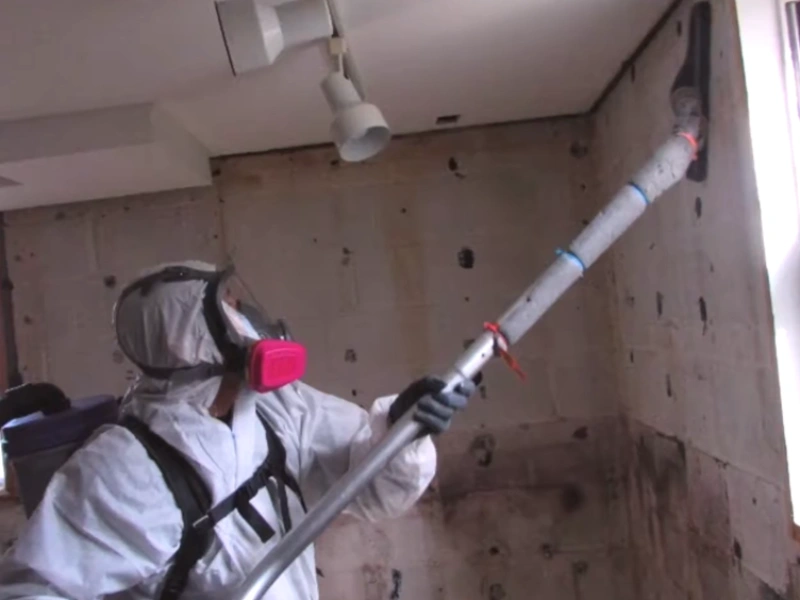
Wet spots hide behind paint. Check the wall, not just the surface.
What Does Mold Removal After Water Damage Actually Look Like?
If you have never had it done, here is what a straightforward job involves. Our process page walks through it in full, and the short version is below. See the full mold remediation process.
| Step | What happens | Why it matters |
|---|---|---|
| 1. Look and measure | We find the water source, check how far the moisture went and mark the affected area | You cannot fix mold without finding the moisture behind it |
| 2. Contain | Plastic barriers and controlled airflow around the work area | Keeps spores from drifting into clean rooms |
| 3. Remove | Affected drywall, pad, insulation or trim comes out and is bagged | Mold in porous material is not something you can just wipe off |
| 4. Clean | HEPA vacuuming and damp wiping of surfaces and framing | Gets rid of settled spores and residue |
| 5. Dry and check | Moisture readings and a visual check before anything closes up | Stops the cycle from starting over |
| 6. Rebuild | Your contractor installs new materials | Only after the area is dry and clean |
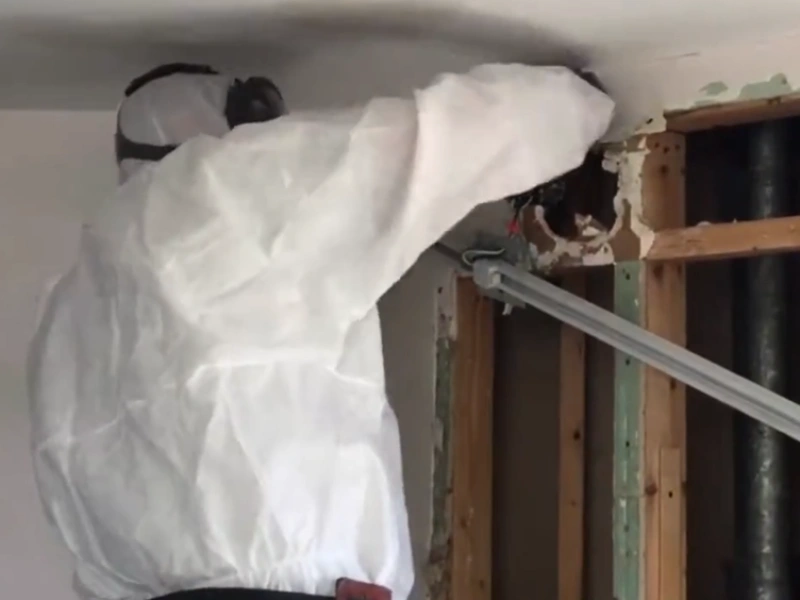
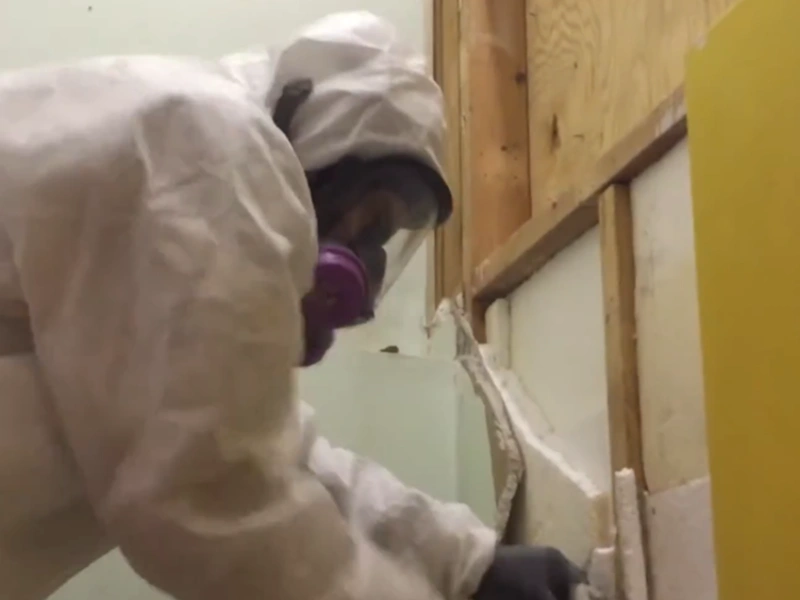
Affected drywall is removed, not painted over.
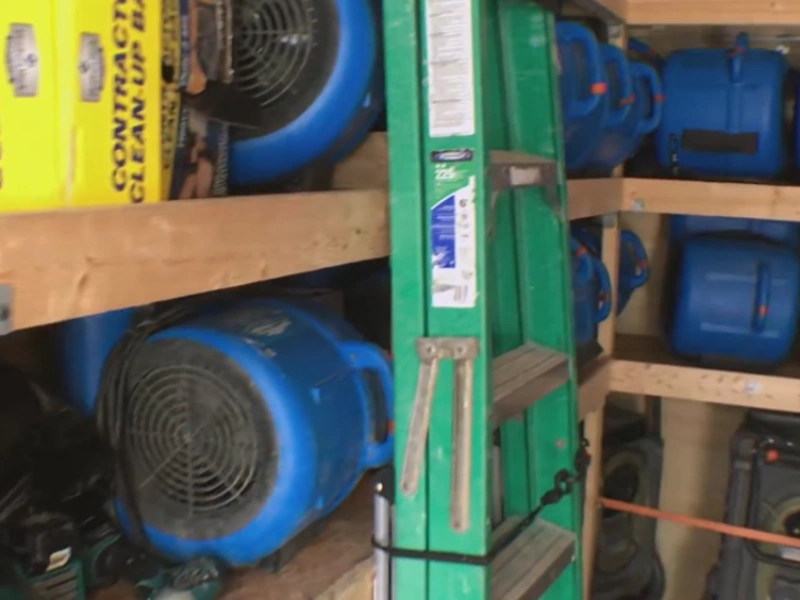
Air filtration and containment protect the rest of the house.
What about carpet and soft surfaces?
Carpet and pad that stayed wet are the usual trouble spot. Pad is easy to replace and almost impossible to dry fully under the carpet. If mold has reached the carpet, treatment and removal are decided by how long it was wet and how far it spread. The EPA does not recommend relying on bleach or routine biocides, and neither do we.
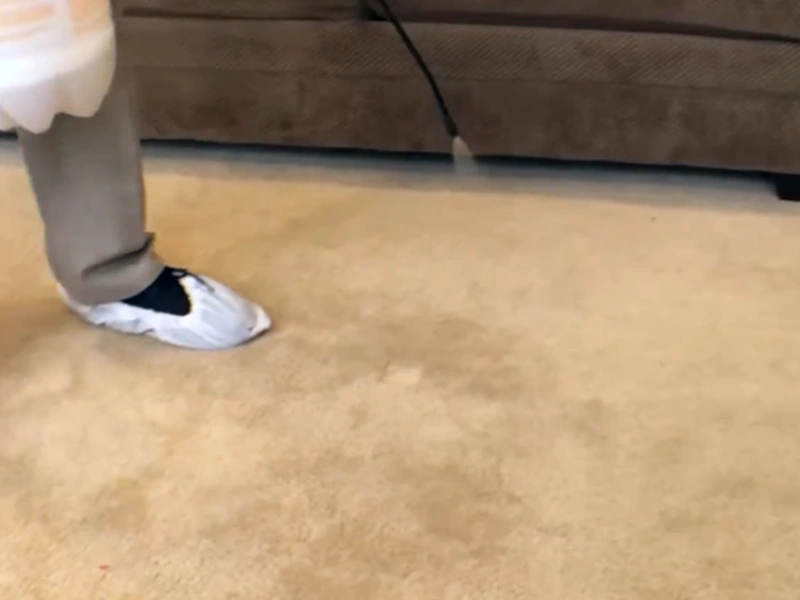
Treatment depends on how long the carpet stayed wet.
Where Does Water Damage Usually Start in Gainesville Homes?
Most of the calls we hear about start with something ordinary. Here are the usual suspects and how they tend to show up around town.
| Source | Why it happens here | Early sign | What to do |
|---|---|---|---|
| AC drain line or pan | Cooling runs most of the year, and the drain line grows slime and clogs | Water by the air handler, damp closet, musty smell | Shut the AC off, call an HVAC tech, dry the closet |
| Roof leak after storms | Heavy afternoon rain and hurricane season wind-driven rain find weak spots | Brown ceiling stain, bubbling paint | Tarp the roof, photograph it, dry the ceiling and attic |
| Water heater or supply line | Often in a garage or closet where leaks go unseen | Wet floor, rusty base, damp baseboards | Shut the supply, pull wet trim, dry the wall base |
| Slab or older plumbing | Older homes can have aging lines. Check the water meter if the bill jumps | Warm floor spot, odd water bill, low pressure | Call a plumber to locate it before drying |
| Washer, dishwasher, fridge line | Hoses wear out, and kitchens run humid | Soft flooring, cabinet swelling | Pull the appliance, dry the cabinet base |
| Flooding and low spots | Homes in low areas can take on standing water after heavy rain | Water at the doors, wet slab edges | Treat as contaminated, call a drying crew |
What do local scenarios look like?
These are illustrative, not customer stories, but they match patterns we hear about around Gainesville.
- Haile Plantation, 32608. A second story AC pan overflows. The ceiling below looks fine for days. By week two there is a stain and a smell.
- Student rental near Midtown or Butler Plaza, 32603 or 32607. A tenant leaves for the summer with the AC set to 85. The house closes up, a small leak keeps feeding the wall and nobody sees it for weeks.
- Older home near the Duckpond or NE Gainesville, 32601 or 32641. An old supply line weeps behind a wall. The first sign is a faint smell, not a puddle.
- NW Gainesville, 32605 or 32606. A water heater in a garage closet leaks slowly into the slab edge and the drywall base.
A slow leak can sit unseen behind a wall for weeks.
What are the early signs of mold after water damage?
Smell
A musty, earthy odor that returns after cleaning is the first sign most people notice.
Check: after the AC runsStains
Brown rings on ceilings, dark spots on drywall, yellowing near baseboards.
Check: after stormsSurface changes
Bubbling or peeling paint, soft drywall, warped trim or lifting flooring.
Check: monthlyAllergy flare ups
Sneezing, itchy eyes or coughing that eases when you leave the house.
Check: see the health pageWhat Should Gainesville Homeowners Do After Storm or Hurricane Water Damage?
Hurricane season runs June 1 to November 30, so it is still going. A roof leak or flooding during a storm is a fast clock, and the first job is simply to keep it from getting worse while you sort out the claim.
| When | What to do | Why |
|---|---|---|
| During the storm | Stay safe. Do not wade through floodwater. Move valuables up if you can do it safely | Floodwater can carry contaminants and hide electrical hazards |
| First day | Photograph damage, cover the roof opening, call your insurer, remove standing water | Documentation and fast mitigation support your claim |
| Days 1 to 2 | Open the house, run dehumidifiers, pull wet carpet pad and baseboards | This is the EPA 24 to 48 hour window |
| After power returns | Run the AC. Watch humidity | A closed, humid house is mold weather |
| Week 1 to 2 | Check for odor, staining, soft drywall. Call us if you see or smell mold | Hidden growth often shows up here |
- Power outages after storms are a common reason drying stalls. If you cannot run the AC, open windows during dry hours and use battery fans if you have them.
- If you were away during the storm, assume the house has been closed up and humid. Check it before you settle back in.
Renting in Gainesville: Who Has to Fix Water Damage and Mold?
Renters ask us this more than anything else. Gainesville has a lot of rentals, and the Reddit and Quora threads are full of people who reported mold and got a coat of paint. This is general information, not legal advice. Check your lease and talk to a tenant attorney or legal aid if the situation is serious.
| Question | What we can say |
|---|---|
| Who has to maintain the unit? | Florida Statute 83.51 sets landlord maintenance duties. Florida has no rental law that deals only with mold. |
| What should I do first? | Tell the landlord or manager in writing. Take dated photos. Keep copies of every message and repair request. |
| Can I hire my own mold test? | You can, but whoever hires the tester usually pays. Talk to the landlord first, and keep the results. |
| What if they only paint over it? | Painting does not fix moisture. If the stain returns, document it and send a written follow up. |
| Can I break the lease? | That depends on your lease and the facts. Get advice before you move out or withhold rent. |
| Does renters insurance help? | It may cover your belongings after a covered water event. Read the policy. |
- Student renters: take move in photos, and check under sinks and around the AC closet when you get the keys.
- If you are leaving for the summer, set the AC to a reasonable temperature, not off. Closed up and humid is how small leaks turn into big ones.
Does Homeowners Insurance Cover Water Damage and Mold in Florida?
It depends on your policy, and you have to read yours. In general, sudden and accidental water damage is more likely to be covered than slow leaks or long term seepage. Mold that follows can be limited or excluded. Call your insurer early, even if you are not sure it will be covered.
- Report the loss as soon as you can. Florida law sets claim notice deadlines (see Florida Statute 627.70132 below), and waiting makes everything harder.
- Take dated photos before you move things.
- Do the reasonable steps to stop more damage. Keep your receipts.
- Ask how your policy treats mold and whether there is a limit.
- Keep wet materials or photos of them until the adjuster has seen them, if you can.
We are not your insurer or your adjuster, and we do not make coverage promises. What we can do is give you a written description of the mold work, so your insurer and contractor are looking at the same scope.
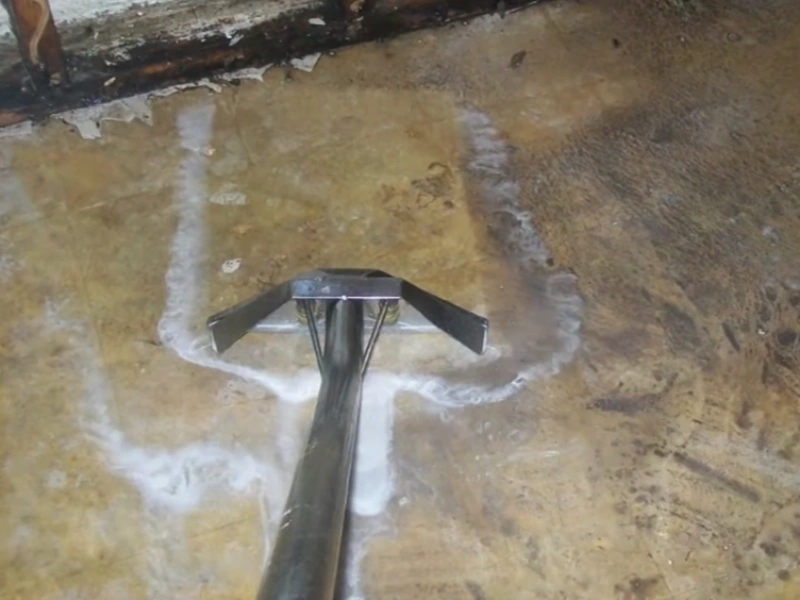
Photos taken before cleanup support your claim.
How Much Does Mold Cleanup After Water Damage Cost in Gainesville?
The honest answer is that the price follows the amount of material affected, how long it stayed wet and how hard the area is to reach. A provider has to see the job first, and we are wary of anyone who prices it blind over the phone.
| What moves the price | Smaller job | Bigger job |
|---|---|---|
| Area affected | One patch or one wall | Several rooms, subfloor or ceiling |
| How long it stayed wet | Caught within days | Weeks of hidden moisture |
| Materials | Hard surfaces that can be cleaned | Drywall, insulation, pad that must be removed |
| Access | Open floor, easy reach | Attic, crawl space, tight closets |
| HVAC involvement | None | Ducts or the air handler affected |
| Rebuild | Paint and trim | New drywall, flooring, cabinets (usually separate) |
What should a fair written scope include?
- The area measured in square feet and where it is
- What will be removed and what will be cleaned
- Containment and air filtration, listed in the scope
- How the moisture cause will be handled or who handles it
- What is not included, such as the rebuild
- No pressure to sign the same day
Is Water Damage and Mold Remediation a Scam? How Do You Spot a Pushy Quote?
Plenty of homeowners ask this, and the question is fair. Some companies lead with fear, push you to sign immediately or sell packages you do not need. Here is the difference as we see it.
| Warning sign | What an honest process looks like |
|---|---|
| Starts with “this could make your family sick” | Starts with what was found, what it means and what the options are |
| Charges more because the mold is black | Prices by measured area and material, not color |
| Pressure to sign today | Gives you time for a second opinion |
| No itemized quote | Lists scope, area and what is excluded |
| Promises a result before looking | Looks first, then explains |
| Skips the moisture source | Says plainly that mold returns if the water problem is not fixed |
A plumber who “refers” you to a restoration company is not automatically a problem, but get your own second opinion either way, and ask what the scope covers.
What Mistakes Make Mold Come Back After Water Damage?
What causes the repeat
- Painting or caulking over a damp wall
- Only spraying bleach on the surface
- Drying the surface but not the wall cavity
- Closing up the house with the AC off
- Leaving a leak half fixed
- Rebuilding before moisture readings are normal
What stops it
- Fix the source first, then dry
- Use a dehumidifier and keep indoor humidity under 60%
- Remove wet porous material instead of hoping
- Open cavities so they can dry
- Check again two weeks later
- Keep the AC drain line clear
Do You Need a Mold Test After Water Damage?
Usually not as a first step. The EPA’s position is that if you can see or smell mold, sampling is typically not needed to decide what to do. Fix the moisture and remove the mold. Testing makes sense in a few cases: a hidden problem you cannot locate, a legal or insurance dispute, or when someone wants to confirm the area is clear. Skip the petri dish from a hardware store. It only shows spores are in the air, and spores are always in the air.
Health worries are real, especially for allergies and asthma. Our mold and health page covers what the EPA and the Florida Department of Health say, without scare tactics.
Which Gainesville ZIP Codes and Nearby Towns Do We Serve?
We work around Gainesville, FL. If your home is in one of these ZIP codes, call and we will talk it through.
- 32601
- 32603
- 32605
- 32606
- 32607
- 32608
- 32609
- 32641
Nearby: Alachua 32615, High Springs 32643, Newberry 32669, Archer 32618 and Micanopy 32667.
Related help: emergency mold removal, attic mold, crawl space mold, AC and duct mold, black mold and mold prevention tips.
Why Talk to Gainesville Mold Rescue About Water Related Mold?
We focus on mold, in Gainesville, so we know what a humid summer does to a wet wall, an AC closet and a closed up rental. We will tell you what is a water job and what is a mold job, explain the scope and let you decide. No fear, no pressure. You can reach us at (352) 450-4030 or contact@gainesvillemoldremoval.net, and we are based at 1201 E University Ave, Gainesville, FL 32641.
Wet Wall, Musty Smell or Mold After a Leak?
Call Gainesville Mold Rescue. Tell us where the water came from, how long it stayed wet and whether you can see or smell mold, and we will tell you what to do next. Photos of the area help.
Water Damage and Mold Questions, Answered Honestly
How long does it take for mold to grow after water damage?
The EPA says mold can start to grow within 24 to 48 hours on materials that stay wet, which is why drying or removing wet material inside that window matters. In Gainesville humidity, a closed up house makes it harder to hit that window.
How soon should I call someone after water damage?
Right away. Stop the source, photograph the damage and call your insurer. If it is more than a small spill, call a water extraction and drying crew the same day. Call us if you can already see or smell mold.
Should I turn off the AC after a leak?
If the AC is the source, or water reached the air handler or electrical parts, shut it off and have it checked. Otherwise the AC and a dehumidifier help dry the house, so keep it running and aim for humidity under 60%.
Do I need a mold test after water damage?
Usually not as a first step. If you can see or smell mold, the EPA says sampling is typically unnecessary to decide what to do. Testing can help with a hidden problem, a dispute or confirming an area is clear.
How do I remove mold after water damage?
Fix the water source and dry the area first. A small patch under about 10 square feet on a hard, non porous surface can often be cleaned by the homeowner. Mold in drywall, insulation, carpet pad or larger areas is usually a job for a mold remediation company.
Can wet drywall be dried instead of replaced?
Sometimes, if it was clean water, dried quickly and measured dry. Drywall that stayed wet for days, was contaminated or has visible mold is often cut out and replaced. A moisture reading decides, not how it looks.
Is bleach enough to kill mold after a leak?
No. The EPA does not recommend routine bleach or biocide use, and bleach does not solve the moisture problem. On porous material like drywall it stays on the surface while the mold goes deeper.
What is the difference between water damage remediation and restoration?
Restoration usually means removing water, drying and rebuilding. Remediation usually means removing mold and fixing the moisture that fed it. Many jobs need both, in order: dry first, remediate if mold is present, then rebuild.
How can you tell if water damage is permanent?
Warped or swollen flooring, soft drywall, stains that return after drying, peeling paint and a musty smell that will not go away are signs. Moisture readings tell the real story, because a wall can look dry and still be wet inside.
How much does mold cleanup after water damage cost?
It depends on how much material is affected, how long it stayed wet, access and whether the AC system is involved. A provider has to look at the area in person before pricing it, so expect a conversation about scope first.
Does homeowners insurance cover mold after water damage?
It depends on your policy. Sudden and accidental water damage is more likely to be covered than slow leaks, and mold coverage is often limited. Call your insurer early, read the policy and keep documentation. Florida Statute 627.70132 covers claim notice.
Who pays for mold in a Gainesville rental?
Florida Statute 83.51 sets landlord maintenance duties, and Florida has no rental law that deals only with mold. Report it in writing, keep photos and records, and get legal advice if it is serious. Whoever hires a mold tester usually pays for it.
Is water damage and mold remediation a scam?
Some companies push fear, same day signing or vague packages. A fair company looks first, explains what it found, explains the scope clearly and lets you get a second opinion. The work should follow measured area and materials, not the color of the mold.
Can I stay in the house during mold cleanup?
For small jobs, often yes with the area closed off. For bigger jobs we talk it through, and people with asthma, allergies or weak immune systems may be more comfortable staying elsewhere. Ask your doctor if you are unsure.
What should I do if mold shows up after the water was dried?
Do not paint over it. Take photos, check for a missed leak or wet spot, and call us. Mold after drying usually means moisture is still in the wall or the materials were not removed in time.
Do you serve areas outside Gainesville?
Yes. We cover Gainesville ZIP codes 32601, 32603, 32605, 32606, 32607, 32608, 32609 and 32641, plus Alachua, High Springs, Newberry, Archer and Micanopy.
Sources
- U.S. EPA: A Brief Guide to Mold, Moisture and Your Home
- U.S. EPA: Mold Cleanup in Your Home
- Florida Department of Health: Mold
- University of Florida Environmental Health and Safety: 10 Things to Know About Mold
- Florida Statute 468.8419: mold-related services
- Florida Statute 83.51: landlord obligation to maintain premises
- Florida Statute 627.70132: property insurance claim notice