
Mold Removal in Alachua, FL: From the AC Closet to the Attic
Dark spots on the ceiling, a musty smell the second the AC kicks on, or growth behind an appliance you finally pulled out. We find the water feeding it, contain the mold, remove what can’t be cleaned and check the job before anything gets rebuilt. Straight answers from a Gainesville crew.
- 24/7 Emergency Calls
- Gainesville based crew
- Independent local contractors
- Moisture source first
Checked against EPA and Florida Department of Health guidance, October 2026.
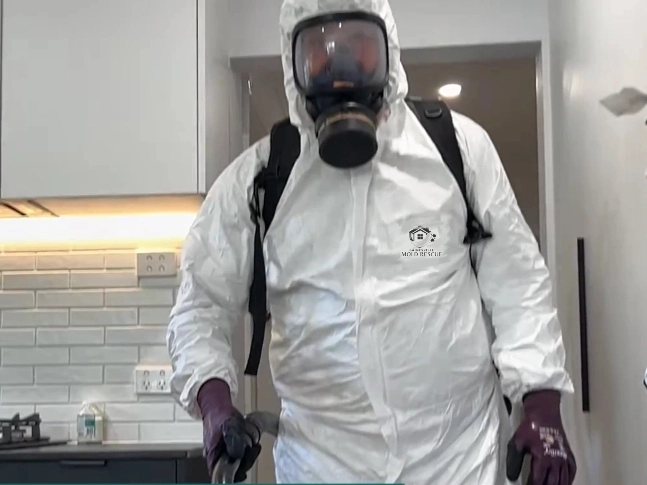
Mold Removal in Alachua Starts With Finding the Water
Alachua is a mix. Downtown has storefronts and houses from around the early 1900s. Along US 441 there are newer slab homes. Past the city limits, plenty of lots run on a private well and septic. Different houses, same rule: mold grows where something stays damp. In places like these, a musty smell often traces back to an AC closet, an attic or a wall nobody looks behind.
This page follows the order most people need: is it mold, where it hides, what to do first, whether you can handle it, what shapes the work, and what we actually do once we are there.
Is It Mold? What Alachua Homeowners Usually Notice First
Most people don’t find mold. They find a smell, a stain or a spot that keeps coming back. Here’s what those clues often point to.
| What you notice | What it often means | First thing to check |
|---|---|---|
| Musty smell right when the AC starts | Damp or growing material near the air handler, in the closet or in the ducts | Open the AC closet: base, drain pan, drain line, walls |
| Dark spots spread across a ceiling or around a light | Moisture from above: attic, roof leak or AC condensation | Attic after the next rain, duct insulation, roof flashing |
| Dark speckled line along a window frame | Condensation that never fully dries | Window seals, indoor humidity, blinds that block airflow |
| Smell strong in one room, nothing visible | Growth inside or behind a wall, often from a slow leak | The other side of the wall, behind appliances, under sinks |
| Fuzzy growth on closet items or shoes | High indoor humidity, closed doors, no airflow | A hygrometer reading, and anything stored against exterior walls |
| Brown ring on a ceiling | A leak at some point. A stain alone is not mold | Is it still growing or still wet? |
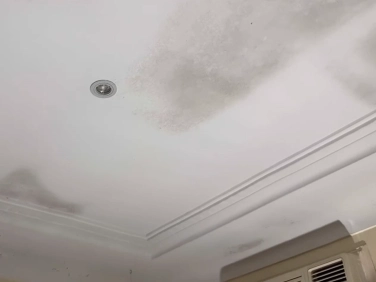
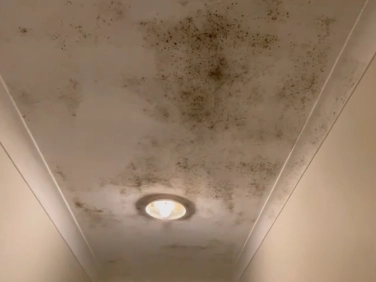
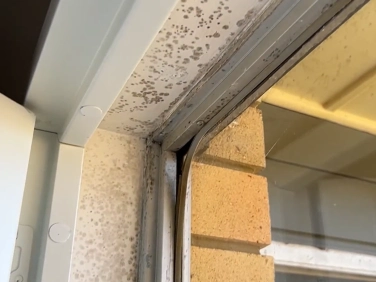
A water stain is proof moisture was there. Mold needs a damp surface to keep going. Not sure which you have? Our guide on mold vs mildew shows the difference, and black mold (Stachybotrys) explains why color alone tells you very little. Photos help us a lot: email them to us or call.
Where Does Mold Hide in an Alachua Home? Start at the AC Closet
The AC closet is one of the most common hiding places for mold and one of the least checked. You see your bathroom every day. When did you last open the closet where the air handler lives?
Why does the AC closet grow mold?
The coil and drain pan run cold, so in muggy air they sweat all day. The closet is small, usually closed up and has little air movement. Add a gap that pulls in warm humid air, and a place nobody cleans, and you have a damp spot that stays damp.
- 1Sweating coil and drain panCold metal in muggy air drips all day. The pan should drain, not sit full.
- 2Clogged drain lineA backed up line can wet the floor and base of the unit and the wall next to it.
- 3Gaps pulling in warm airCracks and open penetrations draw humid outside or attic air onto cold surfaces.
- 4Closed door, no return airAir stops moving, so wet surfaces stay wet. A return path keeps the closet drier.
- 5Damp duct wrap or insulationWet insulation holds moisture against wood and drywall around it.
Can mold in the AC spread through the house?
It can. The system moves air through the whole house, so growth in or near the air handler can reach other rooms. The reverse happens too: a wet carpet or a leak somewhere else gets pulled into the system and shows up where you didn’t expect it. If the equipment itself has to come out, that’s an HVAC contractor’s job, and the mold work is ours. Our guide to mold in air ducts and HVAC covers that side.
How do you check your AC closet?
Ten minutes, twice a year, with a flashlight:
- Look at the floor and the base of the unit for water, rust or a dark ring
- Check the drain pan and drain line for standing water
- Feel the insulation on the lines and ducts for dampness
- Look at the walls and baseboard around the unit for dark spots
- Smell the closet right after the AC has been running
If you see widespread growth, don’t scrub it. Take photos and call. For the routine side, see our AC and mold prevention guide.
Musty smell every time the AC kicks on? A professional look finds out why.
☎ Call (352) 450-4030Can Mold Grow Behind the Stove, the Fridge or a Bathroom Wall?
Yes, and it’s the sneaky kind. A drip every few seconds inside a wall doesn’t stain a ceiling or spike a water bill. It just keeps drywall and framing damp, week after week, behind something heavy that nobody moves.
How a hidden leak shows up in the next room
A slow drip starts
A bad joint or a worn fitting inside a wall or behind an appliance.
The wall stays damp
Drywall and framing soak it up. Nothing looks wrong from the front.
Growth builds out of sight
Behind the stove or fridge, where no one looks or cleans.
The smell shows up next door
Strong in a room with nothing visible. The source is on the other side.
Tip: if a musty smell is strong in one room and you can’t find a thing, go check the other side of the wall. A bathroom wall often backs onto a kitchen, a laundry or a closet.
Where to look around the house
| Spot | What can leak | Quick check |
|---|---|---|
| Refrigerator with an ice maker | The small water line and its fitting | Pull the fridge out. Look for a damp floor, a kinked line or dark wall behind it |
| Range or cooktop wall | Plumbing or lines running through the shared wall | Check the wall behind it for stains or soft drywall. If a rigid gas line is connected, don’t move it. Ask a pro |
| Under sinks and the dishwasher | Supply lines and drain connections | Flashlight and a dry paper towel on every fitting |
| Washer hookups | Hoses and the valve box | Look inside the box for drips or staining |
| Water heater closet | Relief line and fittings | Floor and base for rust and dampness |
| Shower or tub wall | Grout, valves and the back side of the tile wall | Smell next door, soft or stained drywall on the other side |
If the wall has been wet for a while, the drywall may have to be opened and removed. That’s normal, not a sign something went wrong. For the water side, see water damage restoration.
Found Mold? Here’s What to Do Before You Call Anyone
Do these in the first day or two and a small problem stays small. None need a contractor.
Leave it alone
Don’t scrub, sand or point a fan at it. That sends spores into clean rooms. Don’t paint over it either. It’s still under there.
Exception: a small patch on a hard surface (next section).Stop the water
Mold stops growing when the moisture stops. Shut off the fixture or the main if you can’t find the leak. Check the AC drain line, the ice maker line and under every sink.
Can’t find it? Say so when you call.Dry what’s wet
The EPA’s rule of thumb is 24 to 48 hours. Run the AC, add a dehumidifier, move wet items out. Our 48 hour drying guide has the steps.
Soaked insulation and carpet rarely dry in place.Take photos and notes
Date, location, what it looks like, any recent leak, storm or repair. Photos of the source matter most if you file an insurance claim.
Take them before anything gets cleaned or removed.Should You Clean Mold Yourself or Hire a Pro in Alachua?
It depends on how much there is and where. The EPA’s rough line is about 10 square feet. Under that, on a hard surface, with the moisture already fixed, many homeowners handle it. Over that, or inside a wall or an AC system, the job changes, because spores travel.
Usually fine to handle yourself
- Under about 10 sq ft on tile, sealed counters or other hard surfaces
- You know the cause and it’s fixed
- It hasn’t come back after one cleaning
- Nobody in the home has asthma, allergies or a weakened immune system
Better to call a pro
- More than 10 sq ft, or growth on drywall, wood, carpet or insulation
- Anything inside the AC closet, ducts or a wall
- A smell with no visible source
- It keeps coming back
- Infants, older adults or anyone with breathing problems at home
What are the best products for DIY mold removal?
Nothing fancy. Detergent or soap and water, a soft brush, microfiber cloths, an N95 respirator, gloves, goggles and sealed trash bags. A hygrometer tells you if the room is too humid, and a dehumidifier helps if it is. The EPA doesn’t recommend routine use of bleach or other biocides, and never mix bleach with ammonia.
What naturally kills mold in a house?
Mold needs water, food and oxygen. You can’t take away the food (it’s your house) or the oxygen, so you take away the water. Soap and water for hard surfaces, then dry it completely. If the moisture comes back, so does the mold, whatever you used.
Is professional mold cleaning worth it?
| It’s worth the call when | You can probably skip it when |
|---|---|
| The growth is large, hidden or inside the AC system | It’s a small hard-surface patch and the cause is fixed |
| You don’t know where the water is coming from | You found the leak, repaired it and it dried fast |
| It’s on drywall, wood or insulation that stayed wet | It’s surface spotting on tile or sealed grout |
| Someone at home has breathing problems | Nobody is sensitive and the area is small |
| You’re selling, buying or filing an insurance claim | You only need a quick wipe and a dehumidifier |
Our small mold cleanup guide walks through the DIY steps.
Why Mold Shows Up Differently in Alachua Homes
Alachua is the second largest city in Alachua County. US 441 runs east and west through town, I-75 passes just west of downtown, and the Main Street Historic District sits south of US 441 with buildings dating to about 1898 to 1915. The Gainesville area is hot, humid and wet in summer, and parts of Alachua sit close to wooded preserves like San Felasco Hammock and Mill Creek, where shade can slow drying on roofs and walls.
| Home type | Typical moisture pattern | What we check first |
|---|---|---|
| Older homes near the downtown historic district | Aging roofs and flashing, original windows, plumbing added or changed over the years | Roof and flashing, window sills, attic, plumbing runs |
| Newer slab homes along the US 441 corridor | AC condensation on attic ducts and roof decking, AC closet moisture | AC closet, attic, duct insulation, window seals |
| Rural lots on well and septic | Slow plumbing leaks and wet ground near the house | Well line fittings, drain field wetness, slab edge or crawl space |
| Townhomes, duplexes and rentals | Shared walls, bath fans, window condensation, AC closets nobody opens | AC closet, window frames, wall next to wet rooms |
Age matters less than how moisture is managed. A well kept older home can beat a newer one with an AC condensation problem in the attic. For crawl space homes with well and septic, our High Springs mold removal page goes deeper.
Renting in Alachua? Who handles mold?
Florida law sets landlord maintenance duties for residential rentals (Fla. Stat. 83.51), though details depend on your lease and the unit. If you find mold or a leak, tell the landlord in writing, keep photos and dates, and don’t wait. If it spread to your belongings, ask whether your renter’s insurance covers a covered event. This isn’t legal advice. More in our renters guide.
When Is Mold Worst in Alachua? A Season by Season Guide
Summer into early fall. Weather data for the Gainesville area puts the wet season at about June 1 to September 20, with the muggiest stretch from early May through October. Atlantic hurricane season runs June 1 to November 30. That’s a long risky half of the year.
Planning view of mold risk by month
A planning guide based on wet season, muggy season and hurricane season dates, not a measurement. Weather data: WeatherSpark, Gainesville.
| Season | What it does to an Alachua house | What to do |
|---|---|---|
| Late spring (Apr to May) | Humidity climbs and the AC starts working hard | Open the AC closet, clear the drain line, check the attic |
| Wet season (Jun 1 to Sep 20) | Daily storms, constant humidity, coils sweating all day | Keep the AC running, indoor humidity under 60%, look at ceilings after heavy rain |
| Hurricane season (Jun 1 to Nov 30) | Roof leaks, wind driven rain, power outages that stop the AC | Dry wet materials within 24 to 48 hours, check the attic and ceilings after a storm |
| Fall (Oct to Nov) | Still muggy into October, leaves clog gutters | Don’t shut the AC off early. Clear gutters |
| Winter (Dec to Mar) | Cooler mornings can leave condensation on window glass and frames | Wipe windows, fix leaks and schedule repairs now |
What humidity should you aim for?
The EPA says to keep indoor humidity below 60%, and ideally between 30% and 50%. A simple hygrometer shows where you are. Our Florida humidity guide and the page on where to put a dehumidifier cover the rest.
Should you set the AC to 80 or 85 to save money?
You’ll find that tip online. The catch: a warmer setpoint means the AC runs less, and it only dehumidifies while it runs. In a muggy Florida summer, indoor humidity can creep up. If your hygrometer reads over 60%, lower the setpoint a little or add a dehumidifier, and don’t leave the house closed up with the AC off for long stretches. See leaving town with the AC off.
What about after a storm?
Check the attic, ceilings and window corners within a day or two. If anything stayed wet, emergency mold removal or attic mold removal may be the right call. Our storm prep guide has the checklist.
How Much Does Mold Removal Cost in Alachua and Florida?
Anyone quoting a firm number over the phone without seeing the space is guessing. The scope follows the size of the job and how hard it is to reach. These are the factors that shape it.
| What shapes the job | Why it matters | What to ask |
|---|---|---|
| Size of the affected area | More square feet means more time, material and containment | Is it measured, or a rough guess? |
| Where it is | Attics, tight closets and wall cavities take more labor than an open room | Is access included? |
| Material that must come out | Wet drywall and insulation can’t be cleaned. They’re removed | What’s coming out and what stays? |
| The moisture fix | Plumbing, roof, AC drain or ductwork repairs are usually separate trades | What has to be fixed so it doesn’t return? |
| HVAC involvement | If growth is on equipment, an HVAC contractor may need to be involved | Who does what, and in what order? |
| Containment and air filtration | Barriers and HEPA filtration keep spores from spreading | How is the area isolated? |
| Rebuild afterward | New drywall, paint or insulation is separate from removal | Is rebuilding part of the job or separate? |
What a fair written scope looks like
- The area to be treated, in square feet, and how it was measured
- What material will be removed and what will be cleaned
- How the work area is contained and how the air is filtered
- Drying plan and timing
- What’s not included: moisture fixes, rebuilding, any clearance check
That’s what we give you after we’ve seen the space.
Does homeowners insurance cover mold removal in Florida?
Sometimes. It usually depends on the cause. Mold after a sudden, covered event like a burst pipe or storm damage is more likely to be covered. Mold from long term humidity or a slow leak is commonly excluded. Many policies that cover mold set a cap, so read yours and ask your insurer. Photos, dates and a written record of the moisture source help any claim.
Is it illegal to sell a house with mold in Florida?
No, but you can’t hide it. Under Florida’s Johnson v. Davis decision, a seller who knows of facts that materially affect a home’s value, and that a buyer can’t easily see, has to disclose them. Mold, or water damage that led to it, can fall into that group. Ask your agent or a Florida real estate attorney. This isn’t legal advice. The Florida Realtors explainer is a good start.
What does “stage 4 mold” actually mean?
Nothing official. People use it to mean “really bad,” but the industry standard (IICRC S520) doesn’t have a Stage 4. It describes three conditions:
Heavy, widespread growth is still Condition 3. Size, location and material decide the job, not a stage number.
Want to talk through your Alachua home? Start with a call.
☎ Call (352) 450-4030What Happens During Mold Removal in Alachua, Step by Step
Every job is a little different, but the order doesn’t change.
Inspect and find the source
Moisture readings, a look at the AC closet, attic and walls, and the cause. Then a plan for the work.
Contain the area
Barriers go up and air filtration runs so spores don’t travel to clean rooms.
Remove and clean
What can’t be cleaned gets bagged out. What stays is HEPA vacuumed and cleaned.
Dry and fix the cause
Dehumidifiers and air movers bring moisture down. The leak, drain or ventilation gets corrected.
Check and rebuild
A final check before anything goes back. An independent clearance check is available.
What does the cleaning stage look like?
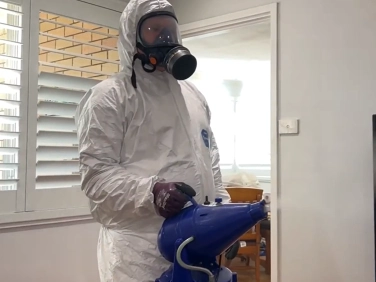
Crew members wear full protective gear: suit, respirator, gloves. Surfaces that stay are cleaned and treated as needed, and a HEPA vacuum picks up the fine dust. Then we dry the space and check readings before it’s closed up.
Nothing gets rebuilt until the area has been checked.
Do you need a mold test before removal?
Not always. For a small visible patch you can often go straight to cleanup. An assessment earns its place when the source isn’t obvious, the growth is hidden or the area is large. The CDC doesn’t recommend routine mold testing. Here’s how the roles split in Florida:
| Role | What they do | Good to know |
|---|---|---|
| Mold assessor | Evaluates the problem, writes a plan and can do a clearance check afterward | Optional for small jobs |
| Mold remediator | Does the physical removal, cleaning and drying | That’s us |
| Clearance check | Confirms the work area is clean before rebuilding | Florida keeps assessment and remediation separate: one company can’t do both on the same property within 12 months (Fla. Stat. 468.8419) |
The full breakdown is on our mold remediation process page.
Three Mold Stories That Fit Alachua Homes
These are illustrative examples based on common patterns, not specific past clients. What they share: no flood, no disaster, just slow moisture in a place nobody was looking.
The AC closet nobody opened
A musty smell every time the AC started, worse in summer. The closet floor had a faint dark ring, the drain pan was half full and the insulation on the lines was damp. The unit was sweating faster than the drain could keep up, and the closet had no airflow.
Fix: clear the drain, address growth in the closet, improve airflow.The wall behind the stove
A strong smell in a hallway with nothing to see. The wall on the other side belonged to a kitchen, and a slow leak had kept it damp behind the range for months. The drywall was soft when pressed.
Fix: repair the line, remove the wet drywall, dry the cavity.The attic over a newer ceiling
Dark spotting on a bedroom ceiling and no roof leak anywhere. Cold ducts in a hot attic were sweating onto the roof decking and insulation above.
Fix: correct the duct insulation and ventilation, then remove affected material.Why Call a Gainesville Crew for Mold Removal in Alachua
Gainesville Mold Rescue is based at 1201 E University Ave in Gainesville and serves Alachua and the rest of Alachua County. A few things we hold to:
- We tell you when it’s a DIY patch. If you can handle it, we’ll say so.
- We look first and explain the scope once we’ve seen the space.
- We fix the cause, not only the visible mold. If it’s the AC drain, a fitting or the attic, that’s in the plan.
- Call any time, day or night, and we’ll help get a local provider to your address as soon as their schedule allows.
Want to know more first? Read about Gainesville Mold Rescue or see what neighbors say in the homepage reviews.
How Do You Keep Mold From Coming Back in an Alachua Home?
- Open the AC closet twice a year and keep the drain line clear
- Give the closet some airflow if it’s sealed shut
- Check behind the fridge and under sinks when you clean
- Keep indoor humidity under 60%, ideally 30 to 50%, and check it with a hygrometer
- Look at the attic and ceilings after storms
- Fix drips as soon as you see them and run bath fans after showers
- Wipe window frames if condensation shows up on cool mornings
Weekend homework: open the AC closet, look behind the refrigerator, and check one ceiling corner you never look at. It takes half an hour. The full room by room list is in Mold Prevention Tips for Gainesville.
Mold Removal Around Alachua, FL and Alachua County
We cover Alachua (ZIP 32615) and the nearby communities, from the Main Street Historic District and the US 441 corridor to Hal Brady Recreation Complex, Legacy Park, Progress Corporate Park and the roads toward San Felasco Hammock Preserve State Park. Confirm coverage for your exact address when you call.
- 32615 Alachua
- 32643 High Springs
- 32669 Newberry
- 32618 Archer
- 32667 Micanopy
- 32641 Gainesville (our base)
Based in the city? Head to our Gainesville mold removal homepage.
Beyond the living room, we also do commercial mold remediation, crawl space mold removal and mold encapsulation. Wondering what you are looking at? Our guides to Aspergillus and Cladosporium explain the two molds Alachua County homes see often.
Alachua Mold Removal: Your Questions Answered
Short answers to the questions people ask most. Don’t see yours? Call (352) 450-4030.
Do you offer mold removal in Alachua, and how fast can you get there?
Yes. We serve Alachua and the rest of Alachua County from our Gainesville base and offer professional look. We’ll confirm timing for your address when you call.
Where is mold most often found in a house?
Often in the AC system and the closet it sits in, in attics, around windows, in bathrooms and behind appliances or walls with slow leaks. The ones people miss are the AC closet and the wall behind the stove or fridge.
Why does my AC closet smell musty?
The coil and drain pan sweat in humid air, and the closet usually has little airflow. A clogged drain line, damp insulation or gaps pulling in warm air make it worse. Check for water, rust and dark spots, and call if you see growth.
Can mold in the AC spread through the house?
It can. The system moves air through the whole home, so growth near the air handler can reach other rooms. If equipment has to come out, that’s an HVAC contractor’s job, and the mold cleanup is ours.
Can mold grow behind a stove or refrigerator?
Yes. A slow leak at a water line or a fitting can keep a wall damp for months without any stain. If a smell is strong in one room and nothing is visible, check the other side of the wall.
How much does mold removal cost in Alachua and Florida?
It depends on the size of the area, how hard it is to reach, how much material has to come out and what needs fixing so it doesn’t return. A provider has to see the space first, so expect a conversation about scope before any pricing.
Does homeowners insurance cover mold removal in Florida?
Sometimes. Mold after a sudden, covered event is more likely to be covered, while long term humidity or a slow leak is commonly excluded. Many policies cap mold coverage. Your insurer decides, so read your policy and document the source.
Is it illegal to sell a house with mold in Florida?
No, but sellers can’t hide it. Under Johnson v. Davis, a seller who knows of facts that materially affect value and that a buyer can’t easily see must disclose them. Ask your agent or a Florida real estate attorney. This isn’t legal advice.
What naturally kills mold in a house?
Nothing replaces fixing the moisture. For a small hard-surface patch, the EPA suggests soap or detergent and water, then complete drying. It doesn’t recommend routine bleach or other biocides.
Should I hire a professional or do it myself?
If it’s under about 10 square feet on a hard surface and the cause is fixed, many homeowners handle it with gloves, goggles and an N95. Call a pro for larger, hidden or recurring growth, anything in the AC system or a wall, or if someone at home has breathing problems.
Do I need a mold test before removal?
Not always. The CDC doesn’t recommend routine testing. An assessment helps when the source is unclear. Florida keeps assessment and remediation separate, so if you want an independent clearance check, we point you to one.
Should I set the AC to 80 or 85 to save money?
A warmer setpoint saves energy but the AC dehumidifies less because it runs less. Check a hygrometer, aim for under 60% humidity and don’t leave the house closed with the AC off for long.
What time of year is worst for mold in Alachua?
Summer into early fall. The wet season runs about June 1 to September 20, the muggiest period runs early May through October and hurricane season runs June 1 to November 30.
I’m renting and found mold. What do I do?
Tell the landlord in writing, keep photos and dates, and don’t wait. Florida law sets landlord maintenance duties for residential rentals, though the details depend on your lease. This isn’t legal advice.
What should I expect during mold removal?
An inspection to find the source, containment, air filtration, removal of materials that can’t be cleaned, HEPA vacuuming and cleaning, drying and a final check before rebuilding. The scope is worked out after the first look.
Will mold come back after removal?
Only if the moisture does. Removal clears the mold that’s there. If an AC drain, a leak or high humidity caused it, that has to be fixed too.
More reading: mold vs mildew, black mold removal and mold in air ducts and HVAC.
Ready to Talk to Someone in Alachua?
If you smell something when the AC starts, found dark spots on a ceiling or want someone to look behind the stove, call Gainesville Mold Rescue. We’ll tell you what the problem needs, including when the answer is “you can handle this.”
Call now to talk it through.
Sources
- U.S. EPA: A Brief Guide to Mold, Moisture and Your Home
- U.S. EPA: Mold Cleanup in Your Home
- Florida Department of Health: Mold
- Florida Statute 468.8419: mold-related services
- Florida Statute 83.51: landlord obligation to maintain premises
- Florida Realtors: Disclose, Disclose, Disclose (Johnson v. Davis)
- WeatherSpark: Average Weather in Gainesville, Florida
- Wikipedia: Alachua, Florida