
Attic Mold Removal in Gainesville, FL: Why It Grows Here and What Actually Fixes It
Dark patches on the roof decking, a musty smell when the attic hatch opens, insulation that looks damp in July. Most advice online was written for cold-climate winters. Gainesville attics fail in a different way, and the fix has to match. Here is what causes it locally, what you can handle yourself, and what a proper job involves.
- Built for Florida’s humid climate
- Follows EPA & CDC guidance
- Serving all of Gainesville, FL
Reviewed October 2026 by the Gainesville Mold Rescue team
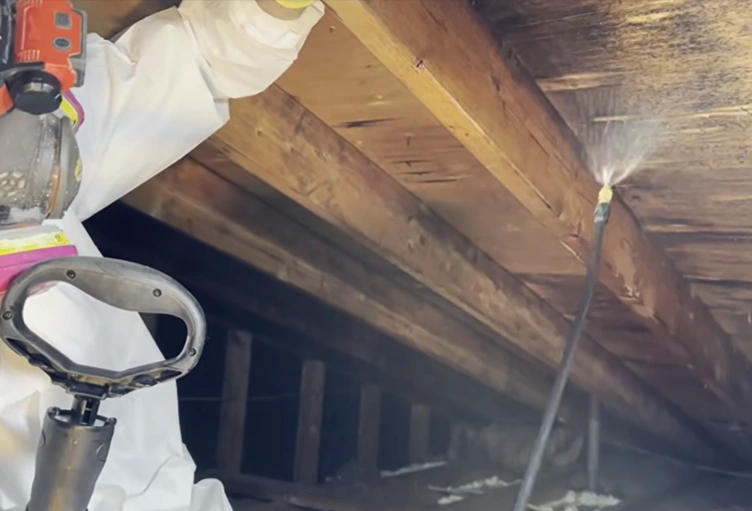
What Does Attic Mold Look Like, and How Serious Is It?
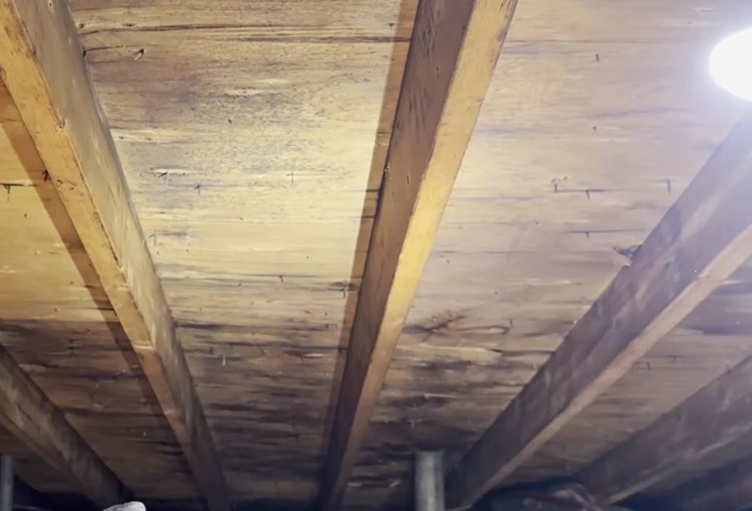
Attic mold usually shows up on the underside of the roof deck, on rafters and trusses, and on the top of insulation. It can be black, dark green, gray or white, and it can be fuzzy, speckled or a flat stain. Color alone does not identify the species, and it does not tell you how harmful it is. If you are not sure whether you are looking at mold or mildew, or at true black mold, the cleanup rules are the same.
Common signs you have attic mold
- Dark spots or staining on the roof decking or wood framing
- A musty, earthy smell near the hatch or in upstairs rooms
- Damp, matted or discolored insulation
- Peeling or bubbling paint, or stains on ceilings below
- Rusty nails or damp spots around the roof penetrations
- A hot, humid upstairs, which can point to wet or compressed insulation
Is attic mold dangerous?
It is worth fixing, but it is rarely an emergency. Mold can irritate the nose, eyes, throat and lungs, and it hits people with asthma, allergies or weakened immune systems hardest. Serious illness from household mold is uncommon. The larger risk is slow damage to wood and insulation if the moisture keeps coming. Read more on mold and health effects.
Why Gainesville Attics Grow Mold: It Is Not the Winter-Condensation Story
Most online guides blame warm house air condensing on a cold roof in winter. That happens in Michigan and Pittsburgh. In North Central Florida the problem is usually humid outdoor air meeting cool surfaces during our long wet, muggy season.
Local weather data puts the wet season at roughly June 1 to September 20, with July the rainiest month at about 6 inches, and oppressive humidity running from early May through October. Hurricane season (June 1 to November 30) overlaps almost all of it. Mold needs moisture, a food source and time. Gainesville supplies the moisture for months.
1. Cold AC ducts and the air handler sweat
In many Gainesville homes the air handler and ductwork live in the attic. Cold supply ducts and the air handler cabinet can drop below the dew point of attic air, and moisture condenses on them. Building Science Corporation documents this duct-sweating problem in hot-humid climates and notes that it is worst in South Florida and Texas, with mold growing on the porous sealant (mastic) at duct joints. The same physics applies here. It is made worse by thicker attic insulation, radiant barriers and longer air-conditioner run times, which keep ducts colder. If you see growth on or near ducts, read about mold in HVAC and air ducts.
2. Bathroom, kitchen and dryer exhaust that stops in the attic
A bath fan that dumps into the attic instead of outdoors puts a shower’s worth of moisture up there every day. This is common in older homes and DIY remodels, and it is also a frequent cause in newer builds where the duct was never connected to a roof or wall cap.
3. Roof leaks, storm damage and slow drips
A failed flashing, a cracked vent boot or storm damage can wet the roof deck for weeks before a ceiling stain appears. Growth often starts around penetrations like skylights, plumbing vents and chimneys. After a storm, dry the area fast and see our guide to water damage restoration.
4. Air leaks from the house into the attic
Gaps around recessed lights, attic hatches, wiring and plumbing penetrations let conditioned, humid air drift into the attic. Power attic fans can make this worse by pulling air through ceiling gaps from the rooms below, so check before adding one.
What a Gainesville field study found
A University of Florida and Oak Ridge National Laboratory field study monitored four Florida homes, including one in Gainesville, between June 2016 and June 2017. The attics were sealed ones with spray foam. Wood moisture content stayed under 20 percent in all four, which is generally treated as the line for mold and decay risk, although the Gainesville house briefly touched about 20 percent in January, and its attic humidity ran above 90 percent at times between December and June. The takeaway is simple: Florida attic moisture swings widely through the year, so a one-time wipe-down rarely solves it.
Where this shows up around town
We see the same patterns across older frame and raised-foundation homes in the Duckpond and Northeast Gainesville, newer subdivisions around Haile Plantation, Tioga and Kanapaha, and rentals near UF and Midtown where small leaks sit unreported between tenants. New construction is not exempt. Poorly sealed bath vents, insulation that blocks the soffit and unsealed ceiling penetrations trap moisture in homes that are only a few years old.
Can You Remove Attic Mold Yourself, or Do You Need a Professional?
The EPA draws the line at about 10 square feet, roughly a 3-by-3-foot patch, and Florida’s mold licensing law uses the same 10 contiguous square feet. Attics make that line harder to judge, because you rarely see all of the growth from the hatch.
| Situation | DIY may be reasonable | Call a professional |
|---|---|---|
| Size | A small spot under about 10 sq ft | More than 10 sq ft, or growth across the roof deck |
| Surface | Hard, easy-to-reach framing with no insulation damage | Insulation affected, or growth on porous or deteriorated wood |
| Cause | You found and fixed one clear source | You cannot tell where the moisture is coming from |
| Location | Open, well-lit area near the hatch | Around ducts, the air handler, or tight eaves and corners |
| People in the home | No one with asthma, allergies or a weak immune system | Infants, older adults, or anyone with lung or immune conditions |
| Recurrence | First time, and it stayed gone | It keeps coming back |
If you are cleaning a small area yourself
- Fix the moisture source first. Cleaning mold that is still being fed is wasted effort.
- Wear an N95 respirator at minimum, plus gloves, goggles and a disposable suit, per the CDC.
- Mind the heat. A Gainesville attic in summer can be dangerously hot, so work in the early morning, take breaks, carry water and tell someone you are going up.
- Do not stir up dust. Skip dry scrubbing and leaf blowers, and keep the hatch closed when you leave.
- Bag and discard anything porous that is visibly moldy, and carry it out sealed.
What can you spray in the attic to kill mold?
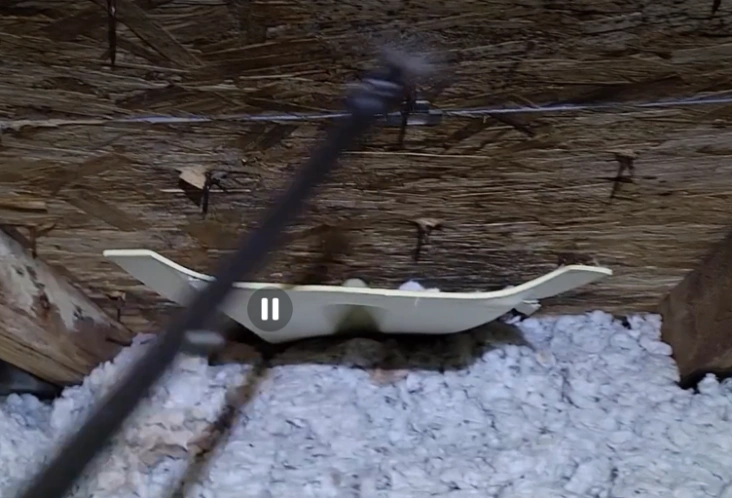
This is one of the most searched questions, and the honest answer has a few parts. The EPA does not recommend biocides as a routine part of mold cleanup. Bleach can disinfect hard, sealed surfaces but does not soak into porous wood, which is why forum advice about it is so mixed. Detergent and water on hard surfaces, followed by thorough drying, is the baseline.
Many homeowners also use commercial mold-stain removers and preventive sprays applied with a pump sprayer. They can lighten the stain, but they do not stop a roof leak or a sweating duct. Whatever product you choose, follow the label, ventilate, protect your skin and eyes, and never mix cleaners.
What not to do
- Do not paint or seal over active growth. It will return through the coating.
- Do not add a power attic fan without checking for ceiling air leaks first.
- Do not go up alone on a hot day, or step between joists onto bare drywall.
Sources for this section include the EPA’s mold cleanup guide and the CDC’s mold cleanup page.
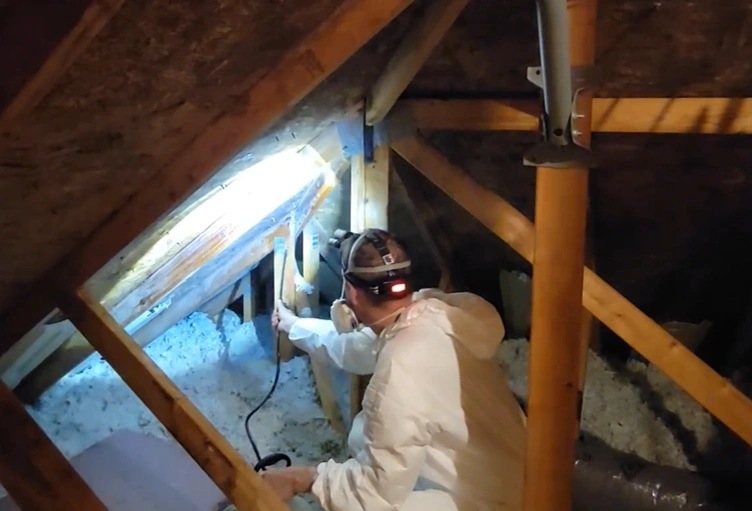
How Professional Attic Mold Removal Works
A proper job controls the spores and the moisture, not just the stain.
Moisture meters, a visual check of the roof deck, ducts, penetrations and exhaust runs, and sometimes thermal imaging trace the water to its source.
The work area is sealed off from the living space, and negative air machines with HEPA filtration keep disturbed spores from drifting into the house.
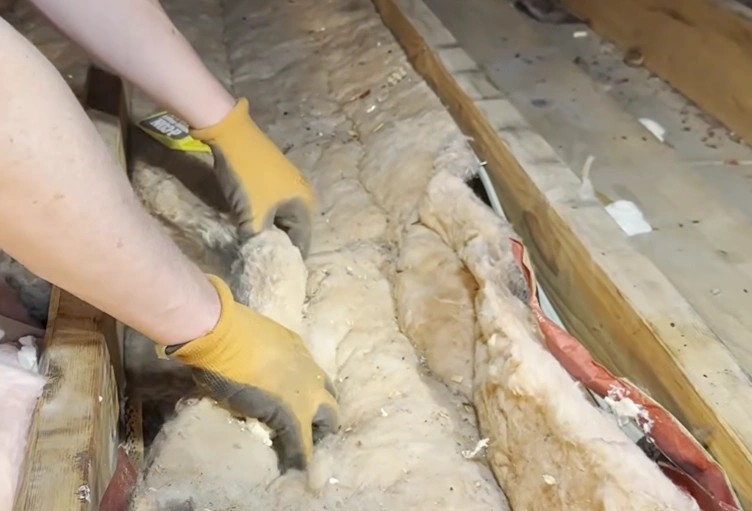
Wet or mold-affected insulation and any deteriorated material are bagged and removed. Porous material is discarded, not cleaned.
Framing and roof decking are HEPA vacuumed and cleaned. Depending on the scope, methods can include abrasive cleaning such as soda blasting or dry-ice blasting, followed by antimicrobial treatment and, where appropriate, a sealing coating.
That can mean repairing the roof, connecting exhaust ducts outdoors, sealing ceiling air leaks, insulating or sealing ducts, or adding dehumidification. If the cause is not fixed, the job is only temporary.
The area is dried and checked. On larger jobs, an independent licensed Mold Assessor can confirm the result before insulation goes back in.
Do You Have to Replace the Attic Insulation?
Often, yes, but not always. Insulation is porous, and spores and moisture settle into the fibers. Insulation that is wet, matted or visibly moldy is normally removed and replaced. Dry, clean insulation next to a moldy roof deck can sometimes stay, depending on how far the contamination has spread. That is a judgment made on site, not from a photo.
Before new insulation goes in
- The moisture source is fixed and the framing is dry.
- Soffit vents are clear. Insulation should not block airflow at the eaves, and baffles help keep the path open.
- Ceiling air leaks, such as light fixtures, wiring holes and the attic hatch, are sealed.
- Exhaust fans vent outdoors, not into the attic.
- Ventilation openings are in balance. A common rule of thumb is about 1 square foot of vent opening per 300 square feet of attic floor.
Ventilation strategy is different in a hot-humid climate than in a cold one. Before changing vents or adding a fan, have an insulation, roofing or HVAC specialist look at the whole system.
How Much Does Attic Mold Removal Cost in Gainesville?
What an attic job involves depends on how much insulation is wet or moldy, how big the roof deck area is and how hard it is to reach. A provider needs to see the attic before setting a price.
| What changes the job | Why it matters |
|---|---|
| Affected square footage | The biggest driver, and hard to see from the hatch |
| Insulation removal and replacement | Adds labor, disposal and material |
| Access and height | Tight eaves, low pitch and heat slow the work |
| Cleaning method | Hand cleaning, soda blasting and dry-ice blasting take different time and equipment |
| Fixing the cause | Roof repair, duct work and venting are often separate |
| Verification testing | Independent assessment is a separate service from a separate company |
Ask for a written scope that lists measured square footage, what will be removed, what containment and air filtration are included, and whether re-insulating and repairs are part of the job. Be cautious of a firm verdict over the phone, or a plan that cannot be explained. If a plan seems far out of line, get a second opinion before you decide.
Is Attic Mold Covered by Homeowners Insurance in Florida?
Often covered
Mold that results from a sudden, covered event, such as storm damage that opened the roof, reported promptly.
Usually not covered
Long-term leaks, ongoing humidity, duct condensation or maintenance problems that went unaddressed.
Watch the limits
Many policies cap mold or fungi coverage at a fixed amount. Check your declarations page.
Mind the deadline. Under Florida Statute 627.70132, notice of a new or reopened property claim is due within 1 year of the date of loss, and a supplemental claim within 18 months. For storms, the date of loss is tied to the NOAA-verified event. Photograph the attic before anything is removed and keep every invoice and report. We are not adjusters, and what your policy covers is between you and your insurer.
How to Hire an Attic Mold Remediator in Gainesville Without Getting Burned
- Verify the license yourself. Check the company on the Florida DBPR mold lookup before signing. Jobs over 10 contiguous sq ft require a licensed Mold Remediator.
- Ask what causes it in your attic. A contractor who only talks about killing mold and never about the moisture source is selling a repeat job.
- Get containment and HEPA air filtration in writing. A scope that only says “spray and wipe” is not enough.
- Ask who verifies the result. On larger jobs, an independent assessor should confirm it.
- Ask for a clear scope based on square footage and materials.
- Check after storms. Out-of-area crews show up after major weather. Verify the license and local references first.
Common Attic Mold Situations Around Gainesville
These are typical patterns, not specific past customers.
Mold found at a home inspection
You are buying and the inspector flags attic growth. Get the scope and cause in writing, ask for a remediation scope and talk to your agent or attorney about how to handle it before closing.
The post-storm roof leak
A wind-driven leak after a hurricane or summer storm dries on the surface but stays wet in the insulation, and growth shows up weeks later.
The sweating duct
Dark growth and drips along a supply duct or around the air handler, with stained ceiling drywall below.
The bathroom fan that vents into the attic
Damp insulation and dark framing right above a bathroom, often in an older home or a DIY remodel.
The new-build surprise
A home only a few years old with unconnected vents, blocked soffits or air leaks around ceiling fixtures.
The rental no one checked
A student or young family notices a smell. Written notice to the landlord with dated photos is the starting point.
Attic Mold Removal Across Gainesville, FL
We cover homes and rentals from Midtown and the UF area to Haile Plantation, Tioga, the Duckpond, Millhopper and Kanapaha, and out to the smaller towns around the county.
Gainesville ZIP codes
- 32601
- 32603
- 32605
- 32606
- 32607
- 32608
- 32609
- 32641
Nearby communities
Related pages: black mold removal, crawlspace mold removal, emergency mold removal and our Gainesville mold removal resources.
How to Keep Mold Out of a Florida Attic
- Inspect twice a year, and after any hurricane or heavy storm. Look at the roof deck, around penetrations and along the ducts.
- Vent every exhaust fan outdoors. Bath, kitchen and dryer vents should never end in the attic.
- Keep the ducts sealed and insulated. Have an HVAC contractor check for leaks and sweating, and keep the drain line clear.
- Seal air leaks from the house around hatches, lights and wiring.
- Keep soffit vents clear so insulation does not block the airflow.
- Repair roof damage quickly, including cracked boots and lifted flashing.
- Hold indoor humidity at 30 to 50 percent.
More in our mold prevention tips for Gainesville homes.
Attic Mold Removal in Gainesville: Your Questions Answered
Can I remove attic mold myself?
Sometimes. The EPA says you can usually handle under about 10 square feet on a hard surface yourself if the moisture source is fixed. In an attic, the wood framing is porous, the space is hot and cramped, and growth often runs behind insulation. Larger or recurring growth needs a professional.
Is mold in the attic serious?
It is worth fixing, but rarely an emergency. Mold can irritate the nose, eyes and lungs, mainly in people with asthma, allergies or weakened immune systems. The bigger concern is what feeds it: a roof leak, a sweating duct or poor venting can damage wood and insulation if left alone.
Is attic mold covered by homeowners insurance?
Sometimes. Mold that follows a sudden, covered event, such as storm damage to the roof, is more likely to be covered, while long-term humidity or condensation usually is not. Many policies cap mold coverage. In Florida, a new claim generally must be reported within one year of the date of loss.
What can I spray in my attic to kill mold?
The EPA does not recommend biocides as a routine step, and bleach does not soak into wood. Hard surfaces can be cleaned with detergent and water. Many homeowners use a commercial mold-stain product, but spraying without fixing moisture and containing spores often brings it back.
How much does attic mold removal cost in Gainesville?
Insulation removal, size and access all change the job. Ask for a clear scope based on measured square footage and materials, and discuss pricing directly with the provider once they have seen the attic.
Why do I have mold in my attic in Florida?
In Gainesville it is usually humid outdoor air meeting cool surfaces, such as AC ducts and the air handler, or a slow roof leak. Bath fans that vent into the attic and leaky ceilings add moisture. This is different from the winter-condensation story in most online guides.
Do I need to replace my attic insulation?
Insulation that is wet or has visible growth is normally removed and replaced, because fibers trap spores and moisture. Dry insulation that sits beside a moldy roof deck may be able to stay, depending on how far growth has spread. A professional should check before you decide.
Why do mold companies ask me to leave during attic work?
Attic work disturbs dust and spores, and a leaky hatch or ceiling can let some of it into the house. It is also a liability question for the contractor. It is reasonable to ask how the hatch is sealed and where the air is being filtered.
How long does attic mold removal take?
A small, localized area can be a partial-day job. Whole-attic work with insulation removal, cleaning, drying and any repairs takes longer, and rebuilding or re-insulating comes after. Ask your contractor for a schedule that includes drying time and any verification step.
Will attic mold come back after removal?
It will if the moisture returns. The fix has to include the cause: the leak, the duct condensation, the exhaust that vents into the attic, or the air leaks from the house. Cleaning alone treats the stain, not the source.
Is white mold in the attic different from black mold?
Color alone does not tell you much. Both white and black growth can be mold, and you cannot judge how harmful it is by looking. What matters is how much there is, what it is growing on, and whether moisture is still feeding it.
Do I need a license to remove attic mold in Florida?
Florida regulates mold work under Chapter 468, Part XVI. Remediation over 10 contiguous square feet requires a licensed Mold Remediator, and assessment requires a licensed Mold Assessor. You can verify any license on the DBPR mold lookup before work starts.
Found Mold in Your Attic and Not Sure What Comes Next?
Tell us what you are seeing, where it is, and whether there has been a roof leak or AC problem. A short call is usually enough to tell you whether this is a small do-it-yourself cleanup or something that needs containment, and what to do before anyone comes out.
Sources and further reading
- U.S. EPA: Mold Cleanup in Your Home
- CDC: Cleaning Up Mold
- This Old House: Attic Mold
- UF/ORNL Sealed Attic Study, Phase 2 (Florida Building Commission)
- Building Science Corporation: Duct sweating and mold in hot-humid climates
- Florida DBPR: Mold-Related Services
- Fla. Stat. 468.8419 and Fla. Stat. 627.70132
This page is general information, not legal, medical or insurance advice.