
Mold Allergies and Health Effects in Gainesville, FL: What Mold Can Really Do to You
Maybe it is the stuffy nose that never clears, a cough that hangs on all summer, or itchy eyes every time you walk into the back bedroom. In Gainesville, plenty of people blame pollen, a cold or the AC, and sometimes that is exactly right. Sometimes it is a slow leak behind a wall that nobody has found yet.
Here is the plain version, written by a mold removal crew, not a doctor. For most people, indoor mold means allergy and irritation: sneezing, a runny or stuffy nose, red watery eyes, a sore throat, a cough, maybe a rash. For people with asthma it can set off attacks. The scary stories online go further than the evidence does, and we will show you where that line is. What we can do is the part that is ours: find the moisture, dry it and get the mold out so your home stops making things worse.
Nothing on this page replaces your doctor. If you are wheezing, short of breath or running a fever, call a doctor first.
- Allergy and irritation are the usual effects
- Dry wet material in 24 to 48 hours
- Humidity under 60%
- Doctor first for breathing trouble
Checked against CDC, NIOSH and EPA guidance, October 2026.

What Are the Effects of Mold on Health?
For most people, mold causes allergy and irritation: sneezing, a runny or stuffy nose, itchy red watery eyes, a sore throat, a cough and sometimes a skin rash. People with asthma can have attacks. Heavy exposure, a weakened immune system or chronic lung disease raises the stakes. The CDC also points out that some people have no effects at all.
That last part matters. Two people can live in the same damp house and one never notices while the other cannot sleep. Here is how it tends to show up, body system by body system.
Nose and sinuses
Sneezing, a runny or stuffy nose, postnasal drip.
Most commonEyes
Itchy, red, watery or burning eyes.
Very commonThroat and chest
Sore throat and cough. With asthma: wheezing, chest tightness, shortness of breath.
See a doctor if it lingersSkin
Dry, itchy skin, a rash or dermatitis.
Less commonWhole body
Fatigue and headaches get reported in damp buildings. They have plenty of other causes too.
Not specific to moldLungs, rare
Hypersensitivity pneumonitis and infections are uncommon and tied to heavy exposure or weak immunity.
RareWhy do symptoms seem to follow you home?
A pattern we hear a lot: the cough fades on a trip, then comes back a day after you get home. NIOSH notes that asthma symptoms in damp buildings typically improve when people are away from the building. That does not prove mold, but it is a good reason to look for moisture and to tell your doctor what you noticed.
- Worse in one room, or after rain
- Better when you are away from home
- Worse after the AC cycles on
- A musty smell that returns after cleaning
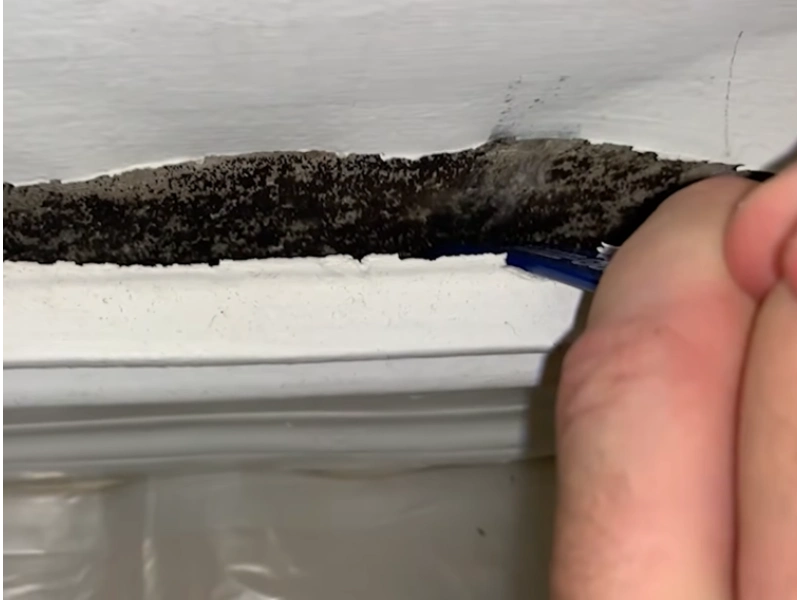
Mold and symptoms often share a cause: moisture.
Is It a Mold Allergy, a Cold or Something Else?
Look at the pattern, not just the symptoms. A cold usually runs its course in a week or two. Allergy symptoms tend to linger, flare in certain rooms or weather and come with itchy eyes. Fever and chills are not typical of a simple allergy and are worth a call to your doctor.
| Clue | Mold allergy | Common cold | Pollen allergy |
|---|---|---|---|
| How long it lasts | Weeks to months while you are exposed | Usually a week or two | Through the pollen season |
| Itchy eyes and nose | Common | Less common | Common |
| Fever or body aches | Not typical | Can happen | Not typical |
| Where and when it flares | Indoors, in damp rooms, after rain or a leak | After contact with someone sick | Outdoors on high pollen days |
| Clue in the house | Musty smell, stain or leak nearby | None | None |
These are general patterns, not a diagnosis. An allergist can test you with a skin prick or blood test.
Who Is More at Risk From Mold Exposure?
The CDC lists people with asthma, people allergic to mold, people with a weakened immune system and people with chronic lung disease as higher risk. Workers with heavy exposure are on that list too.
| Group | Why it matters | What helps |
|---|---|---|
| People with asthma | Mold can trigger attacks and worsen asthma (CDC, NIOSH) | Follow your doctor’s asthma plan and fix moisture fast |
| People with mold or other allergies | Spores set off the immune response (AAAAI) | Allergy testing, avoiding damp rooms, treating symptoms |
| Weakened immune system | Some molds can cause opportunistic infections (CDC) | Ask your doctor first, and let a crew handle any growth |
| Chronic lung disease | Higher risk of reacting (CDC) | Same: doctor first, avoid disturbing mold yourself |
| Heavy workplace exposure | Mayo Clinic lists farming, baking, carpentry and greenhouse work | Follow your workplace safety guidance |
What raises the risk inside your own house?
- Indoor humidity above 50% (Mayo Clinic)
- Leaky pipes, roof leaks and flood damage
- Poor ventilation in bathrooms and closed-up rooms
- A family history of allergies or asthma
Can Mold Make You Seriously Sick?
It can, but it is uncommon. Serious problems are usually tied to heavy or long exposure, or to a weakened immune system or lung disease. The EPA notes that symptoms other than the allergic and irritant types are not commonly reported. The conditions below are the ones doctors name, so you know what to bring up.
| Condition | What it is | Who is most affected | What to know |
|---|---|---|---|
| Mold-triggered asthma | New or worse asthma attacks set off by mold | People with asthma or allergies | A well documented trigger (CDC, EPA) |
| Allergic fungal sinusitis | Sinus inflammation from an allergic reaction to fungi | Listed by Mayo Clinic as a complication | Sinus symptoms that will not clear deserve a doctor visit |
| Hypersensitivity pneumonitis | Lung inflammation from inhaled particles: cough, breathlessness, fever, tiredness | Heavy or repeated exposure, documented in water-damaged buildings (NIOSH) | Can improve away from the exposure. Continued contact risks permanent lung damage (NIOSH) |
| Allergic bronchopulmonary aspergillosis | A lung reaction to Aspergillus | Listed by Mayo Clinic as a possible complication | Needs a specialist, not guesswork |
| Opportunistic infection | Infection by mold in people whose defenses are down | Weakened immune system, chronic lung disease (CDC) | Rare, and the reason vulnerable people should not disturb mold |
What is hypersensitivity pneumonitis in plain English?
Think of it as a lung inflammation that can feel like the flu: fever, chills, tiredness and a cough. NIOSH says it can improve when you are away from the exposure, but continued contact risks permanent lung damage. It is the reason we tell people not to shrug off a cough that follows them around a damp building.
Fever, chills or trouble breathing? Call your doctor. Do not wait for a mold company.
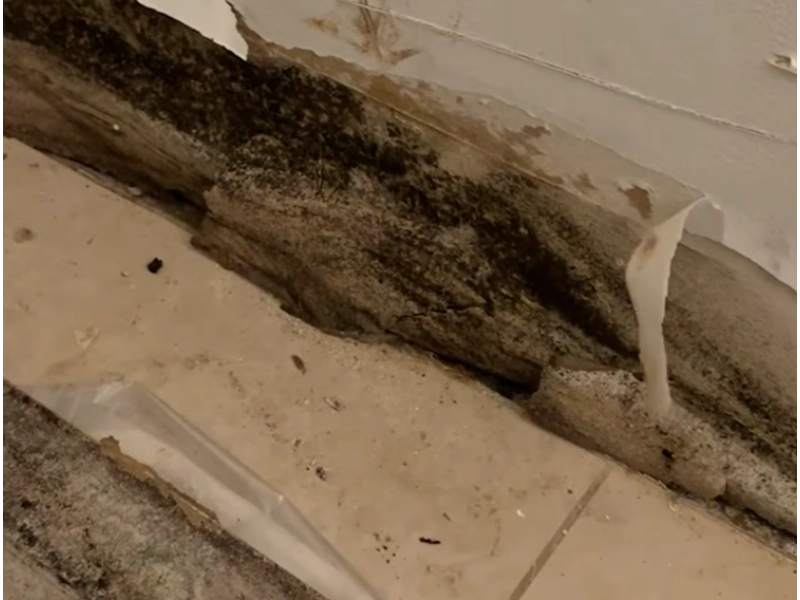
Heavy, long-running exposure is where the serious cases come from.
Is Black Mold More Dangerous Than Other Mold?
Not in the way the internet says. Color does not tell you what a mold is or how risky it is. The “black mold” people mean is usually Stachybotrys chartarum, which grows on wet paper, drywall and wood. Cleveland Clinic says it will not make most people very sick, and it can cause the same allergy and asthma problems as other molds.
You may have heard about the infant lung bleeding scare from the 1990s. Those Cleveland cases were first linked to Stachybotrys, but a CDC review in 2000 found insufficient evidence of a relationship (as summarized by the AAAAI). We treat every growth the same way: find the water, remove what the mold has taken, fix the cause.
- Dark spots are not always mold: soot, dirt, rust and old water stains look similar
- Color alone does not tell you the species
- Bigger or recurring growth deserves a closer look, whatever the color
More on this: black mold removal in Gainesville, what Stachybotrys is and mold vs mildew.
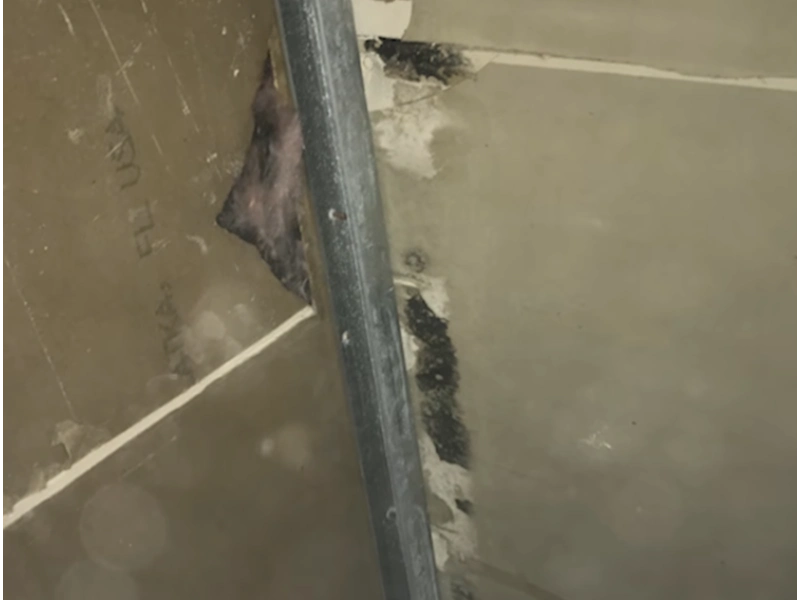
Black growth on wet drywall: treat the moisture, not the color.
Mold Allergy vs. Mold Toxicity: What Is the Difference?
A mold allergy is your immune system reacting to spores. “Mold toxicity” is the idea that mycotoxins from mold make people ill in a broader, body-wide way. The allergy is well established. The toxicity idea is disputed: some clinicians treat it, while allergy specialists say the evidence is not there. Either way, the fix for the house is the same.
| Mold allergy | Irritant effects | “Mold toxicity” (mycotoxin illness) | |
|---|---|---|---|
| What it is | The immune system overreacts to spores (IgE antibodies and histamine) | Direct irritation of eyes, nose, throat and lungs, even if you are not allergic | The claim that inhaled mycotoxins cause illness across the body |
| Typical signs | Sneezing, itchy eyes, congestion, rash, asthma flare | The same kind of symptoms in non-allergic people | A wide range, such as fatigue, joint pain or brain fog, reported by some patients and clinicians |
| Evidence status | Well established | Established (EPA, CDC) | Disputed |
| How it is checked | Skin prick or IgE blood test with an allergist | Your doctor’s exam and history | Some clinics use urine mycotoxin tests, which the AAAAI says are not FDA approved or standardized |
| Who to see | Allergist or immunologist | Your doctor | A physician. Be careful with costly, unproven testing |
| What the house needs | Moisture fixed, mold removed | Moisture fixed, mold removed | Moisture fixed, mold removed |
The AAAAI describes “toxic mold syndrome” as lacking scientific support, and says the Institute of Medicine and the WHO found the evidence insufficient to link inhaled mycotoxins to the symptoms people report. We are a remediation company, so we stay out of diagnosing. Our view: if you have unexplained symptoms that last, see a physician, and fix a wet building problem either way.
Can a Blood Test Detect Mold Exposure?
Not exposure. An allergy blood test (IgE) or a skin prick test shows whether you are allergic to mold. Neither tells you how much mold is in your home or how long you were exposed. The CDC does not recommend routine mold testing of homes either, because there are no accepted safe levels and the result does not change the next step: find the moisture and remove the mold.
| Test | What it can tell you | What it cannot | Who does it |
|---|---|---|---|
| Skin prick test | Whether you react to specific molds, in minutes (AAAAI) | How much mold is in your home | Allergist |
| IgE blood test | Whether you are sensitized to mold | Your exposure level | Doctor or allergist |
| Home air or surface sampling | That spores are present, which they always are | A safe versus unsafe number. The CDC does not recommend routine testing | Mold assessor |
| Urine mycotoxin test | Not established as a diagnostic (AAAAI) | Whether mold is making you sick | Some clinics |
| Moisture and visual check | Where water is getting in and what is wet | Your allergy status | A remediator or inspector |
If someone does recommend lab sampling for your home, Florida law keeps the mold assessor and the remediator separate on the same job (Fla. Stat. 468.8419), so ask how that is handled.
Can Mold Allergy Be Cured, and What Actually Helps?
There is no cure, but it is very manageable. Doctors use avoidance, antihistamines, nasal steroid sprays, inhaled steroids for asthma and sometimes allergy shots (Cleveland Clinic, AAAAI). Medicine treats you. It does not fix the damp wall.
Do pills like Zyrtec or Claritin help mold allergies?
Antihistamines are a standard option for allergy symptoms like sneezing and itchy eyes, and nasal sprays help with congestion. Which one, and how often, is a call for your pharmacist or doctor, especially if you have asthma or take other medicine. They ease symptoms. They do not remove the cause.
Your doctor and pharmacist
Diagnosis, allergy testing, antihistamines, nasal sprays, asthma care and immunotherapy if it is right for you.
The “you” sideYour home and a mold crew
Finding the moisture, drying, containing and removing growth, replacing soaked materials and keeping humidity down.
The “house” sideWhy Do Mold Problems Show Up So Often in Gainesville Homes?
Because the air does half the work for mold. Gainesville sits in a warm, humid subtropical climate. Humidity averages around 71 percent and runs near 80 percent in August, the wettest stretch is June through August, and the AC runs most of the year. Cold supply ducts, sweating windows, a clogged condensate line or a roof that took one hard afternoon storm: any of them hands mold what it needs.
Where does your indoor humidity land?
EPA range: 30 to 60%. CDC and Mayo Clinic: under 50% is better. Outdoor air here sits well above these numbers for months, so a closed-up house with a tired AC drifts into the red fast. A simple hygrometer tells you more than a guess.
What do these look like in real Gainesville homes?
Illustrative scenarios based on common patterns, not specific customers.
| Scenario | What sets it up | Health angle | First move |
|---|---|---|---|
| Rental near UF and Midtown (32601 or 32603) | Tired AC, windows shut all summer, weak bathroom fan | Stuffy mornings, worse in the bedroom | Check the bathroom ceiling and AC drain, tell the landlord in writing |
| Two-story home in Haile Plantation (32608) | An upstairs bathroom supply line or shower pan leaking into the ceiling below | A cough that follows a damp smell | Find the leak, open the ceiling, dry before repainting |
| Pier-and-post house near Paynes Prairie (32641) | Humid air under the house and a wet crawl space | Musty smell in the floor-level rooms | Look underneath. See our crawl space guide |
| Apartment near Butler Plaza or Archer Road (32608) | A condensate line that backs up into the AC closet | Itchy eyes inside, fine outside | Clear the line, dry carpet inside 24 to 48 hours. See AC and duct mold |
| Older house in the Duckpond area (32601) | Aging plumbing, roof flashing or windows that let water in slowly | Allergy flares after storms | Check the attic and roof edges. See attic mold |
Outdoors, the AAAAI suggests skipping leaf raking and uncut fields on high-mold days and showering after yard work to wash spores off your hair. Simple, and it helps.
What Can Renters and UF-Area Tenants Do About Mold?
Document it and tell your landlord in writing. Florida law (Fla. Stat. 83.51) puts basic maintenance duties on landlords for residential rentals, and the details depend on your lease. This is general information, not legal advice.
- Photograph the stain, the leak and any damage, with dates
- Email or write your landlord or property manager, describing the problem and when it started
- Keep a short log of symptoms and doctor visits
- Run the AC, keep wet items out of closets and beds, and do not paint over it
- Keep your own mold cleanup to small, hard-surface spots
What Should You Do First If You Think Mold Is Affecting Your Health?
Look after your health, then chase the water. See a doctor for symptoms that linger or any breathing trouble, then find the moisture source and dry everything within 24 to 48 hours.
Six steps from symptoms to a drier house
1. Get checked
Lingering symptoms, an asthma flare, fever or breathlessness: see a doctor and ask about allergy testing.
2. Find the water
Check bathroom ceilings, under sinks, the AC closet and drain line, window sills, the attic and the crawl space.
3. Dry it
The EPA says dry or remove wet material within 24 to 48 hours. Run fans, a dehumidifier and the AC.
4. Size it up
Under about 10 square feet on a hard surface is usually a small job (EPA). Larger, hidden or recurring growth needs help.
5. Clean or remove
Soap or detergent and water on hard surfaces. Soaked drywall, insulation and carpet pad often have to go.
6. Keep it dry
Hold humidity under 60 percent, fix the cause and look again after the next storm.
Reasonable to handle yourself
- A small spill dried within a day
- Mold under about 10 square feet on a hard, non porous surface
- A leak you found, stopped and can fully see
- No one at home has asthma, allergies or a weak immune system
Time to bring in help
- More than about 10 contiguous square feet, or it keeps coming back
- Mold in or around the AC, ducts or air handler
- Wet drywall, insulation or subfloor, or water that sat past 48 hours
- Someone in the home is sensitive, or you smell mold you cannot find
The EPA recommends soap or detergent and water for hard surfaces and does not recommend routine biocide use. If you use bleach anyway, the CDC says never to mix it with ammonia.
Should You Call a Doctor or a Mold Company First?
| What is happening | Call first | Why |
|---|---|---|
| Wheezing, chest tightness or shortness of breath | A doctor, or 911 if it is severe | Breathing trouble is a medical problem first |
| Fever, chills or flu-like illness that tracks with a damp building | A doctor | It can point to infection or hypersensitivity pneumonitis |
| Stuffy nose and itchy eyes, no visible mold | Your doctor or an allergist, then look for moisture | Allergy testing and a moisture check answer different questions |
| Visible mold over about 10 sq ft, or hidden behind a wall | A mold remediation crew | Size, hidden growth and containment are our side |
| A fresh leak or storm water | A water damage crew, then a mold check if anything stayed wet | Drying inside 24 to 48 hours is what stops mold. See water damage restoration |
| A musty smell with no visible source | A mold crew to hunt the source | An odor that returns usually means hidden moisture |
| You rent | Your landlord in writing, then a pro if it helps | The landlord controls repairs |
Where does Gainesville Mold Rescue fit?
We do the part that is ours. We find where the moisture is coming from, contain the area, remove the growth and the materials it has taken, and leave you a written scope of what was done. We will also tell you straight when what you need is a plumber, a restoration crew or a doctor instead. Our remediation process is laid out step by step if you want to see it first.
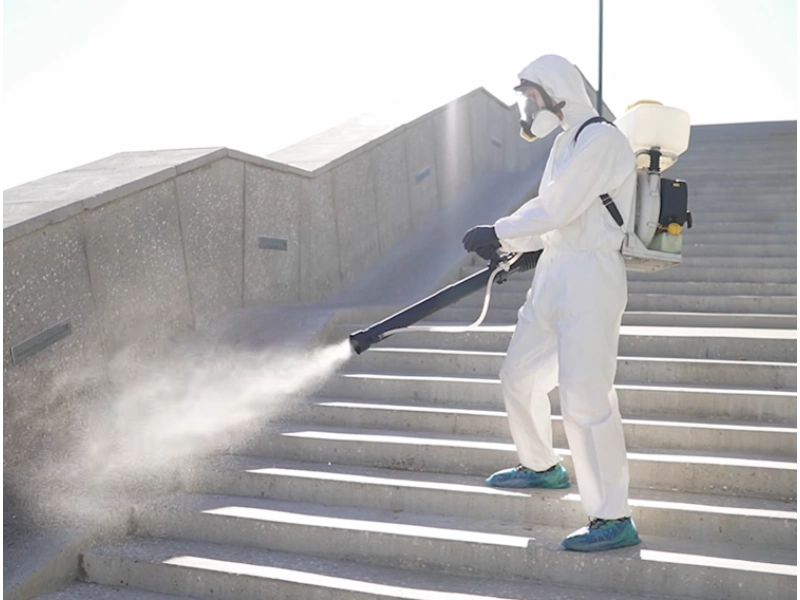
Containment and removal start only after the water source is found.
How Do You Keep Mold Down in a Florida Home?
Control moisture. That is what every medical and government source keeps coming back to: keep humidity under 60 percent (under 50 is better), fix leaks fast and dry anything that gets wet within 24 to 48 hours.
| Do this | Why it helps | Source |
|---|---|---|
| Run the AC and a dehumidifier through the humid months | Keeps humidity in range | CDC, Mayo Clinic, EPA |
| Use bathroom and kitchen exhaust fans | Pulls shower and cooking moisture out | CDC |
| Fix leaks the week you find them | Mold can start in 24 to 48 hours on wet materials | EPA |
| Change HVAC filters on schedule | Fewer spores circulating | Mayo Clinic |
| Skip carpet in bathrooms and damp rooms | Carpet holds moisture | CDC, Mayo Clinic |
| Slope soil and downspouts away from the house | Keeps groundwater off the foundation | Mayo Clinic |
| Keep a hygrometer in the bedroom | Measures humidity instead of guessing | Our tip |
The full checklist lives on our mold prevention tips page. If the question is the AC itself, see mold in air ducts and HVAC.
Waking Up Stuffy and Wondering If It Is the House?
Call Gainesville Mold Rescue. Tell us where you notice it, whether there was a leak or a storm and whether you can see or smell mold, and we will tell you what to do next. Photos of the area help.
Mold Allergy and Health Questions, Answered Honestly
What are the symptoms of an indoor mold allergy?
Sneezing, a runny or stuffy nose, postnasal drip, itchy red watery eyes, a sore throat, a cough and sometimes dry, itchy skin or a rash. If you have asthma you can also get wheezing, chest tightness and shortness of breath (Mayo Clinic, CDC).
What are the symptoms of mold in the house in adults?
The same list, plus a pattern: symptoms that get worse in certain rooms or after rain and ease when you leave. Fatigue and headaches get reported in damp buildings, but they have many causes, so mention them to your doctor. A musty smell, stains or soft drywall point to hidden moisture.
Do Zyrtec or Claritin help mold allergies?
Antihistamines are a standard option for allergy symptoms such as sneezing and itchy eyes, and nasal sprays help with congestion. Which one and how much is a question for your pharmacist or doctor. They ease symptoms and do not remove the mold.
Can a blood test detect mold exposure?
No. An IgE blood test or a skin prick test shows whether you are allergic to mold. It does not measure how much mold you were exposed to or how much is in your home.
Can a mold allergy be cured?
There is no cure, but it can be managed with avoidance, medicines and sometimes allergy shots (Cleveland Clinic, AAAAI). Fixing the moisture problem in the house removes the source.
Is black mold actually dangerous?
Black mold, usually Stachybotrys chartarum, can cause the same allergy and asthma problems as other molds. Cleveland Clinic says it will not make most people very sick. Color alone does not tell you the species or the risk.
Is mold overhyped, or is it a real problem?
Both. Mold is everywhere outdoors and most people cope fine. Indoors, damp buildings are linked to allergies, asthma and irritation (CDC, NIOSH). Claims of body-wide poisoning go beyond the evidence. The practical takeaway: do not panic, but do not ignore a wet wall or a musty smell that keeps coming back.
Can mold make you sick if you are not allergic?
It can irritate the eyes, skin, nose, throat and lungs of allergic and non-allergic people, according to the EPA. People with asthma, a weak immune system or chronic lung disease are at higher risk (CDC).
Why do my symptoms get better when I leave the house?
NIOSH notes that asthma symptoms in damp buildings typically improve when you are away from the building. That pattern does not prove mold, but it is a good reason to tell your doctor and to look for moisture at home.
What is hypersensitivity pneumonitis?
A lung inflammation caused by inhaling certain particles. Symptoms include cough, shortness of breath, fever and tiredness. NIOSH says it can improve away from the exposure, but continued contact risks permanent lung damage. It is uncommon. See a doctor if you have these symptoms.
Is toxic mold syndrome real?
The AAAAI describes it as lacking scientific support, and says the Institute of Medicine and the WHO found the evidence insufficient to link inhaled mycotoxins to the symptoms people report. Allergy, irritation and asthma from mold are well established. If you have unexplained symptoms, see a physician.
Can mold cause neurological symptoms like brain fog?
People online report them. The CDC and EPA guidance we reviewed lists allergy, irritation and asthma, and the EPA says other symptoms are not commonly reported. Brain fog, memory or vision problems need a doctor to look at every possible cause, not a guess about mold.
Can mold spores on my clothes make me sick?
Spores can ride on clothing and hair, and the AAAAI suggests showering after heavy outdoor exposure. For most people the effect is allergy-type. Washing clothes and showering after cleaning mold or doing yard work is sensible. The more dramatic claims about detoxing mycotoxins are disputed.
Should I get my Gainesville home tested for mold?
The CDC does not recommend routine mold testing, because there are no accepted safe levels and results do not change what you do. If you can see or smell mold, find the moisture and deal with the mold. A written inspection and scope of work is more useful than a number.
Can I clean mold myself?
Often yes, for a small spot. The EPA draws a rough line at about 10 square feet on a hard surface, using soap or detergent and water, once the moisture is fixed. Bigger, hidden or recurring mold, or mold near the AC, is a different job. If anyone at home has asthma or a weak immune system, think twice about doing it yourself.
Do you serve my ZIP code?
We cover Gainesville ZIP codes 32601, 32603, 32605, 32606, 32607, 32608, 32609 and 32641, plus Alachua, High Springs, Newberry, Archer and Micanopy. Call (352) 450-4030 and we will confirm your address.
Sources
- CDC: Mold
- CDC NIOSH: Health Problems From Mold in Damp Buildings
- U.S. EPA: How do molds affect people?
- U.S. EPA: Ten Things You Should Know About Mold
- AAAAI: Mold Allergy
- AAAAI: Toxic Mold Syndrome, Separating Fact from Fiction
- Mayo Clinic: Mold allergy, symptoms and causes
- Cleveland Clinic: Black Mold Exposure
- Cleveland Clinic: Mold Allergy
- Florida Statutes: 83.51, landlord obligation to maintain premises
General information only, not medical or legal advice. Talk to your doctor about symptoms.