
Crawl Space Mold Removal in Gainesville, FL: What It Takes, What It Costs, and How to Keep It From Coming Back
A musty smell coming up through the floor. Soft spots near the bathroom. A foundation company that quoted you for a vapor barrier and never mentioned the mold already growing on the joists. Here is how crawl space mold actually works in Gainesville’s wet, humid climate, what a proper cleanup looks like step by step, and what each stage involves.
- Built for Florida’s humid climate
- Follows EPA & CDC guidance
- Serving all of Gainesville, FL
Reviewed October 2026 by the Gainesville Mold Rescue team
How Do You Know If Your Gainesville Crawl Space Has Mold?
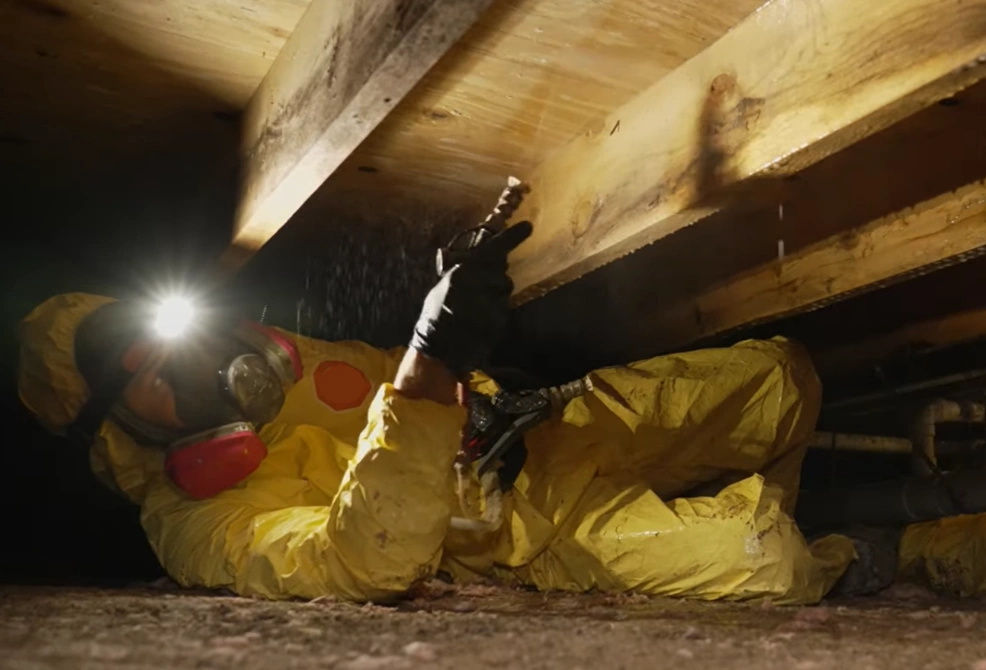
Most homeowners smell it long before they see it, because nobody goes under the house to look. A crawl space is dark, tight and out of sight, so the first clue usually shows up upstairs: a damp, earthy odor that is strongest near floor vents, closets on exterior walls or the bathroom, and gets worse after a summer storm.
- A musty smell that is stronger at floor level or when the AC runs
- White, green, gray or black fuzzy or speckled growth on joists, subfloor, beams or the underside of the floor
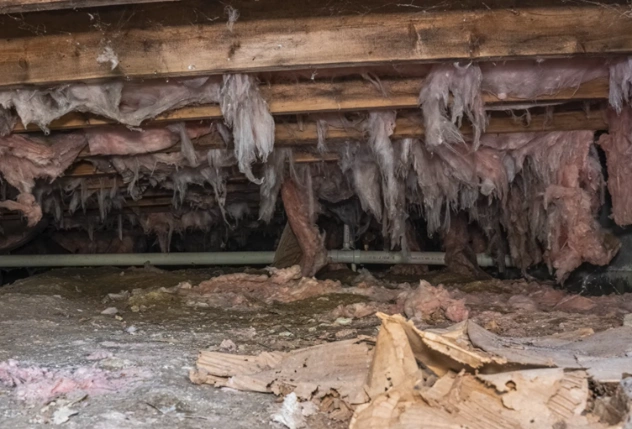
- Fiberglass batts sagging, stained or falling off the floor above
- Cupped or buckling hardwood, soft or spongy floor spots, or sticking doors and windows
- Condensation on ducts or pipes, rusty fasteners, or standing water after rain
- New allergy-type symptoms at home, such as a stuffy nose, wheezing, or itchy eyes and skin that ease when you leave
Look for the cause too. Mold on one joist near a leaking drain is a plumbing problem. Mold spread evenly across the whole floor framing is a humidity problem. The two need different fixes, which is why the first step in any honest assessment is finding the water. Not sure what you are seeing? Our guide to mold vs. mildew helps, and so does a photo sent to us when you call.
Why Do Crawl Spaces in Gainesville Grow Mold So Easily?
Mold needs three things: moisture, a food source and time. A Florida crawl space has an endless supply of the first two. Wood framing and paper-faced insulation are food, and the moisture comes from several directions at once.
Humid air through the vents
The U.S. Department of Energy notes that vented crawl spaces perform poorly in humid climates: warm, moist outdoor air has a dew point higher than the temperature of the cool framing and ductwork, so it condenses on them. Gainesville is muggy from early May through October.
The wet season and the water table
Our rainy season runs roughly June through mid-September, with July averaging around 6 inches. Gainesville’s sandy soils drain fast but sit over a high water table in many low spots, so heavy rain or a tropical system can leave water, or saturated soil, under the house.
Leaks and drainage you cannot see
Supply and drain lines, a water heater overflow, an AC condensate line dumping under the house, missing gutters or a downspout pointed at the foundation all feed the same space. A slow drip can go unnoticed for years.
Older raised-foundation homes are the usual suspects
Plenty of pier-and-beam houses in older Gainesville neighborhoods such as Duckpond, Northeast Gainesville and the areas around Midtown and Paynes Prairie have open or vented crawl spaces that were built long before anyone worried about humidity control. Add a ductwork run, original batt insulation and bare dirt, and the conditions are right. Homes closer to Hogtown Creek and other low areas get the extra water pressure.
Ducts in the crawl space make it worse
If your air handler’s ducts run under the floor, a leak or poor insulation pumps cool, conditioned air into a hot, humid space. The duct surface sweats, the insulation stays wet and the growth spreads. We cover the system side in our guide to mold in air ducts and HVAC systems.
How Serious Is Mold in a Crawl Space?
More serious than most people expect, for two reasons: what it does to the house and how air moves through it.
It reaches the living space
Air does not stay under the floor. Warm air rising through your home pulls replacement air up from below through gaps around plumbing, ducts, wiring and the floor itself, so odors and airborne spores from the crawl space can end up in the rooms above. The CDC says mold exposure can cause stuffy noses, wheezing, and itchy eyes or skin, and people with asthma, allergies or weakened immune systems can react more strongly. Read more in our guide to mold and health effects.
It damages the structure slowly
Long-term moisture means wet framing. Wood that stays wet can soften and rot, fasteners corrode, and insulation stops working. If you can press a screwdriver into a joist or the floor above feels spongy, stop treating it as a cleaning job. That needs a repair plan and a qualified contractor looking at the framing.
Can You Remove Crawl Space Mold Yourself, or Do You Need a Professional?
The EPA says small areas of mold, about 10 square feet or less (roughly a 3 ft by 3 ft patch), can often be handled by the homeowner once the moisture problem is fixed. A crawl space changes that math. You are working on your back in a confined, dirty space, often with a dirt floor, and most of the growth is on the underside of the floor above you where it is hard to see, reach and contain.
What about bleach, vinegar, borax, peroxide, a fogger or a store-bought kit?
This is where most DIY attempts go wrong. The EPA does not recommend bleach as a routine mold treatment, and it does little on porous surfaces like wood, where growth sits below the surface. Spraying a wet chemical into a damp space adds moisture. A fogger coats surfaces but does not physically remove growth, and the EPA points out that dead mold can still cause allergic reactions, so it has to be removed, not just killed. A rented air scrubber helps clean the air but does nothing about the source. We hear the same story often: the smell fades for a few weeks, then the next humid stretch brings it back, usually with a chemical odor on top of it.
| You can do this | Leave this to a professional |
|---|---|
| Fix an obvious leak, redirect a downspout, extend gutters away from the foundation | Growth across joists or subfloor over roughly 10 square feet |
| Check the crawl space from the access door with a flashlight and take photos | Removing wet or moldy insulation and debris from a confined space |
| Run a dehumidifier in the living space and keep the AC drain line clear | Containment, negative air and HEPA filtration so spores stay under the house |
| Clean a small, isolated, accessible patch on non-porous material | Treating framing, checking wood moisture, and verifying the result |
| Wear an N95, gloves and goggles for any short look inside | Anything involving ducts, soft framing, standing water or a dirt floor |
Rule of thumb: if you can see it from the access door and it is small, document it and call. If you have to crawl in to reach it, hand it over.
How Is Mold Removed From a Crawl Space? The Step-by-Step Process
A good crawl space job follows a fixed order. Skip a step and the mold is back by the next wet season. This is the sequence we recommend Gainesville homeowners expect, and the one to compare against any plan you get.
Start with a real inspection, with proper light
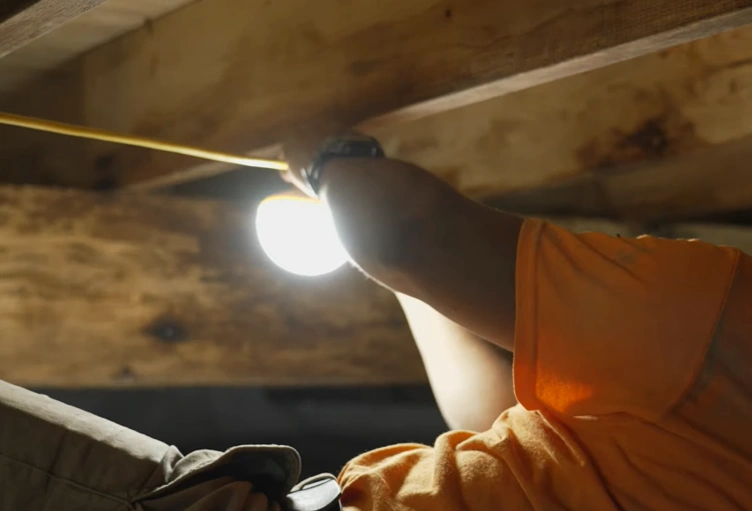
Crawl spaces hide problems in the dark, so crews bring bright, portable lighting and look at everything: the underside of the floor, joists, piers, insulation, ductwork, plumbing, the soil and the vents. They check moisture levels in the wood with a meter, trace where the water is coming from and take photos you can see. If a company gives you a plan without going under the house, ask how they arrived at it.
Leaks, poor drainage, a missing gutter, an AC drain or an open vent pulling in humid air. Mold removal done while the water is still running is wasted money.
Clear a work path, set up lights, and seal off the work area with plastic sheeting. A HEPA air filtration unit runs to keep disturbed spores from drifting into the house or the rest of the crawl space.
Wet, moldy fiberglass batts and trash left under the house are bagged and removed. Insulation that has absorbed moisture will not recover.
HEPA vacuuming, wire-brushing or sanding on structural wood, and wiping of non-porous items. UF’s remediation guidelines call for removing growth rather than just covering it, and using a two-towel wet-wipe method on hard surfaces. An EPA-appropriate antimicrobial is applied afterward where the plan calls for it, not as a substitute for removal.
Fans and dehumidification dry the framing. UF’s guideline is to bring materials below 20% moisture content, and wood that will be sealed should be under 12%. Wet lumber that gets sealed in simply grows mold again.
A visual check at minimum. For an insurance claim, a real estate deal or a dispute, an independent assessor can do post-remediation verification, which is a visual inspection plus air or surface sampling.
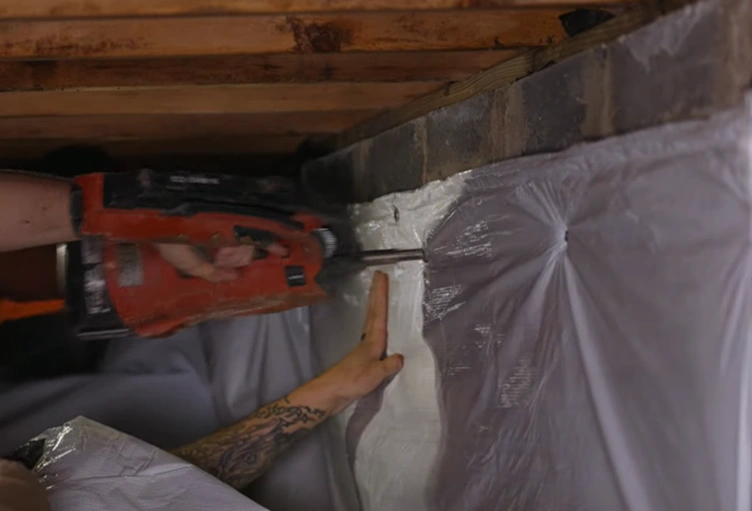
Heavy plastic sheeting covers the soil, overlaps at the seams, and is sealed up the walls and around piers. The DOE’s floor guidance is 6-mil plastic, overlapped and sealed to the walls; many installers use thicker, puncture-resistant liners.
On a conditioned crawl space, the vents are sealed and the perimeter walls are insulated, so humid outdoor air stops flowing through. This is the approach DOE building research favors for humid climates.
A crawl space dehumidifier with a drain or pump holds humidity in check, and the EPA recommends keeping moisture-prone spaces below 60% relative humidity, ideally 30 to 50%. A small humidity monitor tells you it is working.
Why containment matters, and whether you have to move out
Containment is what separates a cleanup from a spore release. With a sealed work area and HEPA filtration, most households can stay in the home during a crawl space job. The exceptions are people with severe asthma or a suppressed immune system, a crawl space that houses the HVAC ducts or air handler, or very large jobs. Ask for a containment plan up front, and ask whether they recommend you stay elsewhere for a day or two. You will get a straight answer from a good company.
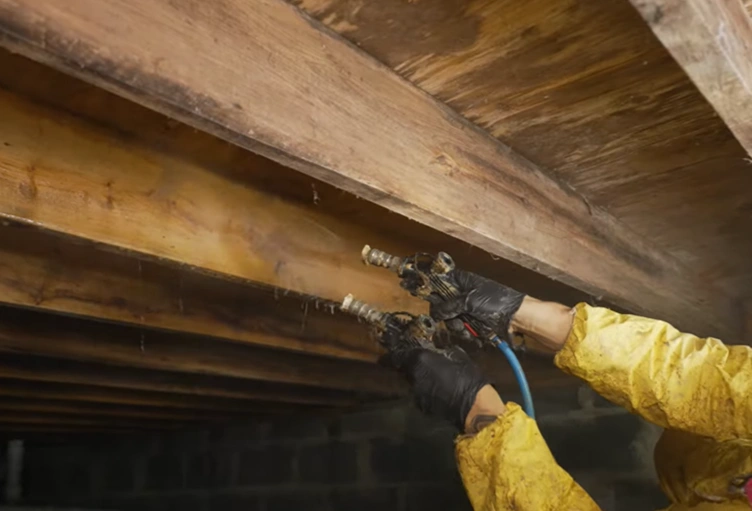
What actually gets sprayed, and when
Spraying is the last part of mold removal, not the first. After the growth is physically removed and the wood is cleaned, a treatment suited to the surface may go on. If a crew’s whole plan is to spray the joists and leave, it is a cosmetic fix. That kind of shortcut is one of the biggest reasons homeowners end up paying twice.
Mold Removal vs. Crawl Space Encapsulation: Which Does Your Crawl Space Need?
They are two different jobs, and mixing them up is the most common mistake we see. Mold removal gets rid of what is growing. Encapsulation changes the conditions so it does not grow back. Most wet Gainesville crawl spaces need both, in that order.
What encapsulation is, and what it is not
Encapsulation means covering the ground with a sealed vapor barrier, sealing it to the walls and piers, closing the vents, and conditioning the space with a dehumidifier or a small amount of conditioned air. Building America research from the Department of Energy shows that a sealed, conditioned crawl space performs better than a vented one in most climates, including hot-humid ones. What it does not do is remove mold that is already on the wood. Cover active growth with plastic and you have wrapped the problem in a bag.
One more thing worth knowing before you call around: some foundation and encapsulation companies do not offer mold testing or remediation at all. Ask whether the crew that seals your crawl space is the same one cleaning it, or whether those are two separate jobs that need to be coordinated in the right order.
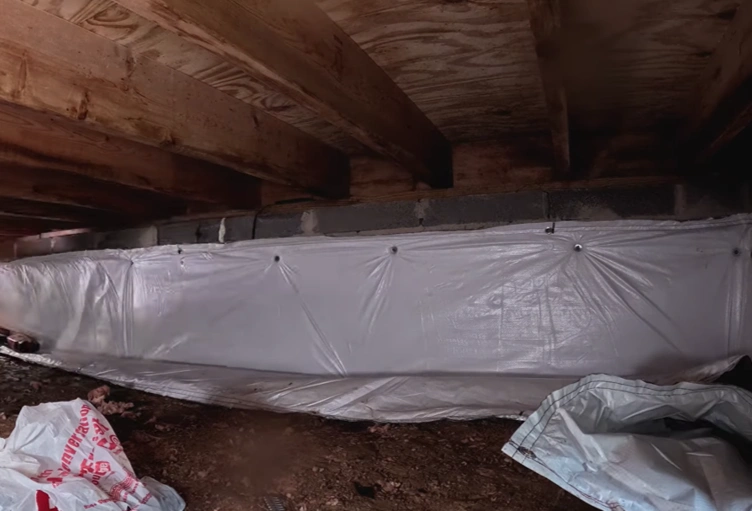
The vapor barrier, done right
A good liner runs across the whole floor with overlapped, taped seams, goes up the foundation wall and around each pier, and is fastened so it cannot slump or tear. A sheet laid loosely on dirt with gaps at the walls lets moisture straight through. If your soil stays wet, drainage or a sump pump is often part of the plan, and you will want that on paper before work starts.
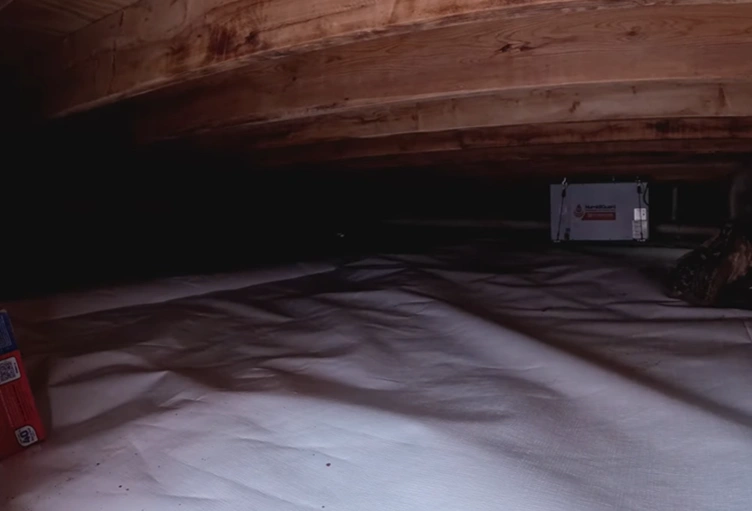
The dehumidifier is what holds the result
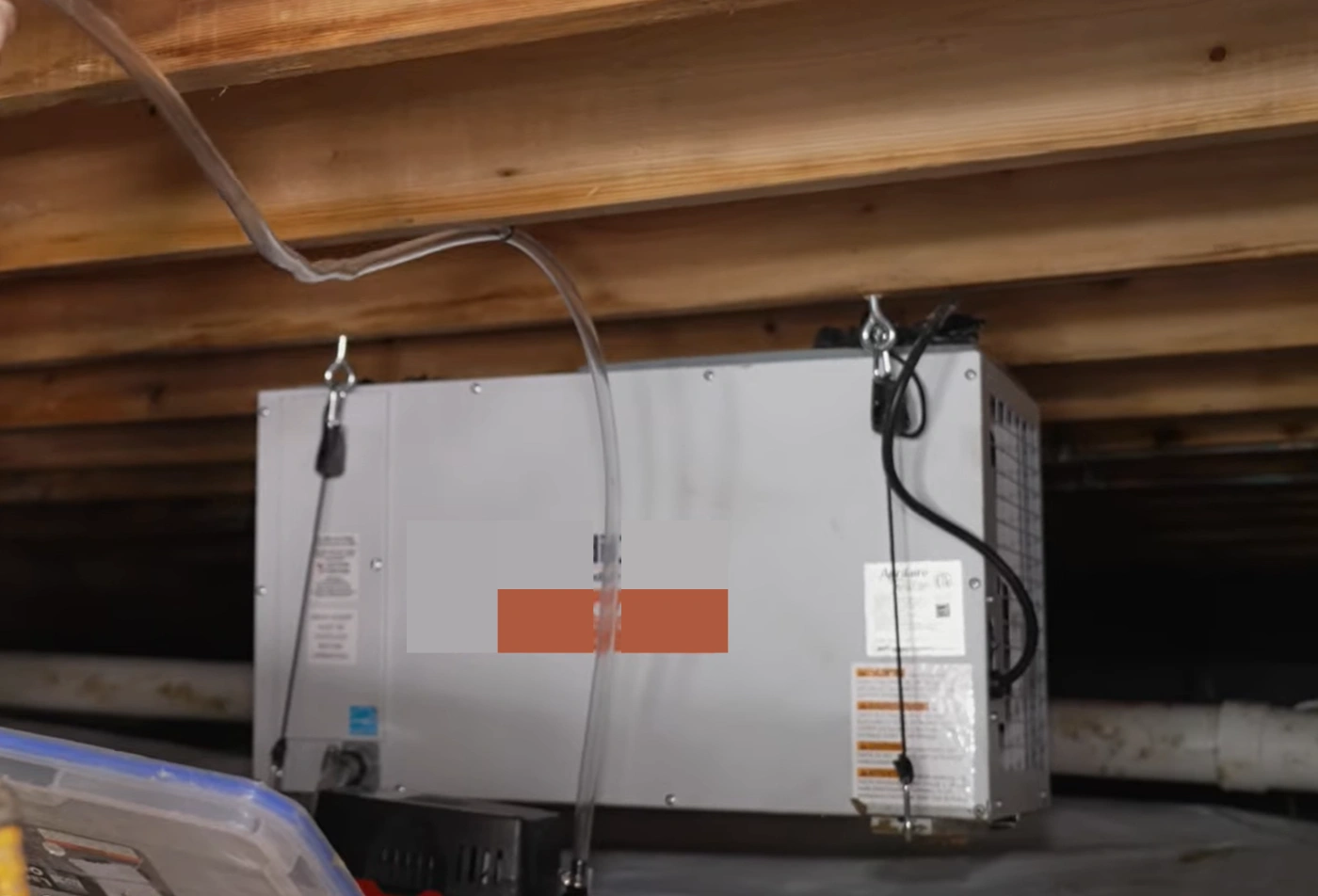
Plastic on the floor only slows moisture. A properly sized crawl space dehumidifier, with a drain line or condensate pump and a way to service it, is what keeps humidity under control through a Gainesville summer. The EPA says to keep humidity below 60%, ideally 30 to 50%, and a simple humidity monitor on the wall tells you in minutes whether the system is doing that. For more on prevention, see our mold prevention guide and our page on mold encapsulation.
How Much Does Crawl Space Mold Removal Cost in Gainesville?
Crawl space mold removal depends on the size and condition of the space and on what else is going on under the house. A provider needs to go under the house before setting a price. What shapes the job:
- Square footage and how much of the framing is affected
- Crawl space height and access (a 16-inch crawl is slower to work than a roomy one)
- How much wet insulation and debris has to come out
- Whether wood is only surface-stained or actually soft
- Whether water is still entering the space
- Whether ducts, plumbing or electrical work in the way need to be handled separately
Encapsulation, drainage, repairs and dehumidifier installation are separate jobs and vary widely with crawl space size and condition. Ask for the mold removal and the moisture-control work to be described separately, so you can see what each part involves and compare plans fairly. A plan that skips containment, drying or the water source is not a fix. It is a repeat visit.
Do You Need Mold Testing for a Crawl Space?
Often, not to decide whether to clean. The EPA does not recommend routine sampling when mold is visible, because you need to remove it either way and fix the moisture either way. Testing earns its place in specific cases: you smell mold but cannot find it, an insurance adjuster or lender wants documentation, you are buying or selling, or you want a clearance result after the work.
Does Homeowners Insurance Cover Crawl Space Mold in Florida?
It depends on your policy and on why the mold is there. Many Florida policies limit mold coverage or tie it to a covered water loss, such as a sudden pipe burst, and exclude mold that grew from long-term humidity or a slow leak. Read the mold and water-damage sections of your policy, or ask your agent directly.
Timing matters. Under Florida Statute 627.70132, notice of a new or reopened property claim must generally be given within one year of the date of loss, and a supplemental claim within 18 months. If a recent storm, leak or appliance failure caused the water, take dated photos, stop the water, and report it before you start cleaning. For the water side of the claim, see our guide to water damage restoration.
Selling or Buying a Home With Crawl Space Mold in Florida
It is not illegal to sell a house with mold in Florida, but sellers cannot hide what they know. Under the Florida Supreme Court’s decision in Johnson v. Davis (1985), a seller who knows of a problem that materially affects the value of the home and is not easy for a buyer to see has to disclose it. A crawl space is exactly that kind of hidden area. If you are selling, document the cause, the cleanup and any verification result, and talk to a real estate attorney or your agent about what to disclose. If you are buying, ask for access to the crawl space during the inspection. A musty smell in a raised-foundation home is worth a closer look before closing.
How to Choose a Crawl Space Mold Company in Gainesville
You will hear very different answers from different companies, so compare them on substance:
- They go under the house. No phone-only plans, and ask for photos.
- They name the moisture source and explain how it gets fixed, or who fixes it.
- The scope is in writing: containment, HEPA filtration, insulation removal, drying and verification.
- Removal and encapsulation are described separately so you can compare apples to apples.
- They are clear about who tests and who removes, and they do not pitch both in one visit.
- Paperwork is ready: a written scope, license number and proof of insurance.
When you call Gainesville Mold Rescue at (352) 450-4030, we start with questions about the water, not the sales pitch, and match you with a local provider that works that way. Tell us what you smell, where, and when it gets worse, and send photos if you have them.
Crawl Space Mold Removal Across Gainesville, FL
We cover every part of Gainesville, from the older raised homes near Duckpond and the University of Florida campus to Northwest, Southwest and Northeast neighborhoods, Millhopper, and the Newberry Road and Archer Road corridors. Homes near Hogtown Creek, Lake Alice and the Paynes Prairie basin tend to sit closer to wet ground, so crawl space moisture checks matter more there. Student rentals near campus often have older foundations and deferred maintenance, so a quick look under the house is worth it before a lease or a purchase.
Gainesville ZIP codes
- 32601
- 32603
- 32605
- 32606
- 32607
- 32608
- 32609
- 32641
Nearby communities
After a hurricane or tropical storm, check the crawl space within a day or two. The EPA says mold can start growing within 24 to 48 hours of a water event. Hurricane season runs June 1 to November 30. If you need help fast, see our emergency mold removal page.
How Do You Keep Mold From Coming Back in a Florida Crawl Space?
- Point gutters and downspouts well away from the foundation, and fix any low spots that pond water against the house
- Repair plumbing, water heater and AC condensate leaks fast, and make sure the condensate line drains outside
- Insulate and seal ducts that run through the crawl space
- Seal the ground with a vapor barrier and control humidity with a dehumidifier, rather than just opening or closing the vents
- Vent the dryer outdoors, never into the crawl space
- Do not store cardboard or fabric under the house
- Check the crawl space after every major storm and once each spring before the wet season
Planning other work? Our mold remediation process, attic mold and black mold pages cover the other places mold hides in Gainesville homes.
Crawl Space Mold Removal in Gainesville: Frequently Asked Questions
How much does crawl space mold removal cost in Gainesville?
Cost depends on crawl space size, height and access, how much wet insulation and debris must come out, and whether water is still entering. Encapsulation, drainage, repairs and dehumidifier installation are separate jobs, so ask for each part to be described separately.
Can mold be removed from a crawl space?
Yes. A proper job finds and stops the moisture source, removes wet insulation and debris, removes or cleans the growth on framing under containment with HEPA filtration, dries the wood, and confirms the result. Without fixing the moisture, the mold usually returns.
How serious is mold in a crawl space?
It can be serious. Air from the crawl space moves up into the living area, and mold exposure can cause stuffy noses, wheezing and itchy eyes or skin, especially in people with asthma, allergies or weak immune systems. Long-term moisture can also soften and rot framing.
Is it illegal to sell a house with mold in Florida?
No, selling a house with mold is not illegal in Florida, but sellers who know about a problem that materially affects value and is not easy for a buyer to see must disclose it under the Florida Supreme Court decision in Johnson v. Davis (1985). Talk to a real estate attorney about what to disclose in your situation.
Do I need mold testing for my crawl space?
Often not, if you can see the mold, because you would remove it and fix the moisture either way. Testing helps when you smell mold you cannot find, when an insurer, lender or buyer wants documentation, or when you want a clearance result after the work. Florida law keeps the assessor and the remediator separate for 12 months on the same structure.
Is crawl space encapsulation the same as mold removal?
No. Mold removal gets rid of existing growth. Encapsulation covers the ground with a sealed vapor barrier, seals the walls and vents, and adds humidity control so mold is less likely to return. Sealing over active mold does not remove it, so removal comes first.
Will bleach or vinegar kill crawl space mold?
Not reliably. The EPA does not recommend bleach as a routine mold treatment, and it does little on porous wood. Spraying liquid into a damp space adds moisture, and dead mold can still cause allergic reactions, so growth needs to be physically removed and the moisture source fixed.
Does homeowners insurance cover crawl space mold in Florida?
It depends on your policy and the cause. Many policies limit mold coverage or tie it to a covered water loss, and exclude mold from long-term humidity or slow leaks. Under Florida Statute 627.70132, notice of a new or reopened claim must generally be given within one year of the date of loss and a supplemental claim within 18 months.
Do I have to move out during crawl space mold removal?
Usually not. With containment and HEPA filtration, most households can stay home. People with severe asthma or a suppressed immune system, homes with ductwork or an air handler in the crawl space, and very large jobs are the exceptions. Ask for a containment plan before work starts.
How long does crawl space mold removal take?
A small, contained job can often be finished in a day or two, while larger crawl spaces with insulation removal, drying and sealing take longer. Ask for a written schedule that includes drying time, since wet framing has to dry before it is sealed.
Should I close my crawl space vents in Florida?
Closing vents alone is not enough. DOE building research finds vented crawl spaces perform poorly in humid climates and conditioned, sealed crawl spaces perform better, but sealing works as a system: ground vapor barrier, sealed walls and vents, and humidity control. Fix any water problem and remove existing mold first.
How do I stop crawl space mold from coming back?
Control water and humidity. Fix leaks, direct gutters and downspouts away from the foundation, seal the ground with a vapor barrier, insulate and seal ducts, run a dehumidifier to keep humidity below 60 percent, and check the crawl space after major storms.
Smell Mold Under Your Gainesville Home?
Call Gainesville Mold Rescue and tell us what you are seeing, smelling and where. We will help you work out whether it is a leak, a humidity problem or both, and connect you with a local provider who can look at it.
Sources and further reading
- U.S. EPA: Mold Cleanup in Your Home
- CDC: Cleaning Up Mold
- U.S. Department of Energy: Unvented Crawlspace Code Adoption
- University of Florida EH&S: Mold Remediation Guidelines
- Florida Statute 468.8419: mold assessment and remediation
- Florida Statute 627.70132: property insurance claim notice
How this site works: gainesvillemoldremoval.net is a local information and referral service, not a contractor. When you call, we connect you with a mold remediation provider serving the Gainesville area. Nothing here is legal or insurance advice.