Bathroom Mold Removal in Gainesville, FL: Find the Water Behind the Black Caulk, Grout and Ceiling
Dark lines on the caulk. A brown spot over the shower. A floor that feels a little soft by the tub. In a Gainesville bathroom, that is rarely just a cleaning job. Gainesville Mold Rescue connects you with a local mold remediation provider who finds the water first, then removes the mold and dries the space.
- 24/7 Emergency Calls
- Gainesville based providers
- Water source first
- Independent local contractors
Updated October 2026 · Written for Gainesville homes, condos and rentals
Why does mold keep coming back in Gainesville bathrooms?
You have probably already tried the spray. It looked better for a week or two, then the dark line came back along the tub, and now you are wondering what is actually going on behind it.
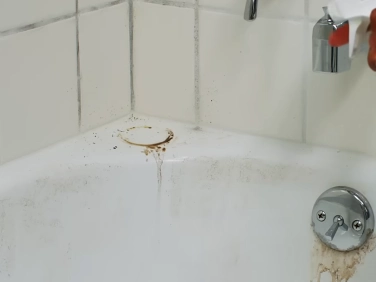
Here is the honest version. The black or gray growth you can see is the surface. The part that matters is the water: a fan that does not clear the steam, caulk that has split, a slow drip at the supply line, a shower pan that is not draining, or a roof leak coming down through the bathroom ceiling after a summer storm. Until that is found, any cleaning is temporary.
Gainesville Mold Rescue is a free service that connects Gainesville homeowners, renters and property managers with independent local mold remediation providers. We do not sell you a spray. We help you reach someone who will look at the room the way a mold remediation provider does: find the water, protect the rest of the house, remove what cannot be saved, and dry what can.
Not sure what you are looking at? Describe it on the phone and we will point you the right way.
☎ Call (352) 450-4030What am I looking at? A quick guide to where bathroom mold shows up
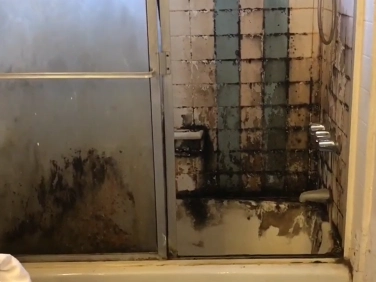
Where the growth sits tells you a lot about where the water is coming from. Use this as a first read, not a diagnosis. Color alone cannot tell you what kind of mold it is or how risky it is, so we treat any growth the same way: find the moisture and take the growth out.
| Where you see it | What it usually means | Your first move |
|---|---|---|
| Dark line along the caulk at the tub or shower | Surface growth on caulk that stays wet, sometimes with water getting behind it | Press it. If the black runs all the way through, the caulk is finished. Often small |
| Gray or black grout lines | Grout is porous and holds water | Wash with soap and water and dry it. If it is back in weeks, look for water behind the tile. Often small |
| White fuzzy or powdery patches on grout | Could be mold, or mineral salts pushed out of wet grout | Wipe with a damp cloth. Salts dissolve and dry white again. Mold smears and smells musty. Check |
| Pink or orange film on a shower floor | Commonly a bacterial film rather than mold. It still means the surface never dries | Wipe, rinse, dry, and run the fan longer. Often small |
| Brown or yellow spots on the ceiling over the shower | Steam, a leak from above, or a vent duct dumping moisture into the attic | Look at the fan duct and the attic above it. Sagging or soft means stop and call. Look closer |
| Soft or spongy floor by the toilet or tub | A slow leak at the supply line, drain or toilet seal | Stop using that fixture and call. Call |
| Bubbling paint or stained drywall next to the shower | Water behind the wall | Do not paint over it. Call. Call |
| A musty smell, nothing visible | Growth inside a wall cavity or under the floor | Call. Call |
This table is a starting point for your own eyes. A provider checks moisture with a meter, not by guessing.
Why Gainesville bathrooms get it harder than most
Weather data for Gainesville shows a muggy season from about May 4 to October 31 and a wet season from about June 1 to September 20. That is half the year when the air outside is already carrying moisture, your air conditioner is cooling the house, and a hot shower adds a cloud of steam on top of it. Walls, mirrors and ceilings that are cooler than the steam collect condensation, and what does not dry stays damp.
Older bungalows and historic homes
If your house is older, around the Duckpond or in Northeast Gainesville, the bathroom may have been added later, with a small window instead of a proper fan, or a fan that ducts into the attic. See our guide to historic home mold removal.
Student and shared rentals near campus
Back to back showers, one fan, and little time for the room to dry between them. Spots tend to be reported late. Renters can start with Florida’s landlord duty in Fla. Stat. 83.51, covered below.
Newer builds in Haile Plantation, Tioga and Newberry
Large walk-in showers, tall ceilings and fans placed far from the shower. A big room needs a fan that can keep up, and a long duct run clears steam slowly.
Condos and townhomes
Shared walls and stacked plumbing mean a leak above or next door can show up on your bathroom ceiling. Report it in writing to the HOA or property manager and keep dated photos.
After a storm
Roof and window leaks during heavy summer rain often show up first as a brown spot on the bathroom ceiling. If you see one, check the attic too: see attic mold removal.
Fan that vents into the attic
A fan that stops short of an outside vent moves steam from the bathroom into the attic, where it settles on the wood and insulation. A ceiling stain below can be the first sign.
Is your bathroom fan really doing its job?
Most of the bathrooms we are called about have a fan. Fewer have a fan that works. Check yours before you buy anything else.
- Hold a single square of toilet paper to the grille. If it does not stick, the fan is weak or the duct is blocked.
- Listen for a rattle or a hum with no airflow. That often means a failed motor or a crushed duct.
- Go up in the attic if you can do it safely and check that the duct runs all the way to an outside vent, not just to the insulation.
- Run the fan during the shower and for a good while after. Many guides suggest about 30 minutes. If the mirror is still fogged, it needs longer.
- Leave the bathroom door open after showers so the humid air can leave.
EPA says to keep indoor humidity below 60 percent, and ideally between 30 and 50 percent. A small humidity meter from a hardware store tells you where your bathroom and your house sit. If the meter reads high with the fan on, the fan is not enough.
Do these every shower
- Run the fan during and after
- Squeegee the glass and walls
- Hang the towel to dry, do not leave it on the floor
- Wipe the tub edge and the shower floor
- Keep the door open afterward
Skip these
- Dry scrubbing mold with a brush
- Covering stains with paint
- Closing the door to hold the heat in
- Letting a wet bath mat sit on the floor
- Ignoring a fan that has gone quiet
What can you safely clean yourself, and what do vinegar, peroxide and baking soda really do?
Small, surface-level growth on hard bathroom surfaces is something many homeowners handle on their own. EPA puts the line at about 10 square feet, roughly a 3 foot by 3 foot patch. Under that, on tile, a tub or glass, you can start with these steps.
- Wear an N-95 respirator, gloves and goggles, which is what EPA recommends for cleanup.
- Keep the surface damp while you work. Dry scrubbing throws spores into the air.
- Wash with detergent and water, then dry it completely.
- Throw out the sponge or cloth afterward, and bag anything you remove before you carry it through the house.
- Never mix bleach with ammonia or with other cleaners. The fumes are dangerous.
Home remedies, in plain terms
| Remedy | Where it helps | Where it stops |
|---|---|---|
| Soap and water | Tile, glass, tub and other hard surfaces. EPA lists detergent and water for cleanup | Does nothing for the water source, and the surface has to be dried afterward |
| White vinegar | Small spots on hard surfaces. Test a hidden spot first | Does not get inside drywall, wood or grout that is wet through |
| 3% hydrogen peroxide | Small spots on hard surfaces. It can lighten some colored grout | Same limit. The room has to dry or it returns |
| Baking soda | A gentle paste for scrubbing and for odor | A cleaner, not a moisture fix |
| Bleach | Many homeowners reach for it first | EPA does not recommend routine bleach use, and dead mold can still bother people with allergies. Removing it matters more than killing it |
| Tea tree oil, clove and other folk remedies | Popular in forums | We cannot point you to a reliable source showing they do more than soap, water and drying |
Whatever you use, the bathroom has to dry afterward. That is the part that decides whether it comes back.
Caulk, grout, drywall and tile: what can be saved?
People worry that mold means ripping out the whole bathroom. Usually it does not. What matters is how porous the material is and how long it stayed wet. EPA notes that porous materials like ceiling tiles and carpet may need to be thrown away.
| Material | Usually | Why |
|---|---|---|
| Glazed tile, tub, glass, fixtures | Cleaned | Hard, non-porous surfaces. Growth sits on top |
| Grout | Cleaned, sealed or redone | Porous. Surface growth washes off, but grout stained all the way through is often cut out and redone |
| Caulk and silicone | Replaced | If black runs through it, cleaning only hides it. Remove it and reseal on a dry joint |
| Painted drywall, small and dry | Depends | Surface growth may clean. Wet or crumbling board comes out |
| Drywall that was wet or soft | Removed | It holds water and growth inside. Painting over it hides the problem |
| Plaster in an older bathroom | Depends | Hard plaster may clean. Soft or damp plaster is a sign of a bigger moisture problem |
| Bath mats, shower curtains, loofahs | Replaced | Soft materials hold moisture. Wash if you must, but new ones are easier |
Can you paint over it?
No. Mold-blocking paint on a wet wall hides the stain while the moisture keeps feeding what is under it. Paint belongs at the end of the job, after the wall has dried and the cause is fixed.
When is it time to call someone?
Cleaning is fine for a small spot you can see and reach. These are the signs it has moved past that.
- More than about 10 square feet of growth
- Soft flooring, a sagging ceiling or swollen trim
- A musty smell with nothing you can see
- Growth that returns within weeks of cleaning
- Water from a toilet overflow or sewage, which EPA recommends leaving to professionals
- A leak you cannot find or reach
- Anyone in the home with asthma, allergies or a weak immune system. EPA notes some people are more sensitive to mold, so talk to your doctor about symptoms
Call to be connected with a local mold remediation provider. Emergency calls are taken 24/7.
☎ Call (352) 450-4030The bathroom mold removal process, in six steps
Every job is different, but a good bathroom job follows this order. The first step is the one most people skip.
1. Find the water
Moisture meter and a close look at the fan, caulk, supply lines, drain and ceiling above.
2. Seal off the room
Plastic over the doorway and vents so spores stay in the bathroom.
3. Take out what cannot be saved
Wet drywall, failed caulk, soft trim. Bagged inside the room.
4. Clean what can stay
HEPA vacuuming and damp cleaning of tile, tub and framing.
5. Dry it fully
Fans and dehumidifiers until the readings are back to normal.
6. Check and close up
A last look at moisture and the fan, then rebuilding can begin.
That is the short version of what a local mold remediation provider does. If you want the longer version for the whole house, see our page on mold remediation in Gainesville and our guide to water damage restoration in Gainesville.
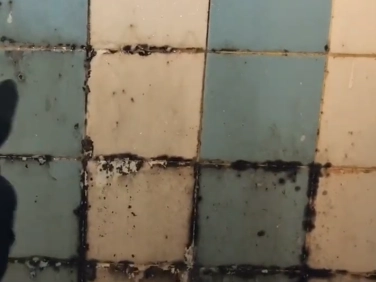
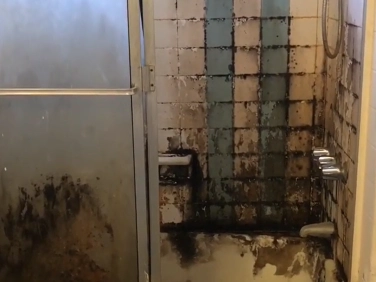
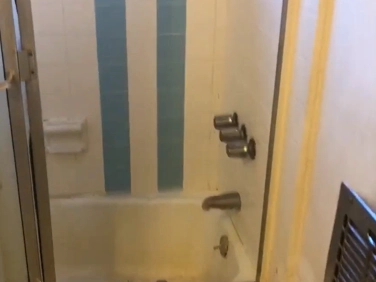
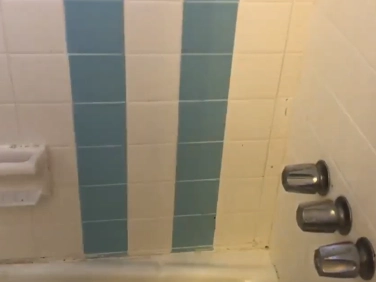
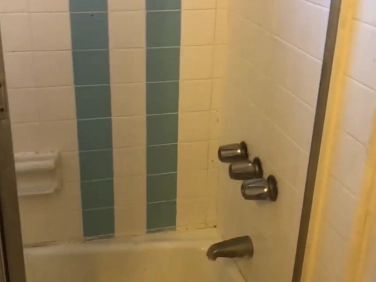
Bathroom mold before and after
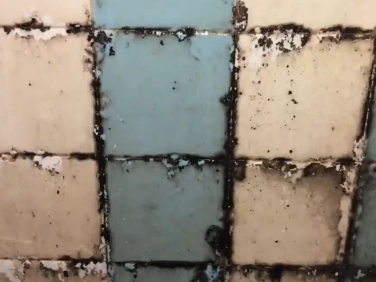
Photos of bathroom mold removal work. Notice how many of the before pictures show the problem at the edges and joints, not in the middle of a wall. That is where water collects.

What to do in the first hour
- Stop using the shower or fixture if you see water on the floor or a soft spot.
- Take dated photos from a few angles and one close-up of the worst spot.
- Turn on the fan, open the door and run a fan or dehumidifier in the room if you have one.
- Shut off the water at the valve under the sink or toilet if you can see a leak.
- Do not paint, caulk over or dry scrub the area.
- Tell your landlord or property manager in writing if you rent.
- Call, and tell us what you see.
Take the photos, then call. We can talk you through the next step.
☎ Call (352) 450-4030I rent. Who is responsible for bathroom mold?
Florida law puts a duty on landlords to maintain the dwelling, and that is where most tenants start. Mold is not named in Fla. Stat. 83.51, so keep your own record.
- Report it in writing, with dated photos.
- Keep copies of every message.
- Ask for repairs to the cause, not just the stain.
- If anyone is feeling sick, see a doctor and keep notes.
- Read your lease and consider talking to a tenant-rights attorney for your situation.
If you are buying or selling and you see a stain on a bathroom ceiling or around a tub, get it looked at before closing so the water source is known. A clean-looking surface is not the same as a dry wall.
Month by month, built around Gainesville humidity
Prevention is mostly habit, and the calendar here matters. This chart uses average weather data for Gainesville.
Outside the muggy windowMuggy (about May 4 to Oct 31)Wet season (about June 1 to Sep 20)
| When | What the weather is doing | What to do in the bathroom |
|---|---|---|
| December to April | Outside the muggy window | Good time to check the caulk, clean the fan grille and test the fan |
| May | Muggy starts about May 4 | Run the fan longer. Re-seal any split caulk before the wet season |
| June to September | Wet season, about June 1 to September 20. Hurricane season begins June 1 | Door open after showers. Check bathroom ceilings after heavy rain or storms |
| October | Muggy until about October 31. Hurricane season still on | Keep up the habits. Look for new stains after any storm |
| November | Hurricane season ends November 30 | Deep clean grout and replace worn mats |
Bathroom mold removal across Gainesville
We connect homeowners with providers in these Gainesville ZIP codes:
- 32601
- 32605
- 32607
- 32608
- 32641 (our base)
Neighborhoods and nearby towns we regularly hear from include the Duckpond, Haile Plantation, Tioga, Newberry, Alachua and Archer. For other rooms, see attic mold removal and all our resources.
Bathroom Mold Questions Gainesville Homeowners Ask
Short answers to what people ask us most. Don’t see yours? Call (352) 450-4030.
How do I get rid of mold in my bathroom permanently?
By fixing the moisture. Find the leak or humidity source, take out materials that cannot be dried, clean what can stay, and dry the room fully. After that, a working fan, dry caulk and a squeegee habit keep it from returning. Cleaning without that usually only buys you a few weeks.
How do I remove black mold from a bathroom?
If it is on tile, glass or a tub and smaller than about 10 square feet, keep it damp, wear an N-95, gloves and goggles, wash with detergent and water, and dry it. If it is in the caulk all the way through, in drywall, or bigger than that, it is a job for a provider.
What does toxic mold look like in a bathroom?
You cannot tell by color. Black, green, gray and white growth can all look alike, and the risk depends on the mold and the person. We treat any growth the same way: find the water and remove it. If anyone is feeling unwell, talk to a doctor.
Is it safe to clean black mold myself?
For a small patch on a hard surface, many homeowners do. Use protection, keep it wet, do not dry scrub, and ventilate. Stop and call if it is larger than about 10 square feet, it is in the ceiling or behind tile, or you have asthma or other breathing problems.
Does vinegar or hydrogen peroxide kill bathroom mold?
Both are popular for small spots on hard surfaces. Neither fixes the water, and neither reaches into wet drywall or grout. EPA does not recommend routine biocide use and says to focus on removal and moisture control.
Can I paint over mold or use mold-resistant paint?
No. Paint hides the stain but does not dry the wall. Fix the water, remove the growth, let the wall dry, and then paint.
Why does mold keep coming back on my caulk?
Caulk is the first thing to stay wet. If it is black all the way through, or if it has split, water is getting behind it. It needs to be removed and resealed on a dry joint. If it returns anyway, look for a leak or a weak fan.
Why is there white mold on my bathroom grout?
White fuzzy patches can be mold, or they can be mineral salts that come out of wet grout. Wipe with a damp cloth. Salts dissolve and dry white again. Mold smears and has a musty smell. Either way it means the grout is wet.
There is mold around the base of my toilet. What should I do?
Check for a soft floor and water at the base. A leaking seal or supply line is common. If the floor feels soft, stop using it and call. If the water came from a sewage backup, EPA recommends professional help.
What causes mold on a bathroom ceiling over the shower?
Steam from showers, a weak or disconnected fan, a leak above, or a duct that vents into the attic. Check the fan and the attic. A sagging or soft ceiling needs a call.
I rent. Is my landlord responsible for bathroom mold?
Florida law puts a duty on landlords to maintain the dwelling under Fla. Stat. 83.51, but mold itself is not named. Put your report in writing, keep dated photos and see a tenant-rights attorney if it stalls.
Is it safe to stay in the house with bathroom mold?
Many people can, but the answer depends on how much there is and who lives there. EPA notes people with asthma, allergies and weak immune systems can be more sensitive. If anyone feels unwell, talk to a doctor and call us about the bathroom.
How long does bathroom mold removal take?
It depends on what is behind the surface and how wet it is. Cleaning is quick. Drying is the step that cannot be rushed. A provider can tell you more after seeing the room.
Do I have to replace my whole shower or tub?
Usually not. Glazed tile, tubs and glass are cleaned. Caulk, soft drywall and wet trim are the usual replacements.
Bathroom mold in Gainesville? Start with a call.
Tell us what you see. Gainesville Mold Rescue connects you with a local mold remediation provider who will find the water, remove the mold and dry the room.
Call now to talk it through.