Historic Home Mold Removal in Gainesville, FL: Clean the Plaster, Save the Wood, Fix the Water
Your house has been here a long time. The plaster, the heart pine floors and the old trim are not easy to replace, so tearing it all out is the last thing you want. Gainesville Mold Rescue connects you with a local mold remediation provider who treats an old house like an old house: clean what can be cleaned in place, take out only what is lost, and fix the water first.
- 24/7 Emergency Calls
- Clean in place first
- Gainesville based providers
- Independent local contractors
Updated October 2026 · Written for Duckpond bungalows, historic districts and older homes across Alachua County
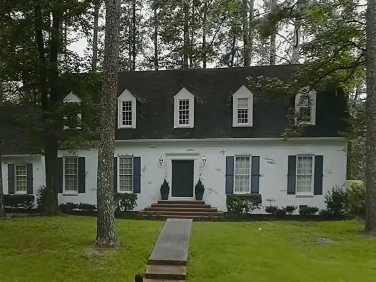
What makes mold removal different in a historic or old house?
Water plus wood is the whole story. Mold needs moisture, something to eat and air. An old house hands it plenty of the second: plaster over wood lath, heart pine, trim, wainscoting. We go after the moisture.
That is why the playbook for a ten year old drywall house does not work here. In a modern house the default is cut it out and replace it. In an older one, more of the work shifts to careful cleaning and drying, with removal for the material that is truly lost. It is slower work, and it is what keeps the character of the place intact.
Gainesville makes it harder. Weather data puts the muggy season at about May 4 to October 31 and the wet season at about June 1 to September 20. A house built before modern air conditioning, now cooled and closed up for half the year, collects moisture in places nobody planned for.
Gainesville Mold Rescue is a free service that connects Gainesville homeowners, renters and property managers with independent local mold remediation providers. We do not do the work ourselves. We make it easy to reach someone who has handled plaster, old wood and tight crawl spaces before, and we will tell you straight when something can wait.
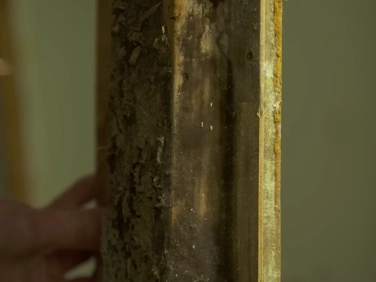
Not sure what you are looking at? Describe it on the phone and we will point you the right way.
☎ Call (352) 450-4030What does mold in an old house look like?
Old houses show mold in their own way. Here is how to read the common signs. None of these confirm mold on their own, and none mean an emergency by themselves.
| What you notice | What it can mean | Your next move |
|---|---|---|
| A musty smell in a closed room or after rain | Damp crawl space, a wall cavity, or ductwork | Check under the house and in the attic. If the smell stays, call Look closer |
| Brown or gray stain on a plaster ceiling | A roof or plumbing leak above, or steam from a bath upstairs | Mark the edge with a pencil and watch it. If it is soft or sagging, call Call |
| Soft, crumbling plaster or bubbling paint | Water behind the plaster | Do not paint over it Call |
| Fuzzy or dark spots on trim, wainscoting or window sash | Condensation, or a damp wall behind | Wipe with soap and water, dry it, and watch whether it returns Check |
| White crust or a damp smell in the crawl space | Ground moisture and poor airflow | Look at the vents, soil and any bare wood Look closer |
| Cupped, soft or springy floorboards | Moisture from below, or a leak | Stop using that area and call Call |
| A stain on the ceiling below a bathroom | A slow leak at the drain, supply line or tub | Call. The bathroom is the first place to look Call |
Where the signs sit tells you where the water is coming from. A provider checks with a moisture meter, not by guessing.
Why does an old house in Gainesville hold so much moisture?
Old houses were built for a different era. Moisture control, vapor barriers and air conditioning came later, and each change moved water in a new way. NPS preservation guidance treats unwanted moisture as the thing to control in historic buildings, and that is also where we start. These are the usual suspects.
Bathrooms and kitchens added later
Added decades after the house was built, often with a small fan or none, and pipes run through walls that were never meant to carry them. See our page on bathroom mold removal.
Air conditioning added to an old structure
Cold ducts and walls meet humid Florida air, and the surfaces collect moisture. Gainesville’s muggy season is long.
Crawl spaces and raised floors
Bare soil, blocked vents, and wood close to damp ground. See crawl space mold removal.
Windows and doors that have shifted
Gaps let in humid air and rain, and old double-hung sashes sweat in the muggy months.
Roof, gutters and flashing
A slow leak above a plaster ceiling can run for a long time before a stain shows. See attic mold removal.
Decades of small repairs
Each patch changed how air and water move, and not always for the better.
What can be saved in an old house, and what has to go?
This is the question every owner asks first. The answer depends on how porous the material is and how long it stayed wet. Think of it as a scale, not a yes or no.
Least disturbedMost removed
| Material | Usually | Why |
|---|---|---|
| Hard, dry plaster | Cleaned in place | The surface is hard. Growth sits on top and can be HEPA vacuumed and wiped |
| Soft, crumbling or wet plaster | Cut out and repaired | It holds water, and cleaning the surface does not reach what is behind it |
| Wood lath behind plaster | Depends | Dry and sound lath can be cleaned. Wet or rotted lath comes out |
| Heart pine and hardwood floors | Cleaned and dried | Surface growth can be cleaned. Cupped or soft boards are a moisture signal |
| Solid trim, wainscoting, baseboard | Cleaned in place | Valuable and usually sound. Cleaned gently and dried |
| Rotted or soft wood | Replaced | It has lost its strength |
| Brick, stone, masonry | Cleaned in place | Hard and cleanable once the moisture source is fixed |
| Old insulation | Replaced | Porous, and it holds moisture |
| Carpet and padding | Replaced | EPA says porous material like this may have to be thrown away |
| Cast iron tubs, tile, fixtures | Cleaned | Hard surfaces |
EPA adds one line that matters here: if you are unsure how to clean an item, or it is valuable or sentimental, talk to a specialist. For old plaster and period woodwork, that means a provider who has done it before.
How do you find mold hiding in an old house?
Old houses keep secrets in deeper places: behind wainscoting, under cast iron tubs, inside plaster, beneath floors that have not moved in decades. A good inspection goes past the flashlight. It combines the history of the house with tools: a moisture meter, humidity and temperature readings, a thermal imaging camera, and in tight spots a borescope. If a test is part of the plan, our page on mold testing and inspection explains what each sample shows.
EPA describes hidden mold as a moldy smell with no visible source, or known water damage with health complaints. It can sit behind drywall, wallpaper and paneling, on top of ceiling tiles, under carpet, inside walls around pipes, behind furniture and in ductwork. In an older house these are the spots we hear about most.
Behind wainscoting and paneling
Damp walls hide behind decorative wood.
Look firstUnder the tub
Slow drips at old drain and supply lines.
BathroomThe ceiling below a bath
Plaster stains show where water has traveled.
BelowThe crawl space
Bare soil, blocked vents, damp wood.
Under the houseThe attic
Roof leaks and humid air that condenses on ductwork.
AboveWindow sash and casings
Condensation collects where old glass meets wood.
EdgesClosets on outside walls
Dark, closed and cool: moisture settles behind the clothes.
HiddenBehind old wallpaper
Layers hold moisture against the wall.
Hidden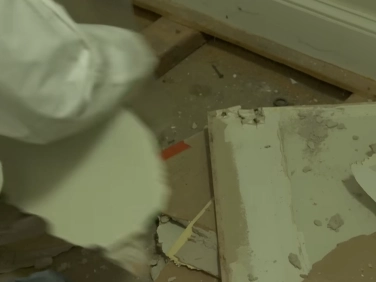
What about the crawl space and the raised floor?
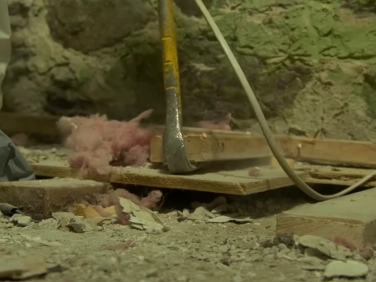
The classic lesson from a damp floor job is simple. Wood that sits on something damp never dries out. In one well known renovation video, floor framing laid on a slab with no vapor barrier stayed wet because moisture came up through the concrete, and the fix had to come before any rebuilding. In Gainesville the same idea applies to a crawl space, a raised floor and a wall that wicks from the ground.
- If your house sits on piers, check that the vents are open and the soil is not wet or bare in a way that holds moisture.
- Look for wood that is soft, dark or fuzzy near the ground.
- Check pipes and the underside of tubs for drips.
- Look for white crust on piers or masonry, which can be a sign of moisture moving through.
- Note any musty smell that comes up through the floor.
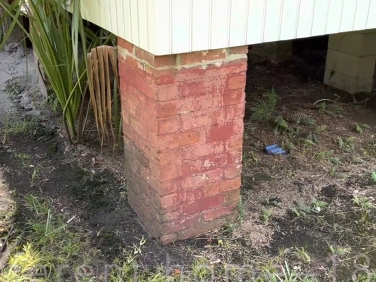
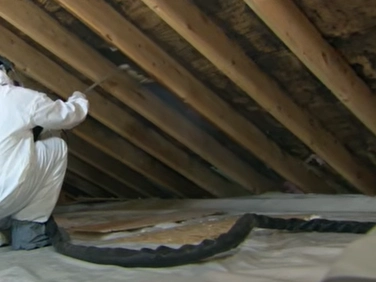
A provider handles this space with a mask, a HEPA vacuum and containment, then fixes the moisture before anything is rebuilt. Encapsulation can be part of that plan: see our page on mold encapsulation.
How is mold cleaned in an old house without ruining the finish?
The rule in a historic house is simple. The gentler the surface, the gentler the method. These are the usual tools, from lightest to heaviest.
| Method | Good for | Watch for |
|---|---|---|
| HEPA vacuum | Surface spores on plaster, wood and masonry, with no added moisture | It has to be done before and after wiping First step |
| Damp wipe with detergent and water, then dry | Hard surfaces and sound wood. EPA lists detergent and water for hard surfaces | Dry completely. Wet wood invites it back Common |
| Dry ice blasting | Wood and masonry where the surface suits it | Check the finish first. See dry ice blasting Where suited |
| Scraping or sanding | Heavily affected wood that needs to be taken back | It can ruin the patina, spread spores and disturb old paint Last resort |
| Bleach | A common first reach | EPA does not recommend routine bleach use, and dead mold can still bother people Not preferred |
What about vinegar, borax, peroxide and ozone?
These come up in every forum thread about old houses. They can lighten or clean surface growth. None of them fix the water, and none reach into plaster or wood that is wet through. Ozone treats a smell, not its source. If you try a home remedy, test a hidden spot first, keep the surface from getting soaked, and dry it fully afterward.
Is there lead paint to think about before anyone sands or scrapes?
Paint in houses built before 1978 may contain lead, and dust-making work can spread it. EPA’s rule is that anyone paid to do work that disturbs painted surfaces in a pre-1978 home must be lead-safe certified. Homeowners doing work on their own home are generally not covered, but EPA recommends hiring a certified contractor. Peeling or chipped paint is a hazard in its own right.
- If the house is older, tell the provider up front.
- Keep children and pregnant family members away from the work area.
- Do not dry scrape or sand painted trim yourself.
- Keep dust down with damp wiping and HEPA vacuuming.
Have an older home with paint and mold? Call and we will point you to a provider who has handled both.
☎ Call (352) 450-4030Historic home mold removal, step by step
Here is how a job runs when the house is worth keeping. The order matters.
1. What are we looking at?
Walk the house, listen to the history, and take moisture and thermal readings.
2. Where is the water?
Find the leak or the humidity and stop it, or control it, before cleaning starts.
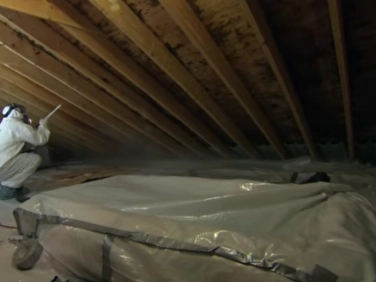
3. Contain it
Plastic sheeting and tape over the work area, with HEPA filtered air so the room is under negative pressure.
4. Take out only what is lost
Wet insulation, soft plaster, rotted wood. Everything else stays.
5. Clean and dry what stays
HEPA vacuum, damp wipe, then drying until readings are normal.
6. Check before you rebuild
Moisture readings and a last look. Repairs, plaster and paint come after.
How long does historic home mold removal take?
The mold work is not the whole timeline. Here is how the phases fit together.
| What stretches the job | Why |
|---|---|
| How far the moisture traveled | Behind plaster, under floors and inside walls takes more tracing |
| How much can be cleaned in place | Cleaning and drying take longer than tearing out and replacing |
| Access | Tight crawl spaces and attics slow the work |
| Containment | Sealing a room and running filtered air is a setup step |
| Drying | Materials have to come back to normal readings before closing up |
| Repair and finishing | Plaster, trim and paint come after the mold work, often with other trades |
EPA’s guidance is to dry water-damaged material within 24 to 48 hours. The sooner the water is dealt with, the shorter everything after it tends to be.
Why is the old bathroom always the damp one?
In many old houses the bathroom was added later, squeezed into a closet or a porch corner. That makes it the most likely place for water to get into a wall that was never built for it.
| Bathroom spot | Why it matters in an old house | What gets checked |
|---|---|---|
| Cast iron or clawfoot tub | Old drain and overflow connections can leak slowly | The floor around and below the tub |
| Hex tile and old grout | Cracks let water behind the surface | Moisture readings on and around the tile |
| Plaster ceiling below an upstairs bath | A stain shows where water traveled | The ceiling, then the bath above |
| An added bath with a small fan or none | Steam has nowhere to go | Whether there is any vent to the outside |
| Older supply and drain lines | Slow drips inside walls | The wall below fixtures |
| Soft floor around the tub | Moisture in the subfloor | The framing below |
Do I need approval before repairing a historic house after mold?
Possibly, for anything that changes the outside. The City of Gainesville has five local historic districts: Pleasant Street, Northeast Residential, Southeast Residential, University Heights North and University Heights South. Its design guidelines cover alteration, addition and rehabilitation of structures in those districts and on the Local Register. The first step is a pre-application conference with the Historic Preservation Planner, and review falls under Section 30-112 of the Land Development Code. The city’s page does not say whether interior work is covered, so ask before you start.
| Where the house is | What to know |
|---|---|
| The Duckpond | This is the Northeast Gainesville Residential District. It was listed on the National Register of Historic Places on February 12, 1980. It has 229 historic buildings from the late 19th and early 20th centuries, in Victorian, Mediterranean and Colonial styles |
| Pleasant Street | One of the city’s five local historic districts. See our page for the Pleasant Street Historic District |
| University Heights | North and South are both local historic districts, close to campus |
| Micanopy | The Micanopy Historic District was listed on the National Register on January 28, 1983. See Micanopy mold removal |
If your house is in one of these areas, tell the provider. Mold cleanup done in place usually fits well with the goal of keeping original material, and it is the repairs afterward that may need the city’s review.
Should I buy a house with a history of mold?
| Who you are | What to do | Why |
|---|---|---|
| Buyer | Ask what the water problem was, when it was fixed and how it was fixed. Ask for moisture readings | A past mold problem is a water problem. If the water is fixed, the house can be sound |
| Seller | Have a suspected problem looked at before it derails a contract | Florida expects sellers to disclose known defects that affect value (the Johnson v. Davis case). Talk to your Realtor or attorney |
| Renter in an older building | Report in writing, with dated photos | Fla. Stat. 83.51 sets the landlord duty to maintain the dwelling. Mold is not named in it, so keep your own record |
| Owner thinking of a test | Read our page on mold testing and inspection first | EPA says sampling is usually unnecessary when mold is visible. An inspection finds the water |
How do you keep mold from returning in an old house?
The honest answer is that you cannot promise never. You can keep the house dry, which is what holds it back. Paint with mold blockers is not the fix. EPA also says paint over mold is likely to peel.
- Keep indoor humidity under 60 percent, and ideally between 30 and 50 percent.
- Keep gutters clear and watch the roof and flashing.
- Keep attic vents and crawl space vents open and clear.
- Run bathroom fans, and fix any bathroom that has no vent.
- Use a dehumidifier in damp rooms in the muggy months.
- Avoid wall to wall carpet in bathrooms and kitchens.
- Check window seals and sash after storms.
| When | What the weather is doing | What to do |
|---|---|---|
| November to April | Outside the muggy window | Good time to check gutters, vents and the crawl space |
| May | Muggy starts about May 4 | Test the AC, run fans, and set the dehumidifier |
| June to September | Wet season, about June 1 to September 20. Hurricane season begins June 1 | Check ceilings and the crawl space after heavy rain or storms |
| October | Muggy until about October 31 | Look for new stains after storms |
| November | Hurricane season ends November 30 | Deep check of the attic and crawl space |
What should I do in the first hour?
- Stop the water if you can see where it is coming from.
- Take dated photos from a few angles and one close-up of the worst spot.
- Run a fan or dehumidifier and open the door to the room.
- Do not paint, caulk, sand or scrape the area.
- Write down the leak history and when you first noticed the smell.
- If you rent, tell the landlord in writing.
- Call, and tell us what you see.
Take the photos, then call. We can talk you through the next step.
☎ Call (352) 450-4030Historic home mold removal across Gainesville and nearby
We connect homeowners with providers in these ZIP codes:
- 32601
- 32641 (our base)
- 32667 Micanopy
- 32643 High Springs
- 32615 Alachua
Neighborhoods and nearby towns we hear from often include the Duckpond, the Pleasant Street Historic District, Micanopy, High Springs and Alachua. Related reading: water damage restoration, black mold removal, mold remediation process and all our resources.
Historic Home Mold Removal Questions Gainesville Owners Ask
Short answers to what people ask us most. Don’t see yours? Call (352) 450-4030.
How do I get rid of mold in a very old house?
Fix the water first, then clean in place where the material is sound and remove only what is lost. A provider contains the area, uses a HEPA vacuum, cleans and dries it, and checks the readings before anything is rebuilt.
Can mold be removed without damaging old plaster?
Often yes, when the plaster is hard and dry. Surface growth can be HEPA vacuumed and wiped. Soft, crumbling or wet plaster is a sign of water behind it and may have to be cut out and repaired.
Should I sand moldy trim?
Not as a first move. Sanding can spread spores, ruin the finish, and disturb old paint. In a pre-1978 house, dust from painted surfaces can contain lead. Clean in place first.
Do bleach, vinegar or borax work on old wood?
They can affect surface growth, but none of them fix the water. EPA does not recommend routine bleach, and dead mold can still bother people. Detergent and water, then a full dry, is the safer start.
Can you ever fully remove mold from a house?
Mold spores are in indoor and outdoor air everywhere, according to EPA. The goal is to remove growth, fix the water and keep the house dry.
Is mold normal in an old house?
It is common in damp places like crawl spaces, bathrooms and attics. Common does not mean ignore it. Find the moisture.
Should I buy a house with a history of mold?
It can be fine, if the water problem was found and fixed. Ask what happened, when, and what was done, and ask for moisture readings.
How long does historic home mold removal take?
It depends on how far the moisture went and how much can be cleaned in place. Careful cleaning takes longer than a fast tear-out, and drying cannot be rushed.
Do I need approval for repairs in a historic district?
Gainesville’s guidelines cover alteration and rehabilitation of structures in its five local historic districts. The city’s page does not address interior work, so ask the Historic Preservation Planner before you start.
Can I paint over mold on plaster?
No. EPA says not to paint or caulk moldy surfaces, and paint over mold is likely to peel. Clean it, dry it, fix the water, then paint.
Does ozone get rid of the musty smell?
Ozone treats a smell, not the source. If the smell comes back, there is still moisture or growth somewhere.
Is lead paint a problem when cleaning mold in an old house?
It can be, in a house built before 1978. Dry sanding or scraping can spread lead dust. Tell the provider the age of the house up front.
Why does my old bathroom keep growing mold?
Baths in old houses were often added later with a small fan or none, and old tubs and drains leak slowly. Check for a vent and a soft floor.
Do I need a mold test in an old house?
Often no. EPA says sampling is usually unnecessary when mold is visible. An inspection that finds the water is the better first step.
Mold in an older Gainesville house? Start with a call.
Tell us what you see. Gainesville Mold Rescue connects you with a local mold remediation provider who will find the water, clean what can stay and remove what cannot.
Call now to talk it through.
Sources
- U.S. EPA: Lead Safe Renovation, Repair and Painting
- City of Gainesville: Historic Preservation
- Wikipedia: Northeast Gainesville Residential District
- National Park Service: Preservation Brief 39, Controlling Unwanted Moisture in Historic Buildings
- Florida Statute 83.51: landlord obligation to maintain premises
- Florida Realtors: Disclose, Disclose, Disclose (Johnson v. Davis)
- WeatherSpark: Average Weather in Gainesville, Florida
- U.S. EPA: A Brief Guide to Mold, Moisture and Your Home
- U.S. EPA: Mold Cleanup in Your Home
- Florida Department of Health: Mold